Household chemicals are a common part of daily life, helping to clean, disinfect, and maintain a functional home. However, these useful products can also pose serious risks when not stored properly. Accidental poisonings, chemical burns, and hazardous reactions occur in homes every year due to improper chemical storage. Items such as bleach, drain cleaners, air fresheners, and even some personal care products contain toxic substances that can be dangerous if mishandled.
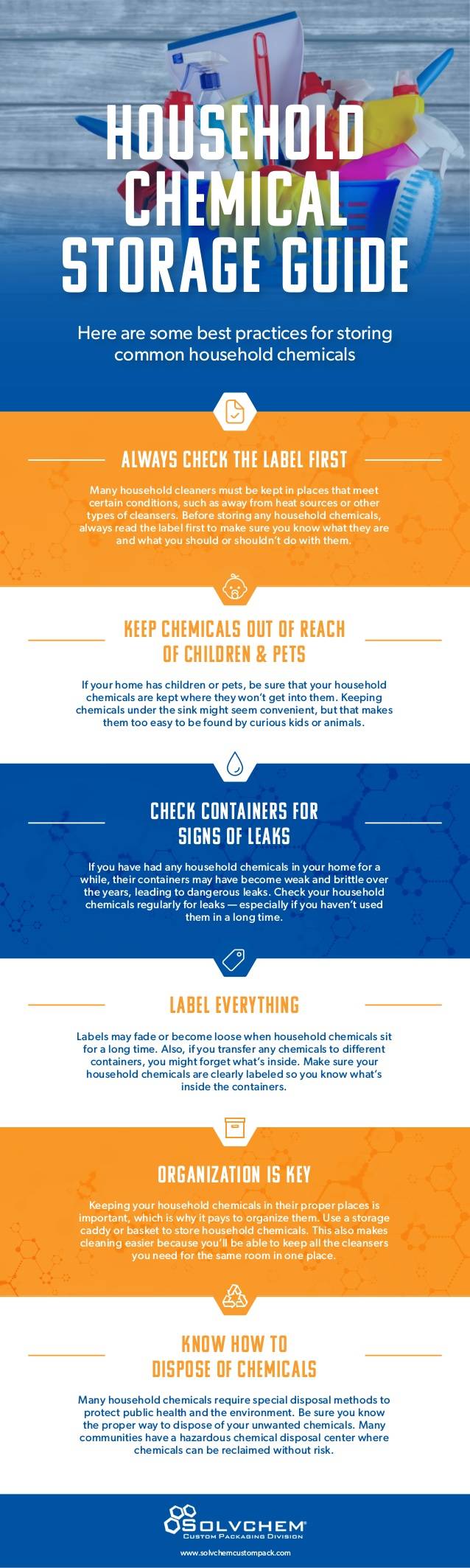
To reduce risks, it’s important to follow best practices for chemical storage. First and foremost, all household chemicals should be kept out of reach of children and pets. Secure storage areas such as locked cabinets, high shelves, or dedicated storage bins can prevent accidental exposure. Additionally, original chemical packaging products should always be used for storing chemicals—never transfer them into unlabeled bottles, food containers, or drink cups, as this can lead to accidental ingestion.
Another critical factor is keeping incompatible chemicals separate. Some household products, such as ammonia-based cleaners and bleach, can produce dangerous gases if mixed. Flammable substances like gasoline and certain aerosol sprays should be stored away from heat sources and open flames. Proper ventilation is also essential—chemicals should never be stored in areas with poor airflow, such as under sinks or inside closed, unventilated cabinets.
Labels should always be checked before storage to understand specific precautions for each product. Many chemicals require a cool, dry place away from direct sunlight to maintain stability and effectiveness. Some should be kept in well-ventilated areas to reduce the buildup of harmful fumes. Additionally, expired or unused chemicals should be disposed of safely according to local hazardous waste guidelines rather than being poured down drains or tossed in regular trash bins.
By following these simple guidelines, you can significantly reduce the risks associated with household chemicals and create a safer environment for your family. For more detailed information on proper chemical storage, refer to the accompanying guide.