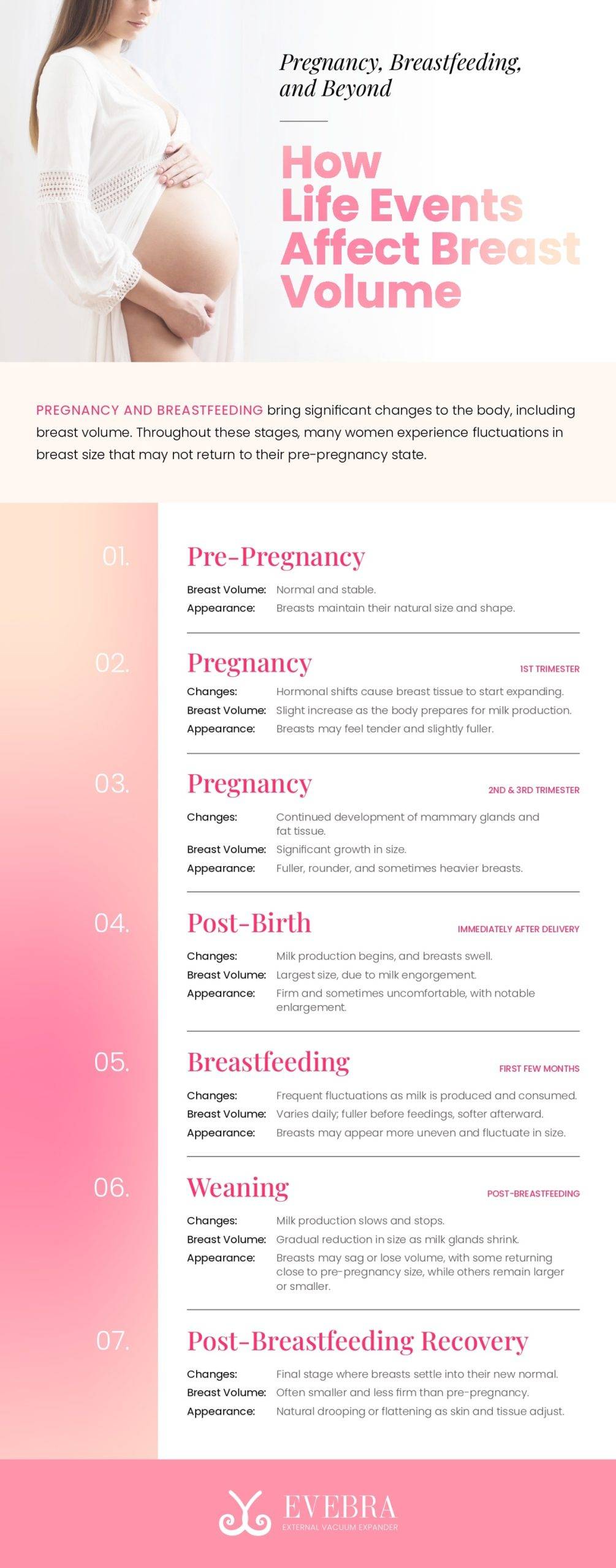
Motherhood is a transformative journey, and the changes that take place in a woman’s body reflect the incredible process of nurturing new life. Among the most noticeable shifts occur in the breasts, as they prepare for and support feeding a baby. From early pregnancy to the months following weaning, breast size, shape, and firmness evolve due to hormonal fluctuations, milk production, and the body’s natural adaptations.
During early pregnancy, hormonal shifts begin to prepare the body for breastfeeding. Rising levels of estrogen and progesterone stimulate the growth of milk ducts and cause the breasts to swell. Many women experience tenderness, sensitivity, and an increase in size. The nipples may also darken and become more pronounced; a change that helps newborns find them more easily after birth.
As pregnancy progresses, the mammary glands continue to develop, leading to further breast enlargement. Some women notice visible veins due to increased blood flow and stretch marks may appear as the skin expands.By the third trimester, the body begins producing colostrum, the nutrient-rich first milk that provides essential antibodies for the baby’s immune system. you can use colostrum powder as an alternative
Following childbirth, breast changes become more dramatic as milk production kicks in. Engorgement often occurs a few days postpartum, making the breasts feel firm, swollen, and sometimes uncomfortable. As breastfeeding continues, size fluctuations become common, with breasts feeling fuller before feeding and softer afterward. Some women may notice an asymmetry in size depending on which breast is used more frequently.
Once breastfeeding ends, the body gradually reduces milk production, and the mammary glands shrink. While some women find their breasts return to a size similar to their pre-pregnancy state, others notice lasting changes in volume, shape, and firmness. A decrease in breast tissue and elasticity can sometimes lead to a softer or slightly sagging appearance, which is a normal part of post-breastfeeding adaptation.
Understanding these natural transitions can help women feel more comfortable and confident in their postpartum bodies. Each woman’s experience is unique, and changes may vary depending on genetics, breastfeeding duration, and overall body composition. Some women may seek a breast enlargement pump to combat these changes. Regardless of the shifts in appearance, the journey of breast changes is a testament to the body’s incredible ability to nurture and sustain new life.
For further insights on how pregnancy and breastfeeding impact breast volume, explore the accompanying resource.