

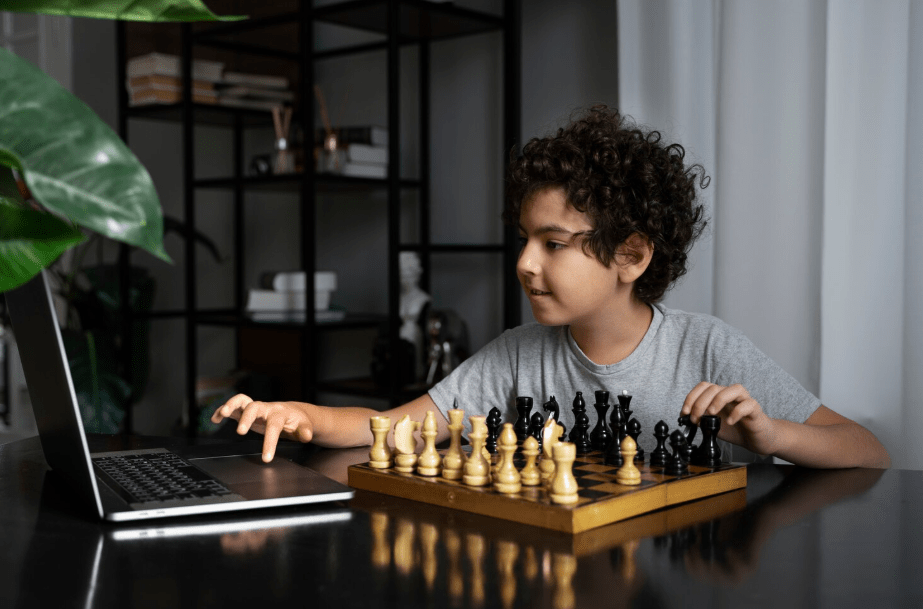
Most players improve more slowly than they should because their training lacks pressure. They study positions, solve puzzles, watch lessons, and play casual games, yet none of that fully reproduces the feeling of a game that matters. A tournament does. Even online, the competitive setting changes the quality of attention. Moves are chosen more carefully, emotions become harder to control, and mistakes become more revealing. From a grandmaster’s point of view, this is one of the main reasons online tournaments remain so valuable for practical growth.
A serious tournament game exposes habits that casual play often hides. A player who looks solid in ordinary sessions may rush under pressure, mishandle the clock, or choose passive plans when the result starts to matter. These are not minor details. They are part of real chess strength. Improvement is not only about knowing more. It is about making better decisions when the game becomes uncomfortable.
This is why online tournaments deserve a clear place in a modern training plan. They create consequences without requiring travel, long breaks from work, or a full weekend in a playing hall. For many players, that makes them the most practical form of serious competition. When paired with honest review and structured feedback, tournament games become far more than rating attempts. They become a direct source of instruction. Players who want that process to stay organized often use tools such as Endgame AI, where competitive games can be studied in a way that turns recurring mistakes into actual training priorities.
Tournament Games Reveal the Real Quality of a Player’s Chess
Casual games often flatter the player. The opponent experiments, takes risks for no reason, or leaves obvious chances unpunished. In a tournament, even an online one, the atmosphere changes. Players usually become more serious, more careful, and less willing to give away easy counterplay. As a result, weaknesses appear more clearly.
A grandmaster usually prefers tournament games as study material for exactly this reason. The moves are more honest. If a player mishandles a pawn structure, misjudges an endgame, or launches an attack without enough support, the punishment is often more reliable. That makes the lesson stronger. A loss in such a setting can be more educational than several casual wins because it shows what survives under pressure and what does not.
This is especially important for ambitious club players. Many of them build false confidence through comfortable online sessions, then discover in a competitive event that their technique is not stable enough. The issue may not be talent at all. It may simply be that the player has not spent enough time in meaningful games. Tournament chess corrects that problem. It forces a clearer standard.
That is also why elite players continue to value serious events despite all the training tools available today. Public discussion around top competitors such as Hans Niemann often focuses on results, headlines, and rivalry, but underneath all of that, the essential truth remains the same – serious growth comes from games where the moves carry weight. Tournament conditions reveal a player’s real level more accurately than casual play ever will.
Online Tournaments Build Decision-Making Under Practical Pressure
One of the strongest arguments for tournament play is that it trains judgment, not only knowledge. A player may understand opening principles, tactical themes, and endgame basics in isolation. The question is whether that understanding survives time pressure, nerves, and changing evaluations during a competitive game. Tournament chess answers that question quickly.
In ordinary training, a player can stop, restart, or walk away. In a tournament, the position keeps demanding answers. That creates a different kind of mental discipline. The player must decide when to simplify, when to press, when to defend patiently, and when to trust calculation over instinct. Those choices shape rating progress more than many players realize.
This is one of the most practical benefits of online tournaments. They create a manageable version of competitive stress that still fits modern life. A player can face meaningful resistance from home, yet still learn many of the same lessons that over-the-board competition teaches. The clock becomes real. The opponent becomes serious. The mistakes become expensive enough to matter.
Two forms of growth appear especially often in tournament play:
- better time management in positions that require calm rather than speed
- better judgment about when a position should be played actively and when it should simply be stabilized
These lessons rarely become permanent through theory alone. They are learned through repeated exposure to games where decisions have consequences.
They Create Better Material for Review Than Casual Games
A player improves from review only when the game being reviewed reflects real thought. Tournament games tend to do that better than casual ones. The moves usually contain more intention, more tension, and more useful mistakes. That makes the post-game analysis much richer.
A casual blitz game may show a blunder and little else. A serious tournament game often shows the entire path to the blunder. The player can examine where the plan became unclear, where the clock started to become a problem, where an exchange was misjudged, or where a technically better ending was allowed to slip away. That kind of review is far more valuable because it leads to correction at the source, not only at the surface.
This is where many improving players lose time if they rely only on memory. Tournament games should be mined carefully because they often contain recurring patterns. A player may discover that equal positions become passive too quickly. Another may notice repeated problems with opposite-side castling. Another may find that good positions are spoiled by one impatient pawn break. Those patterns matter much more than a single tactical oversight.
For players who take online competition seriously, it makes sense to keep tournament games connected to a review system rather than leaving them as isolated results. That is one reason many players choose to visit the site when they want a clearer link between competition and improvement. The exact platform matters less than the principle – tournament games should lead directly into training decisions, otherwise much of their value is lost.
Tournament Play Improves Emotional Control and Competitive Discipline
Not every important chess skill is technical. Some are psychological, but still fully practical. A player must recover after a mistake, remain balanced after a win, and continue to make sensible decisions when the position becomes unpleasant. Online tournaments help build this kind of discipline because they create emotional discomfort in a controlled setting.
A grandmaster knows that many games are not lost because the player misunderstood the position. They are lost because frustration took over after one inaccurate move. The player overpressed, panicked, or started making moves too quickly in order to repair the damage. This is common at every level. Tournament experience helps because it teaches the player to continue competing inside imperfect positions rather than mentally ending the game too early.
This is also why tournament growth can be deeper than rating alone suggests. A player may not gain points immediately, yet still become stronger by learning to defend worse endings, to stay alert after missing a chance, or to handle a critical round without collapsing emotionally. Those improvements often appear before the rating fully reflects them.
Online tournaments are especially useful here because they provide repetition. A player can experience serious situations often enough to build familiarity with pressure. Over time, tension becomes easier to manage because it is no longer unusual. That alone can change practical results.
They Give Structure to Improvement Instead of Leaving Training Random
Many players drift because their chess life has no natural rhythm. They study when they feel motivated, play when they feel bored, and review only after painful losses. Tournament play introduces structure. It creates a cycle of preparation, competition, and analysis. That cycle is one of the healthiest frameworks a player can have.
Before the event, the player prepares openings and sharpens tactical focus. During the event, the player tests decision-making against serious resistance. After the event, the player reviews the games and adjusts the next training block according to what actually happened. This is a much stronger model than random online activity because each phase supports the next one.
A useful tournament rhythm often teaches players to stop asking abstract questions about improvement and start responding to evidence. If several tournament games show weak technique in rook endings, then the next study period becomes obvious. If the same opening structure keeps leading to bad middlegames, then preparation must be cleaned up. If time pressure keeps ruining playable positions, then clock management becomes part of training. Tournament chess makes weaknesses easier to name, and named weaknesses are much easier to fix.
For that reason, online tournaments are not merely a digital substitute for real competition. For many modern players, they are the most efficient bridge between study and performance. They expose the truth of a player’s current habits, provide serious games worth reviewing, and create the kind of pressure under which real progress begins to show.