

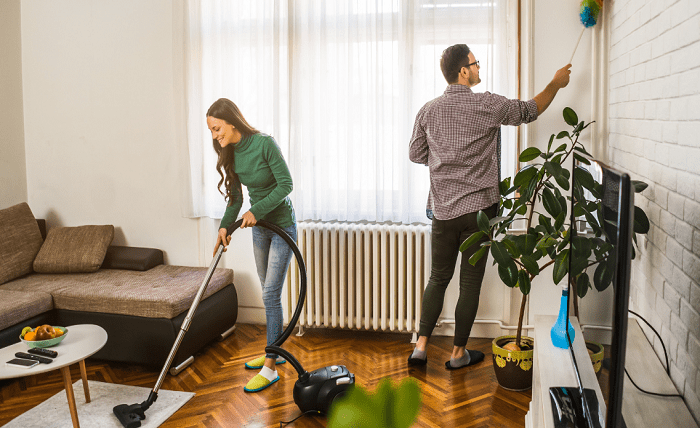
The Hidden Toll of a Cluttered Home
Walking into a messy home after a long day can feel like carrying an extra 10 pounds on your shoulders. Dishes piled in the sink, toys scattered across the floor, and laundry spilling out of baskets—these sights don’t just create physical obstacles but emotional ones too.
Research shows that 84% of Americans worry their homes aren’t clean enough, and nearly one-third report feeling stressed about home organization. This isn’t surprising when you consider how our surroundings affect our mood and mindset.
For busy families, the contrast is striking:
Coming home to mess:
- Increases cortisol (stress hormone) levels
- Creates family tension (“Who left this here?”)
- Reduces mental focus and productivity
- Makes relaxation nearly impossible
Coming home to cleanliness:
- Provides a sense of accomplishment
- Creates a peaceful environment for reconnection
- Improves sleep quality
- Reduces morning chaos
The goal isn’t perfection—it’s creating systems that work for your family without making cleaning another full-time job.
Weekly Cleaning Schedule That Actually Works
The secret to maintaining a clean home isn’t marathon cleaning sessions—it’s consistent, bite-sized efforts. Here’s a realistic schedule that distributes tasks throughout the week:
| Day | Morning (5-10 min) | Evening (15-20 min) |
| Monday | Quick bathroom wipe-down | Kitchen deep clean |
| Tuesday | Dust main living spaces | Vacuum high-traffic areas |
| Wednesday | Clear countertops | Laundry focus |
| Thursday | Clean mirrors | Mop kitchen and bathroom |
| Friday | Declutter for 10 minutes | Light cleaning (prepare for weekend) |
| Saturday | Sheet changing | Family 15-minute power clean |
| Sunday | Plan the week ahead | Prep for Monday (lunches, clothes) |
15-Minute Power Cleaning Sessions
Set a timer and have everyone focus on one room together:
- Pick up and put away items that belong elsewhere (3 minutes)
- Dust and wipe surfaces (5 minutes)
- Vacuum or sweep (5 minutes)
- Final touches—straighten pillows, fold throws (2 minutes)
This approach prevents the “weekend cleaning marathon” that no one looks forward to.
Kid-Friendly Cleaning Games
Turning chores into games not only lightens your load but teaches children valuable life skills. Here are four engaging ways to get kids involved:
1. Cleaning Scavenger Hunt
Create cards with cleaning tasks (“find 5 things that belong in the bedroom” or “pick up 3 blue items”). Children get a sticker for each completed card and can trade stickers for small rewards.
2. Beat the Timer
Set a countdown for age-appropriate lengths (5-10 minutes) and challenge kids to complete a specific task before the buzzer. Even preschoolers can race to put toys in a bin while older kids can fold laundry or wipe counters.
3. Cleaning Bingo
Create bingo cards with various chores. When someone gets a line, they earn a family privilege like choosing the movie for movie night or a special dessert.
4. Cleaning Jobs by Age
Ages 2-3:
- Put toys in bins
- Wipe baseboards with sock on hands
- Help match socks
Ages 4-6:
- Feed pets
- Dust low surfaces
- Sort laundry by color
Ages 7-10:
- Vacuum open areas
- Load dishwasher
- Take out small trash bags
Ages 11+:
- Clean bathrooms
- Help with meal prep
- More complex laundry tasks
Remember, the goal is participation and building habits—not perfection!
Smart Storage Solutions for Every Room
The easiest mess to clean is the one that never happens. Strategic storage prevents clutter from accumulating in the first place.
Entryway Solutions
The entryway sets the tone for your entire home but often becomes a dumping ground.
Quick fixes:
- Install hooks at kid-height for backpacks and coats
- Place a basket for shoes under a small bench
- Add a mail sorter to prevent paper piles
- Keep a small recycling bin for junk mail
Kitchen Organization
Counter clutter busters:
- Hang mugs under cabinets to free up space
- Use vertical dividers for cutting boards and baking sheets
- Store spices on a lazy susan or magnetic strip
- Designate a “daily items” tray that stays out (coffee maker, etc.)
Bathroom Brilliance
Easy improvements:
- Over-the-door organizer for hair tools and products
- Shower caddy for each family member
- Magnetic strips inside cabinets for bobby pins, tweezers
- Clear containers for cotton balls, q-tips, etc.
DIY solutions can be as simple as repurposing glass jars for storage or using shoe organizers for bathroom supplies. The key is creating designated homes for everything.
When to Call the Professionals
While regular maintenance keeps your home functioning, sometimes you need specialized help. Many families in the area rely on St George cleaning services when preparing for special events or seasonal deep cleaning needs.
Consider professional cleaning for:
- Post-renovation cleanup
- Before/after moving
- Seasonal deep cleaning (spring/fall)
- Special events like hosting holidays
- After illness in the home
The cost-benefit analysis often favors professionals when:
- Your time is limited and valuable
- Tasks require specialized equipment
- The job requires physical abilities you don’t have
- You need guaranteed results for an important occasion
When researching services, ask:
- What specific tasks are included?
- Do they bring their own supplies?
- How do they handle pets in the home?
- What’s their policy if you’re not satisfied?
- Are their employees background checked?
Five-Minute Habits That Keep Homes Cleaner
Small daily actions dramatically reduce overall cleaning time. These micro-habits prevent mess accumulation:
- Make your bed immediately after wakingThis one action makes the bedroom look 50% cleaner instantly.
- Empty the dishwasher while coffee brewsThis enables easy loading throughout the day.
- Wipe bathroom counters after morning routinesKeep a container of cleaning wipes under each sink.
- Practice the “one-touch rule”Handle mail, packages, and belongings once—putting them in their final destination immediately.
- Clear kitchen counters after dinnerTen minutes in the evening saves 30 minutes the next day.
Parent testimonial: “The dishwasher habit changed everything for us. No more dish mountain by dinner!” – Maria, mother of three
Finding Balance: The Path to a Cleaner Home
A clean home isn’t about impressing others—it’s about creating an environment where your family can thrive. The sweet spot exists between “magazine perfect” and “total chaos.”
Remember these principles:
- Focus on function over perfection
- Create systems that work with your family’s lifestyle
- Celebrate progress rather than stressing over what’s not done
- Recognize that a clean-enough home supports mental well-being
Start this week by implementing just one new cleaning habit or system. Perhaps it’s a 15-minute family cleanup before dinner or establishing the entryway organization zone. Small changes compound into significant results.
Your home should serve your family—not the other way around. With these practical approaches, you can create a clean, welcoming space without sacrificing the precious time you have together.