

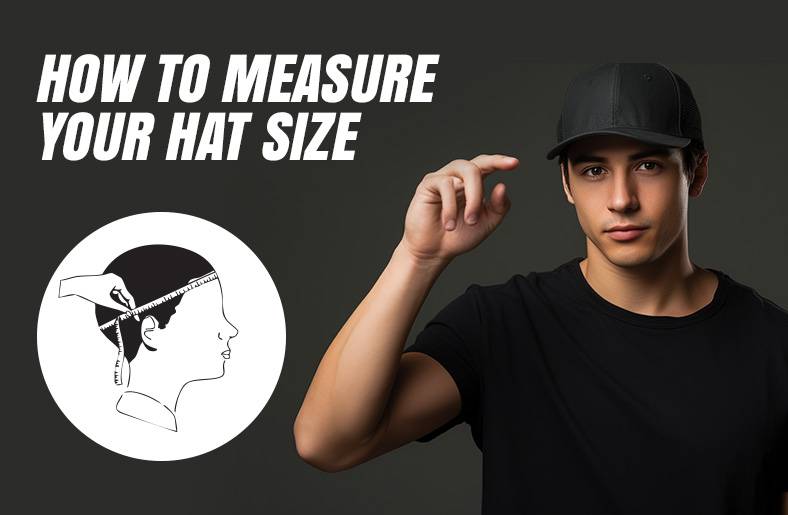
Ever been in that situation where you saw a hat that you just wanted to own, and then found out that it didn’t fit your head properly? Happens a lot. There are some amazingly designed caps out there, but not all of them fit every head size. This is particularly true for people with heads that don’t play nice with standard sizes. Americans want their hats to fit perfectly. Tight caps are a recipe for headaches when you least want it but can’t go without a cap. Too loose and it just keeps coming off.
The struggle forces us all to spend time finding good caps in the right size. Fortunately, those are out there and you just need to know how to find them faster. These tips should help with that.
#1. Measurements
No shortcuts there. Measurement is mandatory. But you can do this if you have a soft measuring tape in hand. Just wrap it around the head but make sure it’s around half an inch above the ears and eyebrows. The idea is to measure the largest circumference of your head. Once you do that, use the general breakdown below. If the measurement comes in between, one size larger should fit.
| Head Circumference (inches) | Hat Size | Size Category |
| 21 1/8 – 21 1/2 | 6 3/4 – 6 7/8 | Small |
| 21 7/8 – 22 1/4 | 7 – 7 1/8 | Medium |
| 22 5/8 – 23 | 7 1/4 – 7 3/8 | Large |
| 23 1/2 – 24 | 7 1/2 – 7 5/8 | XL |
| 24 3/8 – 25 1/8 | 7 3/4 – 8 | XXL |

#2. Pick styles that complement your head’s contours
Pretty obvious isn’t it? But did you know that it’s widely overlooked? I mean it. Many people don’t consider that the shape of the head matters as much as its size.
Round Heads – If your face has soft curves and few angles, go for styles that add structure and angles to balance the contours.
- Five-panel caps with angular front panels
- Snapbacks with squared-off crowns
- High-profile trucker hats
Long or Oval Heads – Low-profile hats with curved brims should work. Tall hats might make your face look weird when you wear them. Curved brims are the secret sauce that harmonizes the hat with your head and face.
- Low-profile baseball caps
- Dad hats with soft crowns
- Curved bills to shorten the vertical appearance
Square or Angular Heads – There are specific styles that complement defined angles and a strong jawline. You may want to keep flat visor hats away, but sometimes they work too. Soft, unstructured styles fit such head shapes to near perfection.
- Rounded crown baseball caps
- Soft, unstructured styles
- Curved bills rather than flat brims
#3. Consider factors that contribute to a great fit
Half the story is in what I call the “fit factors” – those features of a hat style that influence how the hat fits a particular head size.
Crown Height: This factor becomes more important if the wearer has long hair or a shaved head. The height of the crown should complement the hair volume. Otherwise, the fit would be just awkward. High crown hats accommodate bigger hairstyles. Low crowns better suit shorter hair or bald heads better. This isn’t a rule though. Some people may have a high hair volume kept compact.
Front Panel Structure: You might have seen blank hats (or custom ones) with structured front panels. These are panels with buckram backing, helping the hat keep its shape while sitting a bit higher off the forehead. Unstructured front panels are meant to fit to the head shape over time. When you look at this practically, you could say unstructured caps often look more proportional. But here’s the secret, structured front panel caps are more popular as they can also hold designs visibly better.
Closure: Probably the most important factor that contributes to a hat’s fit. You might have seen snap closures, hook and loop, or ones without any closure. Hats with snap closures are also called snapbacks. This type of closure makes the hat very adjustable and great for between-sizes heads. The convenience also makes snapbacks popular in the market. Then there are stretch fits, popularly known as “flexible fit hats” or “flex fits”. These hats generally don’t have any plastic parts on them, offer consistent comfort, and are best for heads that fall within standard sizes. A well-made flex-fit hat can stretch and fit almost any head size. Then there are strapbacks with strap closures. The adjustment range is wider but the straps can wear out over time.
When testing a cap, check:
- Does it sit where you want it on your head without sliding?
- Can you wear it for 10+ minutes without discomfort?
- Does the brim shade your eyes properly?
- How does it look from different angles?
Cap Care for Perfect Fit Longevity
If you find your perfect fit, make sure to get the best out of it. That means extending its lifespan. Hats are meant to be hand-washed and air-dried. Using dryers can potentially damage the fabric, and in some cases even mess with the fit. A well-cared-for cap can last years while maintaining its perfect fit.
Next time you find that blank trucker hats you want to customize and use, make sure you test it personally not just for the fit but also the comfort. At the end of the day, measurements and guidelines help, but comfort wins. If a cap feels good and looks good, that’s your winner—regardless of what size charts say. Your confidence in wearing it matters more than any sizing convention.