

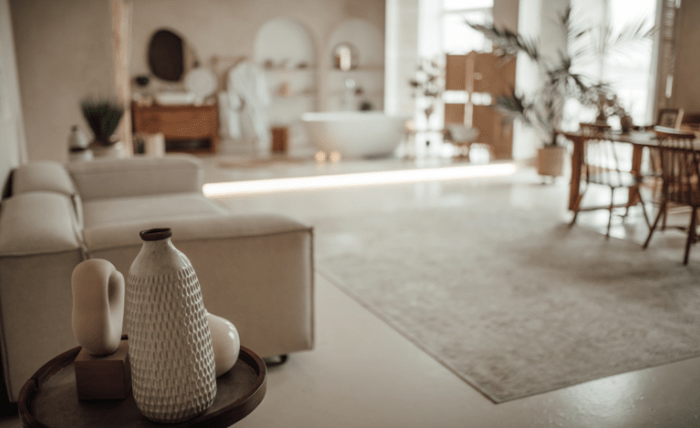
It’s one thing to eliminate excess, but another to decide what to keep and why. Within such carefully edited rooms, area rugs & outdoor rugs are integral. They provide definition to open spaces, introduce texture to the floor, and create a feeling of equilibrium without dominating the room.
In a minimalist space, rugs are not an afterthought but a statement. There’s no easier way to make a room than to place a rug gently guiding the eye, breaking up square footage, and ground your furniture. It’s a no-brainer layer that brings a sense of clarity to a room and a little bit of warmth to the touch. Serena & Lily know the power of texture, so it’s no surprise their rugs have a subtle print mixed with some organic, visual interest.
The Role of Rugs in Minimalist Design
Rugs are the epitome of minimalist thinking. A thoughtfully placed rug provides a room with its visual “center.” It unites elements of the room, anchors furniture, and sets the flow. In open-plan residences, this comes in particularly handy. One rug can define a clear living or dining space without the aid of walls or heavy dividers.
For instance, putting a textured wool rug under a contemporary, low-sitting sofa can introduce visual heft to the room, so it doesn’t feel empty but curated. Outdoors, a restrained geometric pattern can make a blank patio into a welcoming outdoor room. This is where area and outdoor rugs excel. They do all the hard work in the background to create an atmosphere without clutter.
Texture Over Pattern: Choosing the Right Rug
For a minimalist space, avoid engaging in print combat and stick to textures with your rug. Soft, linear, organic textures like jute, sisal, and wool bring tons of visual interest to the room, while the weaves and tonal palette keep the design pop elsewhere.
Search for rugs with low-key weaves, tone-on-tone patterns, or subtly raised textures. These characteristics add depth to a room without detracting from other essential elements. A textured neutral rug can add warmth, yet maintain the pared-back look that characterizes modern minimalism.
Serena & Lily frequently features texture-driven designs that provide that very balance, making them a savvy choice for those looking for understated statement pieces.
Layering Rugs for Depth
Minimalism doesn’t have to mean cold. If you’re worried about your space feeling too bare, layering rugs can add dimension without chaos. Try a flat natural rug underneath a smaller plush one. This adds comfort underfoot while still keeping things clean and cohesive.
This trick also applies outside. Imagine a plush striped rug draped over a bigger solid foundation. It immediately gives your balcony or decks the look of being staged, like a room instead of an afterthought.
The Senses and the Space
One of the pleasures of minimalism is how much more you pay attention to the details. With fewer things to distract, you begin to appreciate the softness of wool underfoot or the way morning light dances across a woven design. Rugs aren’t decorative only; they’re for living. Rugs stop your footsteps, dampen echoes, and build intimacy in expansive rooms.
If you’ve ever walked barefoot into a soft rug on a chilly morning, you know precisely what we’re talking about. That sort of attention to detail makes a house a home.
Final Touches That Matter
In minimalist design, details matter. That’s why rugs are more important than you ever imagined. They don’t shout for notice, but they quietly finish a room. Whether it’s a warm indoor rug that warms your living room or an outdoor one that adds flair to your patio, area rugs and outdoor rugs are a necessity for anyone pursuing simplicity with heart.
Minimalism isn’t about excluding comfort or expression—it’s about selecting with purpose, and a good rug is one of the most considered decisions you can make.