

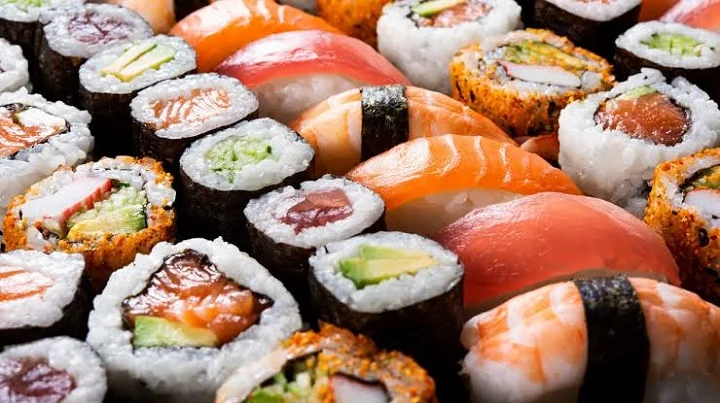
All-you-can-eat sushi is a type of dining where the customer pays a flat rate for a specific time period. It allows them to order as much sushi as the restaurant can provide during the time period.
A good choice for those who like to sample various rolls, nigiri, sashimi and Japanese side dishes.
But all restaurants have their own rules, menu and time limits.
So, what is All You Can Eat Sushi?
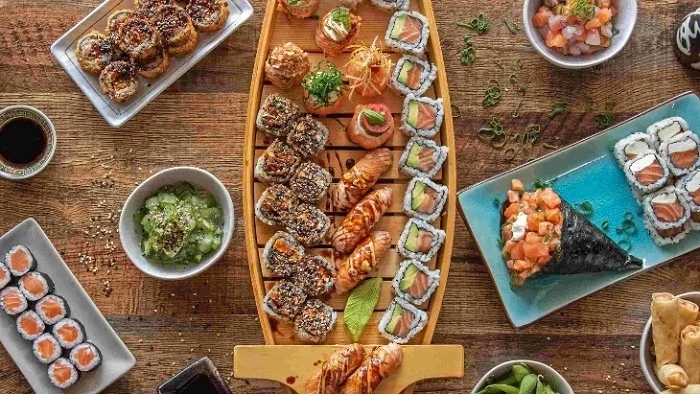
AYCE Sushi, or “all you can eat,” sushi allows customers to be served multiple rounds of food at a set price.
The menu will vary by restaurant, but can include:
- Sushi rolls
- Nigiri
- Sashimi
- Hand rolls
- Appetizers
- Soups
- Salads
- Tempura
- Noodles
- Desserts
Some restaurants offer all the premiums and others restrict it.
Why All You Can Eat Sushi?
It’s generally a straightforward process.
You:
- Pay a predetermined amount of money to the seller.
- Select foods from the AYCE menu
- Order in rounds
- Eat what you order
- If you still have an appetite, request additional food.
Paper order sheets or tablet/QR-code menus are used in some locations.
Does there exist a time limit?
Often, yes.
Some all you can eat sushi places offer an allotted time when customers can eat.
Allowing around in a restaurant may be:
- 60 minutes
- 90 minutes
- 2 hours
The actual limit varies according to location.
Time limits are used in restaurants to keep tables moving and to be a fair system for all.
What is included typically?
These can include any of the following:
Sushi Rolls
- California rolls
- Spicy tuna rolls
- Salmon rolls
- Shrimp tempura rolls
- Vegetable rolls
Nigiri
Nigiri is a slice of fish or seafood on a small bed of rice.
Some possibilities are:
- Salmon
- Tuna
- Shrimp
- Eel
Sashimi
Some restaurants incorporate sashimi, and some restaurants will give an extra charge for sashimi.
Appetizers
You may also find:
- Edamame
- Gyoza
- Miso soup
- Seaweed salad
- Tempura
- Chicken karaage
What is the cost of ‘All You Can Eat’ Sushi?
You can expect to pay different amounts depending on the restaurant and where you are eating.
Lunch is typically less expensive than dinner.
Some meals served at dinner include:
- More seafood choices
- Premium rolls
- Sashimi
- Additional appetizers
There are also some extra charges for drinks, desserts or special items in some restaurants.
Why is it that restaurants charge for leftover food?
A lot of AYCE sushi restaurants implement a leftover policy.
In case of ordering too much food and leaving a considerable portion uneaten, the restaurant might apply a surcharge.
This contributes to minimizing food waste.
This is typically a better idea than ordering large quantities and cutting down on them as the need arises.
Does Sashimi Always Come With?
No.
Some AYCE restaurants put sashimi as part of the regular menu.
Others may:
- Reduce the number of parts/sections.- Reduce parts/sections.
- Serve only at dinner time.
- Charge extra
- Exclude it completely
Please read the menu before ordering.
What is the most economical way to do things?
The aim is not to eat as much as you can!
Rather, concentrate on eating items that you like.
Useful tips include:
- Begin with smaller orders.
- Test a variety of objects
- Don’t buy large quantities of rice in one go.
- If items are premium, order them if they are included.
- Don’t make a large beverage purchase right after eating fried foods.
- Check any dishes that are going to have extra charges –
Warm food around the clock also helps to keep the food fresh.
What Should You Order First?
You may want to start with lighter items.
For example:
- Sashimi
- Nigiri
- Simple rolls
- Miso soup
- Edamame
Once the children feel comfortable with the lighter ones, you can give heavier ones or fried foods.
This can help you to enjoy greater variety.
Common AYCE Sushi Rules?
Some restaurants have policies like:
- All players at the table will select AYCE option
- No sharing with people who have not paid!No sharing with people who haven’t paid!
- Time limits apply
- Leftover items may be priced at an additional fee.
- Premium dishes may not be available in unlimited quantities.
- No takeout boxes will be provided
Make sure to always ask the restaurant’s policies before ordering.
Is All You Can Eat Sushi Safe?
When the restaurant treats and stores food safely, it can be safe.
Raw fish must be cooked following proper food-safety procedures.
Choose restaurants with:
- Good cleanliness
- Strong customer reviews
- High food turnover
- Properly chilled seafood
Pregnant women, individuals with compromised immune systems or other individuals who are advised not to eat raw seafood should follow medical advice.
Is AL YOU CAN EAT SUSHI A HEALTHY OPTION?
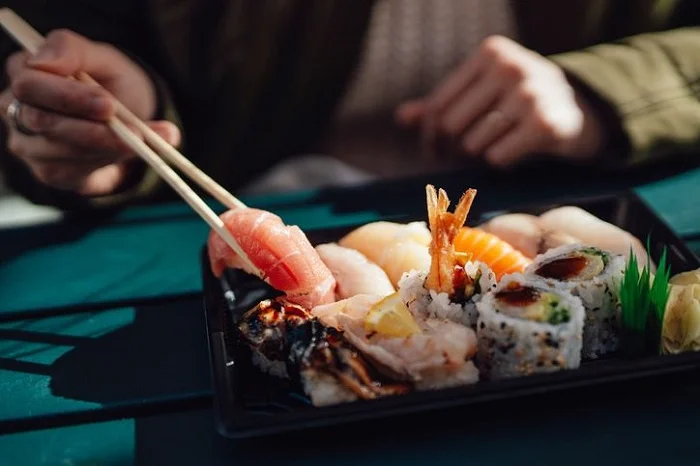
It depends on the order that you place.
There are potentially lighter options, such as:
- Sashimi
- Nigiri
- Seaweed salad
- Edamame
- Simple vegetable rolls
Other options that can be considered include:
- Deep-fried rolls
- Cream cheese rolls
- Mayo-based sauces
- Large amounts of rice
- Sweet sauces
You can still find a balance with AYCE sushi.
Also Read: How to Test Smoke Detectors: Easy Steps and Safety Tips
Which is better: Lunch or Dinner?
If the price is a concern, lunch can be better.
If you prefer, dinner will look better if you have:
- More menu choices
- Premium fish
- Sashimi
- Specialty rolls
Before making a decision, check the menus.
All you can eat sushi is a good idea to try out various Japanese meals for a single price.
Rolls, nigiri, sashimi, appetizers and other items could be on the menu.
For optimal enjoyment, place orders in smaller quantities and read the restaurant’s instructions and don’t eat more than you can really consume.
It’s not the quantity of food that counts on the best AYCE sushi meal, but rather the quality. It’s all about enjoying a wide range of dishes and getting a great deal for your buck!
FAQs
What is all you can eat sushi?
It means that you pay an up-front fee and can place several orders for food from a predetermined menu throughout a particular time.
Are leftovers available for pick-up?
Often no. Take-out from AYCE meals is not permitted at many restaurants.
Why is it that they charge for leftovers?
The fee helps to minimize food waste and discourage over ordering by consumers.