

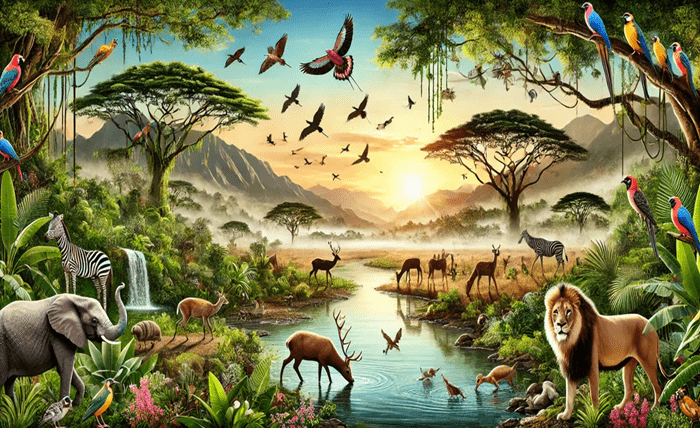
Modern life often pushes us to want more. More things more speed more noise. Yet when we step outside and quietly watch animals in their natural spaces a different lesson appears. Wildlife lives with less yet survives with skill and balance. Animals do not collect what they do not need. They do not rush without reason. They move with purpose and rest without guilt. By observing these patterns we can learn how minimal living is not about sacrifice but about clarity.
In recent years people have started turning to nature for guidance on simple living. Watching animals offers real examples not theories. Even basic wildlife facts help us see how life can thrive with fewer resources when choices are guided by need not desire. This shift in perspective can change how we think about money time energy and even happiness.
Wildlife Lives by Need Not Want
Animals wake up each day focused on clear needs. Food water shelter safety. They do not chase status or excess comfort. A bird builds a nest that fits its body not a larger one just to show off. A deer eats until it is full not until food is gone. This sharp focus keeps animals light and adaptable.
Humans often confuse wants with needs. We buy items we rarely use. We fill rooms with objects that add stress not comfort. Wildlife teaches us to pause and ask a simple question. Do I need this to live well. Minimal living starts with this awareness. When needs guide decisions clutter naturally fades.
Energy Is Used With Care
One of the strongest lessons from wildlife is energy use. Animals do not waste energy on actions that bring no return. A lion rests for long hours to save strength for the hunt. Birds glide when possible instead of flapping nonstop. Even small insects follow patterns that reduce effort.
In contrast many people burn energy on constant busyness. We rush through days without asking if tasks truly matter. Observing animals reminds us that rest is not laziness. It is part of survival. Minimal living includes protecting energy. This might mean fewer commitments simpler routines and better sleep. When energy is respected life feels calmer and more focused.
Nature Values Balance Over Speed
Wildlife moves at a pace that matches the environment. No animal tries to outpace nature. When seasons change animals adapt rather than fight the shift. They migrate grow thicker coats or slow down. This balance keeps ecosystems stable.
Human life often celebrates speed. Faster work faster growth faster results. But speed without balance leads to burnout. Watching wildlife shows us that steady rhythm lasts longer than constant push. Minimal living is not about doing nothing. It is about doing enough. Enough work enough rest enough connection.
Animals Own Very Little Yet Thrive
An animal’s entire life may rely on a few tools. Claws teeth wings or strong legs. They do not store backups of everything. Their bodies and instincts are enough. Even when conditions are harsh animals adjust rather than accumulate.
This can inspire us to rethink ownership. Many items we own duplicate what we already have. Minimal living asks us to trust our skills and adaptability instead of objects. Owning less often means maintaining less and worrying less. Wildlife shows that survival is about ability not inventory.
Shelter Is Simple and Purposeful
Animal shelters are designed for function. A burrow protects from weather and predators. A nest keeps eggs safe and warm. There is no decoration beyond what serves a purpose. When a shelter no longer works animals leave and build again.
Human homes often grow filled with unused rooms and stored items. Maintenance becomes a burden. Observing wildlife invites us to design spaces that support life rather than impress others. A simple space that feels safe and useful brings peace. Minimal living at home starts with asking what a space is truly for.
Food Is Respected Not Wasted
In nature food is precious. Animals eat what they need and store only when necessary. Waste is rare because excess is not guaranteed. This respect for food keeps ecosystems balanced.
Many human societies struggle with food waste. We buy more than needed and discard what goes unused. Wildlife teaches us gratitude and planning. Eating simply choosing quality over quantity and respecting resources are core parts of minimal living. When food is valued meals become more meaningful.
Wildlife Accepts Change Without Resistance
Change is constant in nature. Weather shifts habitats change food sources move. Animals respond by adapting. They do not dwell on loss. They focus on survival in the present moment.
Humans often resist change. We hold onto old habits even when they no longer serve us. Observing wildlife can help us accept change with less fear. Minimal living includes flexibility. Letting go becomes easier when we see change as natural not threatening.
Social Structures Are Efficient
Many animals live in groups with clear roles. Each role supports the group. There is little confusion or competition within the structure. Energy is shared and protected.
Human social lives can become crowded and draining. Too many obligations too many weak connections. Wildlife shows the value of smaller stronger bonds. Minimal living socially means choosing relationships that offer support and honesty. Quality matters more than quantity.
Nature Does Not Chase Perfection
In the wild nothing is perfect yet everything works. Trees grow uneven. Animals carry scars. Weather is unpredictable. Still life continues. There is no attempt to create flawless conditions.
This lesson is powerful for humans. Many people delay living fully while chasing perfect timing or ideal circumstances. Minimal living embraces imperfection. It focuses on what works now. Observing wildlife helps us accept flaws as part of life not failures.
Learning to Observe Instead of Control
Wildlife observation requires patience. You cannot force animals to appear or behave a certain way. You wait you watch and you learn. This mindset contrasts with modern habits of control and instant results.
Minimal living benefits from this shift. When we stop trying to control everything stress reduces. We respond instead of react. Observing wildlife trains the mind to be present. Presence is a key part of a simpler life.
Minimal Living Is About Freedom
Animals move freely because they carry little. They migrate without packing heavy loads. They change direction when needed. Their freedom comes from lightness.
Humans often feel trapped by possessions routines and expectations. Minimal living inspired by wildlife focuses on freedom. Fewer items mean easier movement. Fewer obligations mean more choice. Watching animals reminds us that freedom is not found in accumulation but in simplicity.
Bringing Wildlife Lessons Into Daily Life
You do not need to live in a forest to learn from wildlife. Simple practices can bring these lessons home. Spend time observing birds in a park. Watch how pets rest and play. Notice how animals respond to weather and noise.
Apply these observations gently. Reduce one unnecessary item. Schedule rest without guilt. Eat with attention. Design your space for use not display. Over time these small changes build a life that feels lighter and more grounded.
Final Thoughts
Observing wildlife teaches us that minimal living is natural not extreme. Animals show us how to live with purpose balance and respect for resources. They remind us that enough is truly enough. By learning from their patterns we can step away from excess and toward a life that feels calm focused and free.
Minimal living is not about copying animals exactly. It is about remembering that we are part of nature too. When we observe wildlife closely we do not just learn how they live. We learn how we can live better.