

If dogs could text, they’d probably send a lot of messages that read, “I’m hungry,” “Let’s go sniff stuff,” or “Can you please not vacuum today?” But since they’re working with paws instead of thumbs, dogs use their bodies to get their message across—and they’re doing it all the time.
Your dog doesn’t just wag their tail or bark for the fun of it. Every twitch, every lean, every sigh or head turn—there’s something being said there, even if it’s not spelt out in bold font. But here’s the catch: if you’re not paying attention, it’s easy to miss the memo.
Good communication with your do g starts where most human conversations end—with silence. You don’t need a PhD in dog psychology to figure it out either. Once you focus and tune in, you’ll realise your dog’s been telling you how they feel all along.
For those who spend a lot of time observing dogs or want to take that passion further, learning how to become a registered dog breeder can be a natural next step.
Tail Talk
Let’s start with the back end. People often say, “Oh, he’s wagging his tail, he must be happy.” But tails are a little more complicated and expressive than that. They’ve got a language of their own, and it’s all about how high, how stiff, how fast, and which way they’re swinging.
If your dog’s tail is flying high like a flagpole and isn’t swaying much, chances are they’re on alert. They might’ve spotted a cat on the fence or heard the neighbour’s door slam. That high-and-tight tail says, “I’m watching… closely.”
Now, if the tail’s doing a soft sway and sitting lower on the rump—that’s a relaxed, happy dog. Your dog’s chill, they feel safe, and probably wouldn’t mind a belly rub or a snooze.
A tail tucked between the legs is another story. That’s your dog saying, “I’m really not comfy right now.” Could be fear, nervousness, or them picking up on a tense vibe in the room.
And then there’s the happy dance tail—the one that wags like it’s about to fly off and brings the whole backside along for the ride. That full-body shake-and-wiggle combo? That’s pure, unfiltered excitement. You’ve walked through the door, and to your dog, it’s the best part of their day.
Ears, Eyes, and Facial Expressions
Now head north—to the face. This part’s a bit more subtle, but it’s where a lot of gold is hidden if you know how to spot it.
Ears tell you what’s got their attention. Ears pointing forward, perked and focused? Your dog’s dialled in. Something has piqued their interest—a sound, a smell, or a movement. It’s curiosity and alertness rolled into one.
Ears pulled back? That’s when things get a little nervy. Your dog might be feeling uneasy, shy, or unsure. It’s a bit like someone shrugging their shoulders and quietly backing out of a conversation.
Then there are the eyes—there’s a theory that dogs have evolved to be more expressive with their eyes so that they can better communicate with their humans. Soft, almond-shaped eyes with a loose gaze usually point to a dog who’s comfortable and at peace. Their mouth might even hang open slightly, with their tongue flopping about. That’s your dog’s “all good here” face.
But if you’re seeing the whites of the eyes, especially from the side—that’s often called “whale eye.” It’s a bit of a warning flag that says, “I’m stressed, and I’d like a bit more space.” Dogs show this when they feel cornered, unsure, or caught in a situation they’d rather not be in.
Mouth movements are another cue. A big yawn in the middle of a quiet room? Don’t assume your dog’s just tired. Yawning and lip licking can be soothing gestures—your dog’s way of telling themselves to keep calm when things get tense. You’ll see this at the vet, during loud arguments, or when meeting someone new.
Posture and Movement
If you ever watch dogs meet at the park, the real story isn’t in the barking or sniffing—it’s in the body shifts. Posture gives away what your dog’s feeling, often long before they bark, growl, or bolt under the bed.
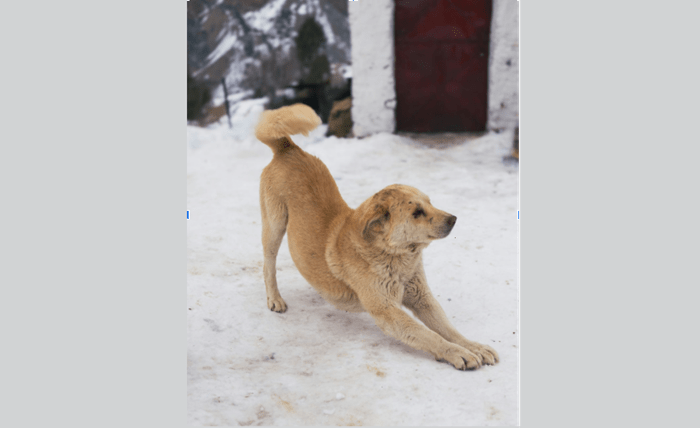
Let’s start with one of the best things a dog can do—the play bow. You’ll know it when you see it: front legs stretched forward, bum in the air, tail wagging like mad. This is the canine equivalent of saying, “Let’s muck around!” It’s friendly, it’s goofy, and it’s an open invitation to play.
Now flip that. A frozen stance, where the dog stands stiff as a board, weight balanced or leaning ever so slightly forward—this isn’t curiosity. This is tension. This is your dog clocking something they’re unsure about, sizing up the situation, and possibly preparing to react.
Cowering, slinking back, or tucking themselves low to the ground usually means fear or discomfort. It’s their way of making themselves smaller, less noticeable, or retreating from a situation they want no part of.
On the flip side, if your dog leans into you, rests their chin on your knee, or nudges their head under your hand—they’re not just being sweet. They’re looking for reassurance or comfort, especially if something’s thrown them off. It’s easy to miss, but it’s a real moment of connection when you spot it.
Growls, Whines, and Barks
Dogs aren’t silent creatures—they’ve got a whole plethora of vocalisations that changes depending on what they need, what they want, or how they feel.
Everyone hears a dog growl and thinks, “Oh no, he’s about to bite!” But growls aren’t always about picking a fight. They’re more like your dog’s way of saying, “Hey, back it up a bit,” or “I’m not loving this.”
Some growls are even part of play—especially during tug-of-war or wrestling with another dog. The trick is to listen to the tone and watch the body. Loose posture and a wagging tail? Probably just roughhousing. Stiff body and curled lip? That’s serious—give them space.
Barking is trickier, because it can mean just about anything. Fast, sharp barks usually signal alert mode—something’s moved outside, or they’ve heard a noise that doesn’t belong. Slower, more drawn-out barking might be boredom, especially if you’ve left them alone too long and they’re trying to get someone—mainly you—to notice.
And then there’s whining. Soft, persistent, and often paired with pawing or pacing, whining is usually your dog trying to tell you, “I need something,” or “I’m not feeling settled.” They might be hungry, want attention, or maybe even in pain.
Putting It All Together
A single signal doesn’t always tell the full story—it’s the mix of posture, movement, expression, and even what’s happening around your dog that paints the clearest picture of what, exactly, they want to communicate.
Say your dog’s tail is wagging—great, right? But if their body’s stiff, ears are pinned back, and their eyes look tense, that tail wag might be more of a “I’m nervous, but trying to hold it together” rather than a “Yay, this is great!”
Context matters. Is your dog in a new place? Did a stranger just walk in? Did something loud go off nearby? All of that colours their body language and gives you clues as to what’s going on behind those puppy-dog eyes.
One of the smartest things you can do as a dog parent is get to know your dog’s normal. Every dog has a baseline—how they stand, move, breathe, and act when they’re feeling good and comfortable. Once you’ve got that locked in your mind, any shift from that becomes easier to spot.
And once you do notice those shifts—respect them. If your dog’s asking for space, give it. If they’re leaning in for comfort, be there. If they’re stressed by something new, don’t rush them through it. Communication goes both ways, and the more you honour their signals, the more trust you’ll build.
Your dog might not speak your language, but they’re always trying to tell you something—if you know what to look for.