

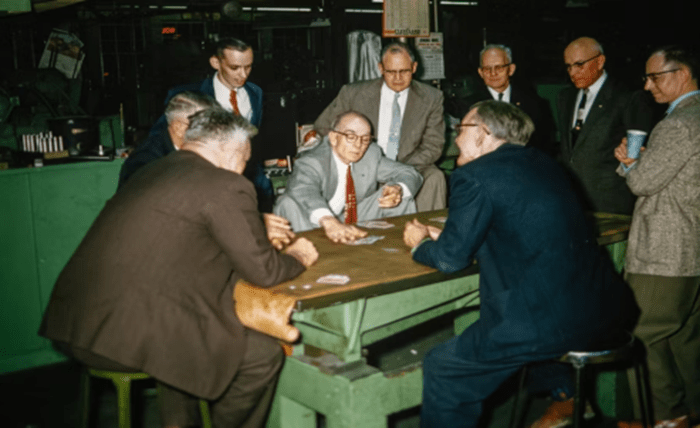
Poker is widely understood as a game combining skill, chance, and psychology. To truly excel, players must grasp the fundamental mechanics and develop proficiency in reading their opponents.
However, the rapid pace of poker, particularly in high-stakes environments, can easily lead to players feeling overwhelmed by the sheer volume of information. This is precisely where a minimalist approach to poker psychology can prove exceptionally valuable.
You can establish a notable advantage at the table by deliberately focusing on the most crucial elements: body language, actions taken, and the most indicative details.
A minimalist approach does not advocate for abandoning strategy or thoughtful play; instead, it emphasizes streamlining your attention to the most revealing clues that can offer insight into your opponents’ potential hands, current mindset, and likely strategies. Let’s explore how embracing minimalism can enhance your ability to read your poker opponents effectively.
Body Language: Understanding the Subtle Tells
A player’s body language is one of the most potent nonverbal indicators in poker. While some individuals may skillfully attempt to mask their emotions or intentions, certain physical behaviors can inadvertently reveal them. A minimalist perspective suggests concentrating on the most prominent and consistent tells – those that consistently provide reliable information regarding a player’s psychological state and hand strength.
Consider, for example, observing changes in posture when a player is likely holding a strong hand. They might sit straighter or slightly lean forward, signaling enthusiasm or confidence. Conversely, a more relaxed or slouched posture could indicate nervousness or a lack of significant interest in the current hand. Paying close attention to these subtle cues can give you an early strategic advantage.
Another significant body language tell involves how a player interacts with their chips. Fidgeting with chips, particularly before making a decision, might suggest uncertainty. In contrast, a player who quickly moves their entire stack into the pot with minimal hesitation could be projecting confidence or, in some instances, attempting to intimidate others.
The minimalist strategy in this area involves training yourself to identify these small yet revealing signals while consciously avoiding distraction by minor, inconsequential movements that do not offer actionable information.
Prioritize Actions Over Verbal Cues
Poker is frequently characterized as a game defined more by action than dialogue. Your opponent’s actions can communicate significantly more information than anything they say.
Indeed, players who engage in excessive chatter may unintentionally expose aspects of their strategy or bluffing attempts. A minimalist approach to poker psychology involves filtering out this extraneous “noise” and concentrating on the critical actions, specifically, betting patterns, the timing of their decisions, and their overall conduct during pivotal moments in the hand.
A prime illustration of this principle is the concept of “bet sizing.” Carefully observe the amount your opponent wagers relative to the pot size. A small bet might hint at a weaker hand, while a larger bet could signal strength or an attempt to bluff. Observing these betting patterns over time allows you to identify trends and make more informed judgments about the likely strength of your opponent’s hand.
Monitoring the timing of actions is also crucial. Quick betting might suggest confidence or a hasty decision, whereas slower, more deliberate actions could indicate that your opponent is carefully evaluating their options. The minimalist approach here is to disregard irrelevant conversation or gestures and instead focus intently on the decisions that truly impact the game’s trajectory – the actions taken.
The Power of Discernment
The poker game presents numerous small details that could offer insight into an opponent’s hand. Still, it’s important to recognize that not all of these details are equally significant. A core tenet of the minimalist approach is cultivating the ability to focus exclusively on the most important information.
This requires actively ignoring distractions and sharpening your capacity to identify genuinely useful patterns for making better decisions.
One such detail is how your opponent reacts to different situations. For example, if a player briefly raises their eyebrows upon looking at their hole cards, it might suggest surprise or excitement.
Conversely, an opponent who immediately checks or folds after reviewing their hand might appear bored, potentially indicating a weak hand. The minimalist strategy here involves filtering out irrelevant details and focusing solely on the most telling indicators of your opponent’s behavior.
Another area that warrants focused attention is the physical environment and a player’s interaction. Players often unconsciously reveal information through how they handle their cards, stack their chips, or even their positioning at the table.
By narrowing your attention to these specific areas, you can acquire valuable insights that can inform your strategic approach and help you anticipate your opponents’ subsequent moves.
Minimalism in Practice: Insights from the WorldPokerDeals
Examining resources like WorldPokerDeals that provide WPT Review offers an excellent demonstration of poker psychology applied effectively. The World Poker Tour features elite players skilled at interpreting body language, understanding betting patterns, and discerning essential details from the non-essential.
Many professionals intuitively apply minimalist principles to their game, optimizing their decision-making processes by eliminating unnecessary distractions and concentrating on the most pertinent information.
By observing how professional poker players interact within their environment and with their opponents, you can gain significant insight into how a minimalist mindset can enhance your ability to read the dynamics at the table. The WPT provides clear examples of how focusing on body language, actions, and key details empowers experienced players to outmaneuver their opponents and secure substantial pots.
Conclusion
A minimalist approach to poker psychology can substantially improve your capacity to read your opponents. Concentrating on body language, actions, and crucial details while filtering out extraneous distractions can give you a distinct competitive advantage at the poker table. This mindset encourages focused observation of the most significant cues, enabling you to make more informed decisions and maintain a strategic edge over your opponents.
Ultimately, poker demands patience, keen observation, and a well-thought-out strategy. By practicing a minimalist approach, you can refine your ability to read opponents more accurately, enhancing your prospects for success in any poker game.