

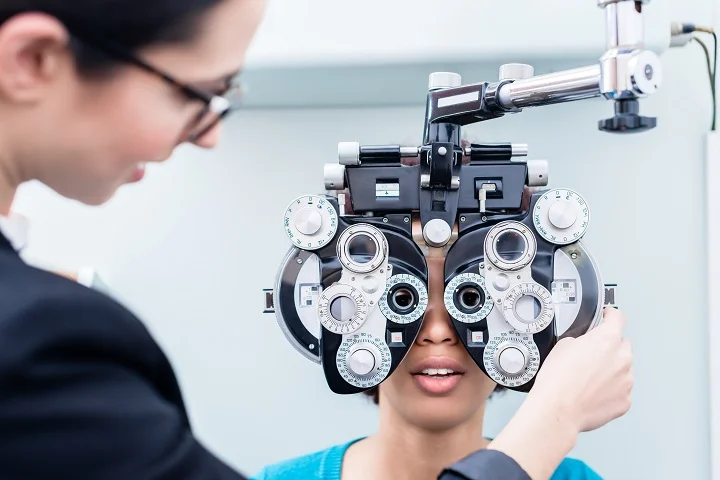
A refraction test is a type of vision test that helps determine how eyes are refracting light. With this test, your eye doctor can determine whether you need glasses or contact lenses. A refraction eye exam is a rapid and painless procedure that is part of an eye examination.
Why Is a Refraction Eye Exam Performed?
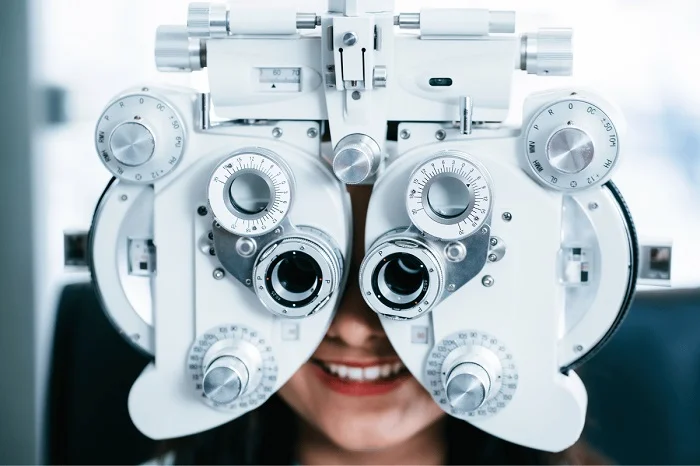
A refraction test can help detect vision problems that occur due to reduced eye power to refract light
Eye problems that can be detected with a refractive test include:
- Myopia
- Hyperopia
- Astigmatism
- Presbyopia
The eye exam can help the eye doctor determine how much the eye lens should bend light to regain clear vision.
How Does the Test Work?
An eye doctor will ask you to look at an eye chart from a distance. You will look through a special device called a phoropter. You will be asked to make comparisons so as to find out the exact prescription for your vision. The comparisons will include:
- Which is clearer?
- Option one or two
- Are they the same?
Your doctor will make necessary adjustments to the trial frame and the phoropter until they can help you see clearly.
What Equipment Is Used?
The following equipment is used for a refraction eye exam:
- Phoropter
- Eye chart
- Retinoscope
- Automated refractor (in some clinics)
How Long Does the Test Take?
The refraction test takes approximately 10 to 20 minutes depending on the other eye examinations that you may need.
Is the Test Painful?
A refraction test is a painless and a non-invasive procedure. The skin is not peeled in this procedure and there are also no other painful activities that are involved. In most cases, people do not feel anything during this test.
Do I Need Eye Drops?
You do not usually need eye drops for a refraction examination. However, children may need special drops so as to relax their eyes. For a comprehensive eye examination, your pupils may need to be dilated using special cycloplegic eye drops.
What Eye Diseases or Deficiencies Can It Detect?
The refraction test can help detect eye problems that are associated with reduced eye power to refract light. Eye problems that may be detected include:
- Myopia
- Hyperopia
- Astigmatism
- Presbyopia
The test cannot detect eye problems such as glaucoma. Ensure you request a comprehensive eye examination if there is a possibility that you are suffering from eye problems.
How Often Should You Get a Refraction Eye Exam?
A refraction eye exam can be performed once every year or every other year depending on how fast your vision is changing. It is always best to leave it to the eye doctor to determine when you need to get your eyes examined again depending on your eye problem. Moreover, people with diabetes and others who are more likely to develop eye problems need to get their eyes tested more often.
How to Prepare for Your Appointment
The following are some of the ways you can prepare for your eye specialist appointment:
- Bring your contact lenses or glasses
- Talk to the doctor about your vision changes
- Bring your list of medications
- Ask the doctor about your headaches or any other discomforts you may be experiencing
Your preparation helps the doctor determine your needs.
A refraction eye exam is one of the most common procedures that are done during an eye examination. It helps the optometrist determine the extent to which your eyes are nearsighted or farsighted as well as the prescription needed when getting glasses or contact lenses. A refraction test is a rapid and painless procedure that can take up to 20 minutes. Refraction exams are important as they help detect changes in vision over time. It also helps you see more clearly.
FAQs
Is a refraction eye exam the same as a regular eye exam?
A refraction eye exam is different from a regular eye exam. An eye exam can consist of a refraction test to determine the lens prescription one needs. However, the full eye exam is different from a refraction test as it looks at other aspects of eye health.
Can a refraction test detect glaucoma?
A refraction test cannot detect glaucoma. Visual field tests and tonometry tests are some of the tests that can help detect glaucoma.
Do I need a refraction eye exam every year?
A refraction eye exam is essential in detecting vision changes, especially as you age. It is best to consult with your optometrist on how often you need a refraction eye exam.
Can my child have a refraction eye exam?
Yes, your child can have a refraction eye exam. The exam is important as it ensures that they have the right prescription for their vision needs.