

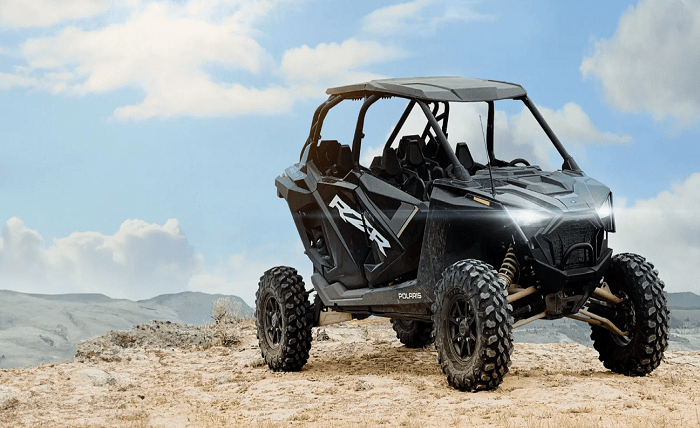
Imagine the engine as the heart of your UTV, pumping out all that horsepower and torque. But that energy needs to get from the engine to the tyres so your machine can move forward. That’s where the drivetrain steps in. It’s a system of components that work together to transfer this power, often incorporating multiple parts, such as:
- The Engine: It all starts here! This is where the combustion happens, producing the rotational force we need. UTV engines range from small singles to larger parallel twins or V-twins, depending on the make and model of the vehicle.
- The CVT (Continuously Variable Transmission): Many UTVs use a CVT rather than a standard transmission with set gears. It’s a system of pulleys and, of course, a belt (that’s where we come in), and it allows the UTV to continuously shift through an infinite number of ratios, keeping the engine in the optimal power band.
- The Clutch: While some might argue that the clutch is actually part of the CVT (and they are closely connected), this unit connects and disconnects the engine’s rotational force from the CVT system. There are various styles depending on the UTV, such as centrifugal or wet clutch types, or even a mix of both.
- Drive Shafts/Axles: Once power has left the CVT system, these rods transfer the torque to the UTV’s differentials. They are essential for ensuring the rotational movement and energy can travel from the CVT or transmission out to the wheels, depending on your UTV setup.
- Differentials: UTV’s often employ two or more differentials to adjust for changes in the individual wheels as you are traveling. For example, when going through a tight turn the inner and outer wheels have different distances to cover in the turn. Differentials allow each tyre to rotate at the right speed for the movement that you’re attempting. Some of these differentials may be manually lockable or automatic.
- Wheels & Tyres: The final stage where all the action results in actual motion. The wheel’s energy and the tread of the tyre give you the ability to go anywhere.
The Drive Belt: Why It’s Important
Now, let’s zoom in on that crucial part: the UTV drive belt. If you look at the CVT, it has two pulleys, one connected to the engine and one to the transmission (or gearbox). These pulleys are sometimes called sheaves. As the engine speeds up, the first pulley squeezes the drive belt outward, which forces it into a higher ratio with the other pulley.
As speeds decrease or an upshift is requested by the operator (via acceleration input), then this ratio is decreased on the two pulleys of the CVT, and you change your overall speed.
Here’s why the drive belt is important:
- Transfer of Power: The belt acts as a direct connection, transferring the rotational motion of the engine to the drivetrain, without needing meshing of gears in the transmission (since many UTV’s do not use gears).
- Continuous Gear Changes: Unlike a traditional geared transmission, the CVT belt, via the pulleys in the system, is responsible for allowing a very wide range of ratio changes and speeds without noticeable jumps from one ratio to another. This is what gives that “seamless acceleration” feel many owners appreciate about the system.
- Smooth and Precise: The use of belts provides smooth and almost imperceptible gear changes without any rough clanking or slipping of meshed gear teeth, as in a more typical manual gearbox design.
Belts Aren’t Indestructible
UTV belts take a fair bit of punishment, operating under high-heat, high-stress conditions in some models. Depending on the UTV, drive belts are responsible for holding the rotational transfer of power for hundreds of horsepower or even just a more mild 30 horsepower motor, and often with very abrupt on-off loads as well as massive traction.
This high-intensity load, the massive amount of tension on the belt and overall exposure to harsh outdoor environments makes these belts prone to issues including wear and breakage. If your belt is not taken care of and maintained with some minimal level of oversight, it will eventually wear out. When a belt wears, that causes the belt to no longer have the needed properties for your CVT to function properly.
Here are a few causes and results of wear or problems in UTV drive belts:
Heat
Constant high speeds generate heat. All the tension on the belt in the transmission pulley, while transferring engine output to the tyres, causes heat on the drive belt that, if left unattended, can deteriorate it over time. Too much heat causes issues that cause cracks, weakening, and failure. Proper cooling of the belt area in the CVT case is needed to ensure belt longevity.
Slippage
A slipping belt isn’t engaging properly on the CVT pulleys. This slippage creates additional heat, exacerbating belt failure. Common reasons for slippage include improperly installed belts,
overloading your UTV (check manufacturer weight limits) and high mud or water environments that make it more difficult to get your vehicle rolling and make the belt have more pressure.
Incorrect Installation
Just because the belt will fit doesn’t necessarily mean that it has been installed correctly or even fits your specific year and model of UTV. Double-check everything. Installation may vary slightly depending on the model and should follow specific OEM and or replacement procedures closely.
Damage and Age
Over time a belt’s material can dry rot or experience damage in certain areas as a result of usage. This damage will then slowly increase in size until the material eventually separates at the weak spot. Always look at your belt if there’s reason to think something may be amiss with your CVT or its operation.
Incorrect Driving
While not often considered, a huge problem with many drive belt failures is a direct correlation to a bad riding style, as it does impact all elements of your drive train, and it’s usually related to a lead foot in your driving, rapid shifts between throttle and brakes or heavy load over and over without pause. Try to be smooth and intentional when accelerating to increase longevity of your UTV belt.
What to Do About Belt Problems
Like many aspects of vehicle maintenance and ownership, understanding common failures of drive belt is important. Here are some actions you should consider:
- Regular Checks: Make a visual check part of your regular UTV maintenance, especially prior to every big trip. Take off the case and look over your belt; keep it cleaned.
- Correct Belts: Buy high-quality, model-specific belts. Some aftermarket brands are designed for greater belt strength or better temperature performance for performance uses of your UTV. Check specs to make sure you match the OEM standard for a daily vehicle, and do research when changing away from a standard design to get proper use.
- Proper Installation: Adhere to the manufacturers install specs; otherwise the drive train will likely be harmed further by having the incorrect placement on the tensioned pulleys, so it may slip and become overly warm if tension is miscalculated.
- Preventative Measures: Always give the belt a good cooling period as to not overheat it or warp it (especially when loaded down heavily and using it often).
- Belt Change: Have a spare readily available so a quick change out may be possible at a trail side or back at camp as well as the tools and knowledge of how to change out the belt safely in either situation.
More Than Just the Belt
While the drive belt is key, it’s important to remember that it’s part of a larger system. Making sure everything in your UTV’s drivetrain is properly maintained and serviced (or replaced when worn) will keep your off-road adventures running smooth. That includes routine lubrication or checking and replacing various items, such as clutch springs, clutch plates, CV axle boots, the diff case or various items inside of your differentials.
Don’t get caught off guard with preventative maintenance or be caught without basic trail repairs due to not checking items beforehand, especially the drive belt. It is a crucial element in the operation of your UTV, after all, so understanding it will give you a much greater level of fun when operating.