

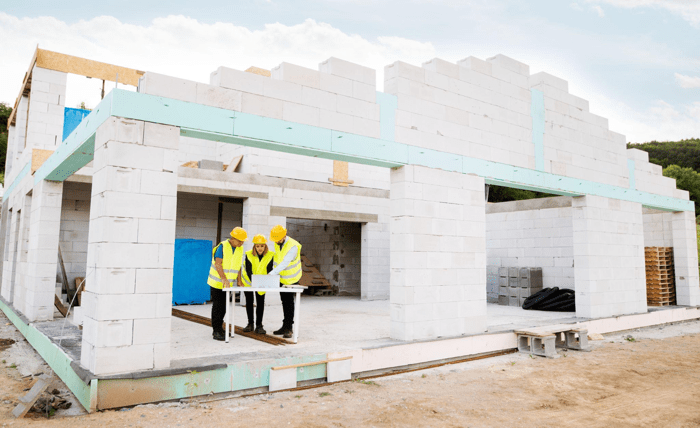
- Construction delays often stem from small, compounding setbacks
- Gaps in communication between builders and clients fuel frustration
- Regional builds face extra delays due to access, weather, and approvals
- Homeowners can help by finalising decisions early and responding quickly
You probably started with a clear idea of when you’d move in. Perhaps the builder provided you with a concise 6- or 8-month estimate, which felt realistic at the time. You signed the contract, watched the site get cleared, and thought, Great, we’re on track. But weeks pass. Framing takes longer than expected. The bricklayers disappear for ten days. And suddenly, the timeline starts to stretch without an apparent reason.
It’s not that builders are trying to stall or that your project is being neglected. It’s that the construction process runs on more moving parts than most people realise. Timelines are set based on ideal conditions, but very little about a live site is perfect.
The dream timeline vs real-world delays
Every home starts with a promise of structure — a timeline broken into stages: site prep, slab, frame, roof, lock-up, and finishing. These steps are common across most residential builds, and they look predictable when plotted out. But in practice, they rarely unfold, much like overnight courier schedules, that cleanly.
A big part of the gap between plan and reality comes from how estimates are made. Builders base their timelines on best-case scenarios. Dry weather, full trade availability, no permit holdups, no design changes. It’s not deceptive; it’s just optimistic, because there’s pressure to give a competitive timeline at the quoting stage.
What slows things down are the subtle gaps between tasks. One crew finishes on a Friday, but the next isn’t available until the following Thursday. Materials arrive early and get damaged on site. Inspectors run behind. These aren’t major disruptions in isolation, but they add up. Delays compound quietly.
And then there’s the bigger picture. Construction is not linear. It’s a chain of dependencies. A short delay early on can push everything back by weeks because the later stages are locked into subcontractor schedules that cannot be adjusted at the last minute.
Why things rarely go to schedule
Most Australian homeowners don’t realise how many variables can influence the pace of their build. Rain delays are the obvious culprit — especially in coastal and regional areas — but they’re just the start. Even something as simple as waiting for scaffolding to be delivered can pause progress for days.
Local councils may process your build permit in three weeks, or they may take double that. A concrete pour may be rescheduled at the last minute due to issues with the batching plant. Framing crews are often stretched thin across multiple sites and may not return exactly when expected. It’s not mismanagement; it’s just how the industry operates under pressure.
Even a typical house construction schedule Australia builders refer to is more of a template than a guarantee. It’s a guide built on average conditions. However, most sites encounter a mix of variables that divert them from that ideal track. Once a delay hits, catching up becomes tricky. Trades are rarely waiting around for a job to resume — they’ve already moved to the following site.
This is why frustration builds not just from the delays themselves but from the lack of clear updates. You expected cabinetry to start this week. You drive past, and nothing’s changed. Without real-time communication, it’s easy to feel like the build has stalled completely, even if it’s just waiting for the next booked trade to return.
The contractor-client disconnect
Much of the frustration surrounding timelines stems from mismatched expectations. Homeowners often picture the build as a steady, daily progression. Something is happening on-site every day, with trades flowing one after the other. Builders, on the other hand, know that gaps are normal — even necessary — to allow for inspections, curing times, or just scheduling logistics.
This disconnect can lead to tension. You might assume that a delay means something has gone wrong, but from the builder’s side, it could be part of the plan. Or worse, no one tells you why things have slowed down, which only fuels uncertainty. If you don’t hear from the site supervisor, it’s easy to assume nothing is being done behind the scenes, even when materials are being ordered or paperwork is being processed.
The bigger issue is communication rhythm. Builders are often juggling multiple jobs, while homeowners are focused entirely on one. If the supervisor doesn’t call, you’re left in the dark. And if you push for constant updates, you risk clogging up the workflow. It’s a tricky balance, especially when there’s little transparency into what’s causing the gaps.
Variations are another sticking point. You decide to upgrade your kitchen cabinetry or shift a wall slightly. It seems minor, but each change triggers new approvals, drawings, possibly even inspections. That small tweak can stall trades and push back dependent stages by a week or more. These compounding shifts are rarely obvious unless someone walks you through the implications step-by-step — which doesn’t always happen.
Regional builds and seasonal setbacks
If your site isn’t in a metro zone, the challenges multiply. In regional or semi-rural areas, there’s often a smaller pool of subcontractors, and they’re already stretched thin. That means longer wait times between stages and less flexibility if something needs to be redone or corrected. You might need to wait for a concreter to drive in from the next town, or for your electrician to finish a job two hours away before he returns.
Seasonal patterns have their own impact. In Queensland, wet season can put slabs on hold for weeks. In Victoria, winter slows down everything from bricklaying to roof tiling. Even if work continues through the rain, some stages can’t be done safely or to standard if conditions aren’t right. That includes things like painting, exterior rendering, or setting up trusses during high winds.
Council approvals can also take longer outside major centres. Some regional councils operate on smaller teams or limited service days, so a variation that might clear in a few days in the city could take over a week elsewhere. These aren’t dramatic hold-ups in isolation, but they layer into the overall timeline.
What’s more, rural deliveries often run on tighter logistics. One missed delivery window can mean your framing timber arrives three days late because it’s bundled with stock for multiple sites on a single route. Builders plan for this as best they can, but transport delays are harder to absorb in remote builds.
What you can actually control
While a lot of the timeline is shaped by factors outside your hands, there are a few areas where your decisions can make a measurable difference. Builders often cite client responsiveness as one of the biggest influences on momentum. When selections are made early and variations are kept to a minimum, it helps the team plan ahead with confidence.
Design choices that seem small — tapware, cabinetry handles, even door swings — often require lead times or updated drawings. If those decisions are left too late, trades can’t proceed, even if everything else is ready. The earlier these calls are made, the easier it is to lock in suppliers and stay aligned with the schedule.
Another common delay point comes from late-stage changes. Swapping tiles or reconfiguring a bathroom layout sounds minor, but can trigger flow-on effects. Waterproofing might need to be redone, cabinetry altered, or electrical plans reissued. These changes don’t just affect one trade, they knock into several.
It also helps to be decisive and responsive during the build. Your builder might need approvals or sign-offs on short notice, and slow replies can mean missing a booked trade slot. Being available to make quick calls — or at least giving your builder pre-approval to proceed within certain boundaries — can smooth things over more than most people realise.
Conclusion
Even when everything is carefully planned, builds rarely unfold in a straight line. Timelines drift not because people aren’t doing their jobs, but because construction is full of interdependencies that don’t always behave. The better you understand how delays arise, the easier it is to stay calm, informed, and ready to act where it counts.