

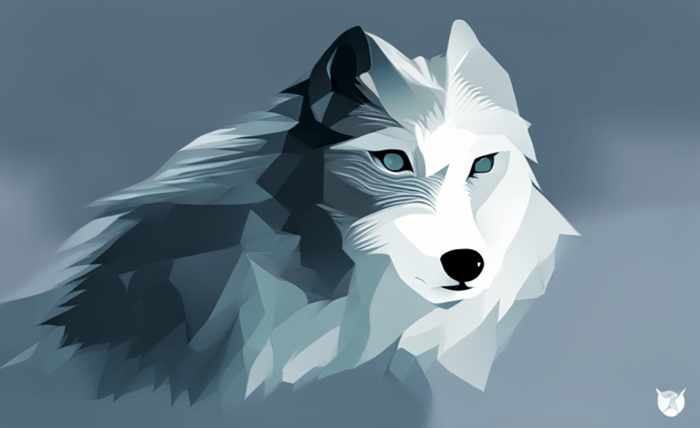
Drawing a wolf is a rewarding challenge for any artist. Wolves are majestic creatures embodying both strength and mystery. Capturing their essence on paper requires attention to detail, an understanding of anatomy, and a bit of artistic flair. In this article, we’ll walk you through the process of drawing a wolf, from the initial sketch to the final touches, and we’ll include some beautiful paintings of wolves for inspiration.
1. Understanding Wolf Anatomy
Before you start drawing, it’s essential to understand the basic anatomy of a wolf. Wolves are muscular animals with strong legs, a broad chest, and a thick neck. Their faces are characterized by pointed ears, sharp eyes, and a long snout. Studying reference images or observing wolves in nature (or even in videos) can help you grasp these details.
Painting Insight: In the painting “Lone Wolf in the Forest,” the artist captures the muscular build and powerful stance of a wolf. Notice how the posture reflects the animal’s alertness and strength, which you’ll want to incorporate into your drawing.
2. Sketching the Basic Shapes
Start with simple shapes to lay out the wolf’s body. Draw an oval for the head, a larger oval for the chest, and a smaller one for the hips. Connect these with a line to form the spine. Add lines for the legs and a long, curved line for the tail. These basic shapes will serve as the foundation for your wolf drawing.
Painting Insight: In the painting “Wolf in the Wild,” the artist uses soft lines to define the wolf’s posture before adding details. This approach can help you create a more dynamic and accurate representation of the animal.
3. Refining the Outline
Next, refine your sketch by adding the wolf’s facial features and defining the shape of the body. Pay attention to the position of the ears, eyes, and snout. For the body, emphasize the curves and angles of the legs, neck, and back. At this stage, it’s crucial to capture the wolf’s proportions accurately.
Painting Insight: The painting “Silent Hunter” shows a close-up of a wolf’s face. Notice how the artist focuses on the sharpness of the eyes and the texture of the fur. These are key elements to keep in mind as you refine your drawing.
4. Adding Details
Now that you have the basic structure, it’s time to add details. Start with the fur, using short, quick strokes to create texture. Wolves have a thick coat, so layer your lines to give the impression of depth and volume. Don’t forget to add the details of the paws and claws, as well as the subtle shading around the eyes and nose to give the face dimension.
Painting Insight: In “Winter Wolf,” the artist uses varying line thickness and shading to create the wolf’s dense fur and intense gaze. You can achieve a similar effect in your drawing by varying your pencil pressure and using blending techniques.
5. Shading and Final Touches
Shading is essential to bring your wolf drawing to life. Identify the light source in your scene and add shadows accordingly. Use softer pencils for shading and a blending stump to smooth out the transitions. Pay special attention to the areas around the face, chest, and legs where the fur overlaps and creates natural shadows.
Painting Insight: The painting “Shadow of the Pack” uses light and shadow to create a dramatic effect, highlighting the wolf’s powerful presence. In your drawing, use shading to emphasize the wolf’s muscular build and the texture of its fur.
6. Adding Background Elements
If you want to take your wolf drawing a step further, consider adding background elements such as trees, mountains, or a moonlit sky. These elements can enhance the overall composition and create a more immersive scene.
Painting Insight: In “Howling at the Moon,” the artist integrates the wolf into a nighttime scene, using the background to add context and mood. Think about how you can use the background to tell a story or enhance the atmosphere of your drawing.
Final Thoughts
Drawing a wolf is an excellent way to hone your skills and explore the beauty of wildlife art. By following these steps and studying wolf paintings for inspiration, you can create a drawing that captures the spirit and power of this magnificent creature. Remember, practice is a key. Each time you draw a wolf, you’ll better capture its unique characteristics and bring it to life on paper.