

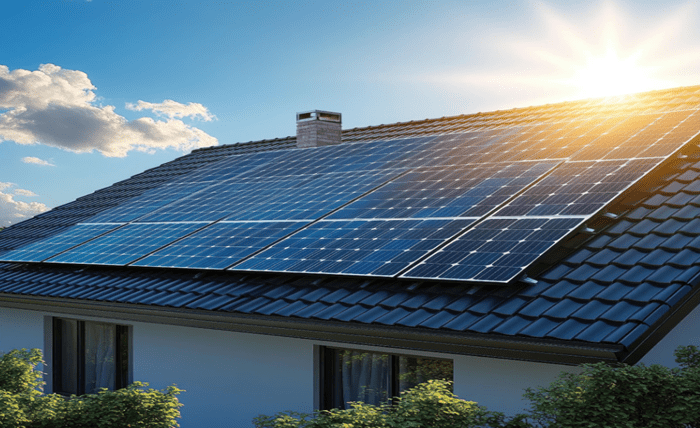
This guide discusses how solar roof financing can save you money in the long run, the types of funding available, and some essential tips on maximizing the benefits of solar energy.
The demand for renewable energy solutions is steadily increasing, and solar roofs are at the forefront of this transition. However, the high costs of installing a solar panel system are a conflicting factor in homeowners’ decision-making. Roof finance, therefore, comes into play.
Roof financing allows homeowners to spread the costs of their solar installation so that it becomes affordable. At the same time, one can still enjoy long-term benefits such as tax benefits, reduced energy bills, and increased property values.
The Financial Benefits of Solar Roof Financing
These are some of the benefits of solar roof financing:
Eliminating Upfront Installment Cost
The cost of installing a solar roof range from $15,000 to $25,000, depending on the system’s size and location. Most homeowners cannot afford to purchase everything upfront. Roof financing allows the installation of solar panels without a huge initial investment, thus improving solar access.
Lowering Monthly Energy Bills
Another great benefit of solar energy is the percentage discount it affords on monthly electric bills. Most homeowners report saving at least 50% on electricity bills when switching to solar. In 20 to 30 years, this adds up to savings worth tens of thousands of dollars.
Benefit from Government Incentives
Numerous federal, state, and local government incentives exist to hasten the adoption of solar energy. These include:
- Federal Solar Investment Tax Credit (ITC): Homeowners can deduct thirty percent of their solar installation cost from their federal taxes.
- State and Local Rebates: Most states have rebates designed to offset installation costs further.
- Net Metering: Homeowners here sell excess solar energy back to the grid, saving even more.
Boosting Property Value
Houses with solar panels generally sell faster and for a higher price than homes without. According to a1solarstore, a Zillow study assesses that homes with solar energy systems sell for around 4 percent more than comparable non-solar homes.
An Overview of Different Solar Roof Financing Options
There are many ways to finance a solar roof installation, and the best choice varies for different people based on their budgets, financial goals, and long-term plans.
Solar Loans: Own Your Solar System with Flexible Payments:
Solar loans are similar to home improvement loans in that they allow the homeowner to buy and own the solar system and pay for it over time.
Types of Solar Loans:
Secured business Loans: Loans backed by collateral, such as a home equity loan.
Unsecured business Loans: Loans without collateral or guaranteed guarantee. The interest rates are usually higher.
Pros:
You own the system and can take advantage of all tax incentives available.
- No large upfront costs
- Monthly savings on energy bills to help offset loan payments
Cons:
- No significant drawback here, except good credit is needed to obtain low-interest rates.
- Maybe on the high side for monthly payments
Solar Leases: Low Upfront Costs, but No Ownership
With a solar lease, a third party owns the system, and the homeowner pays a flat monthly fee for electricity use.
Pros:
- Little or no upfront payment
- The leasing company handles maintenance and repairs
- Electricity bills are lower than traditional utility rates
Cons:
- You don’t own the system, so no tax credits
- There is a possibility that monthly payments will increase
Power Purchase Agreements (PPAs): Pay for the Energy, Not the System
PPAs allow homeowners to pay for the energy generated from the system rather than the system itself. The rates are usually lower than regular utility rates.
Pros:
- No upfront payment
- No maintenance costs
- Lower electric rates than standard utilities
Cons:
- No ownership of the system
- Savings may be less than an owned system
Interest-Free Roof Financing: Pay Overtime Without Interest
Some solar system service providers offer interest-free roof financing, enabling the homeowner to make payments over time without any financing cost.
Pros:
- No additional cost for financing
- Monthly payments are fixed
- More accessible to solar homeowners
Cons:
- May require a high credit score
- Shorter repayment terms can mean higher monthly payments
Alternate Ways to Finance Solar Roofing
Along with conventional roof financing, there are many creative ways to fund solar installations.
Financing for Roofing Companies
Some roofing contractors offer in-house financing, allowing homeowners to install solar roofs with flexible payment plans. Financing for roofing companies often includes low-interest or zero-interest options, making it easier to afford the upgrade.
Government & Utility Programs
Many local utility companies offer interest-free roof financing or rebates for installing solar energy systems. Researching local programs can lower installation costs.
Home Equity Loans & HELOCs
If you have equity in your home, using a home equity loan or home equity line of credit (HELOC) can provide a low-interest way to finance your solar roof.
Maximizing Solar Roof Investment
These are some of the ways you can maximize the investment:
Pick Your Solar Installer Wisely
A trustworthy installer will ensure the highest-quality panels, an efficient installation, and access to the best roof financing.
Compare Financing Options
Don’t settle for the first financing option you find. Compare solar loans, leases, PPAs, and government incentives to find the best fit for your situation.
Improve Energy Efficiency
To further reduce electricity consumption, consider making energy-efficient upgrades to appliances and insulation before installing solar panels.
Monitoring Energy Usage
Most financing plans for solar equipment will provide monitoring systems to help homeowners observe energy savings and maximize efficiency.
Final Thoughts
Investing in solar energy is a long-term financial and environmental decision, and roof financing makes it possible for more homeowners. Though the initial instalment cost is high, it can financially benefit you in a longer run.