

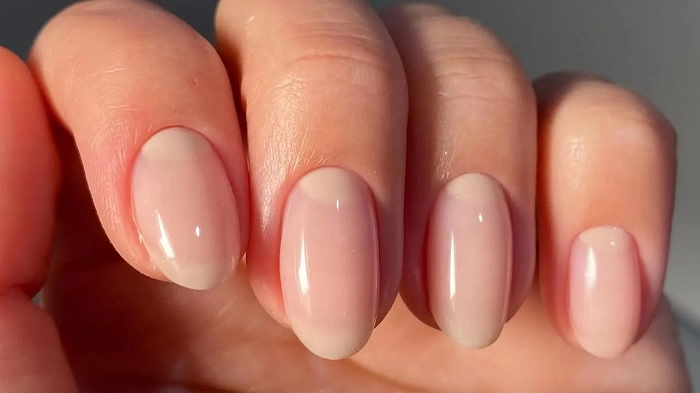
probably seen them on TikTok or Instagram — those impossibly clean nails with zero visible cuticle, smooth polish applied right up to the skin, looking like they were painted on with a surgeon’s precision. That flawless finish is almost certainly the result of a Russian manicure.
But what exactly is a Russian manicure, how is it different from a regular gel manicure, and — maybe most importantly — is it actually safe? There’s a lot of conflicting information out there, and some of it is dangerously misleading.
This guide covers everything: the technique, the steps, the real costs, how long it lasts, who it’s right for, and the honest, unfiltered truth about the risks. By the time you finish reading, you’ll know more than most nail techs will ever tell you.
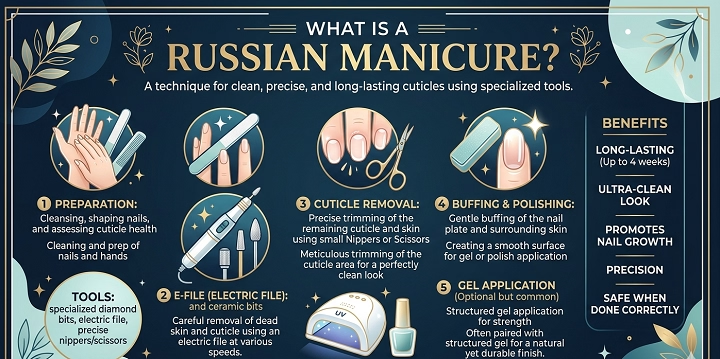
What Is a Russian Manicure?
A Russian manicure — also known as a dry manicure or an e-file manicure — is a technique where nail technicians use an electric drill bit to file down the cuticles and shape the nails without water.
That “without water” part is a bigger deal than it sounds. Traditional manicures start by soaking your hands in warm water to soften the cuticle. The Russian method skips that entirely. Instead, nail techs use almost exclusively an electric file with diamond bits to clean up the cuticles with precision that manual tools simply can’t match.
The result is a nail bed that looks almost artificially perfect — cuticle-free, smooth, and elongated. Polish or gel is then applied closer to the skin than in a traditional manicure, which is a big part of why the finish lasts so much longer.
It originated in Eastern Europe and combines cutting implements and e-file bits to perform the preparation — all dry, with no soaking involved. After all the nail prep is finished, the manicure continues with a structured gel overlay application.
One important thing worth clarifying early: a Russian manicure is not a style of nails, like a French tip. It’s a technique that produces a specific result. You can have any nail design, color, or length on top of it.
Where Did the Russian Manicure Come From?
Despite its recent explosion in popularity, the Russian manicure technique has been around for years in Eastern Europe, where nail artistry is known for its precision and high standards. It only recently made its way into mainstream salons around the world, thanks to social media and growing demand for longer-lasting, clean nail looks.
Russia and surrounding countries have long had a culture of treating nail care as a real skill — more akin to an art form than a quick salon service. The e-file technique was already standard practice in Eastern European nail schools long before it started trending on Western social media. When the aesthetic started circulating on TikTok and Instagram in the early 2020s, demand exploded almost overnight.
How Does a Russian Manicure Work? The Step-by-Step Process
This is where most articles get vague. Let’s actually break it down.
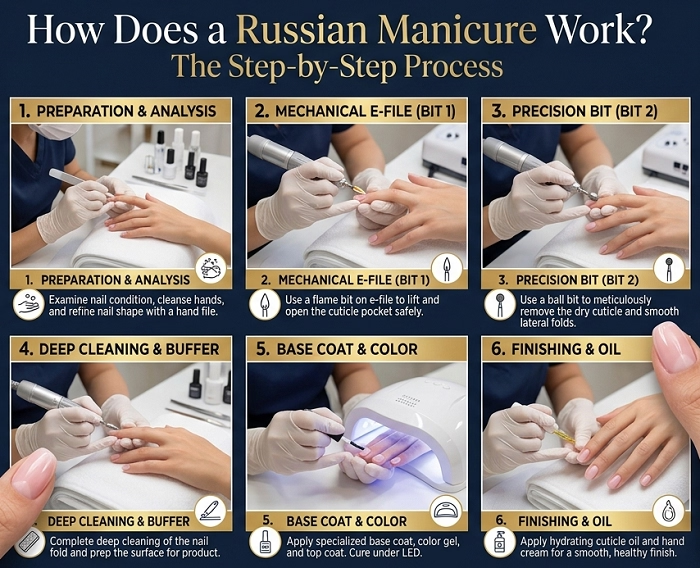
A licensed nail technician and educator, Paola Ponce, who specializes in dry e-file manicuring and structured gel overlays, outlines the technique as a 6-step process that creates the perfect outcome.
Here’s what actually happens during a session:
Step 1 — Dry Prep & Nail Assessment No water bowl, no soaking. The technician starts by examining your nails dry. They assess the cuticle thickness, nail plate condition, and natural shape before touching anything.
Step 2 — Creating the “Pocket” The nail tech uses a sharpened cuticle pusher to separate the cuticle from the nail plate and creates a “pocket” — a void underneath the proximal nail fold. Sharpened pushers are used specifically for this purpose, which is why sterilization is so critical at this stage.
Step 3 — E-File Cuticle Work with Diamond Bits A diamond “flame” bit — shaped somewhat like a candle flame — is used in the electric filer. The point exfoliates dry skin on the nail plate while the round surface exfoliates the folds around the nail. This is the most skill-dependent part of the entire service.
Step 4 — Cleaning the Proximal Nail Fold The proximal nail fold — the skin that borders the lower end of the nail — is carefully cleaned. This is distinct from the cuticle itself, which grows over the nail.
Step 5 — Gel or Polish Application A base coat designed for Russian manicures is applied before gel polish. The color is then sealed with a top coat. The base coat is often selected based on the length and strength of the client’s nails — a personalized approach that’s one of the many reasons the technique has become so popular.
Step 6 — The Close-Up Check Every reputable technician finishes by examining each nail up close under a light to catch any rough edges, uneven skin, or polish that’s off. This final quality check is what separates a true Russian manicure from someone just using an e-file.
The whole process typically takes roughly 90–120 minutes for a full session — considerably longer than a standard gel appointment.
Russian Manicure vs. Regular Manicure: What’s the Real Difference?
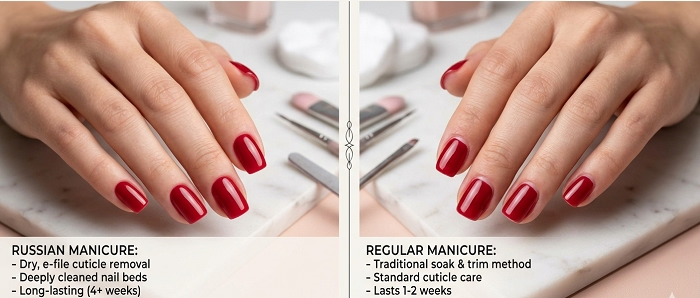
Here’s a straightforward comparison so you can see exactly what sets them apart:
| Feature | Russian Manicure | Regular Gel Manicure |
|---|---|---|
| Cuticle prep | Electric file (dry) | Soak + push back/trim |
| Water involved | No | Yes |
| Polish placement | Under/closer to cuticle | On top of cuticle line |
| Duration of service | 90–120 minutes | 45–60 minutes |
| Longevity | 3–4 weeks | 2–3 weeks |
| Removal method | Filed off (no acetone soak) | Acetone soak |
| Skill required | Specialized training | Standard training |
| Cost | $70–$120+ | $35–$65 |
| Infection risk | Higher if done incorrectly | Lower |
Traditional techniques that soak your hands actually cause nail expansion that works against polish longevity. That’s one of the core arguments in favor of the dry approach — a water-expanded nail plate isn’t the ideal surface for gel adhesion.
How Long Does a Russian Manicure Last?
This is probably the biggest selling point. Russian manicures are supposed to last 3–4 weeks, with minimal damage to the nails upon removal, as there is no acetone involved in the removal process.
Compare that to a standard gel manicure, which most people find starts lifting or chipping around the two-week mark. The reason Russian manicures last longer comes down to two things: the dry prep (better adhesion) and the fact that polish is applied closer to the nail fold, so there’s less exposed gap as the nail grows out.
The result is a flawless, salon-fresh look that lasts 3–4 weeks without chipping or lifting.
For removal, most of the previous gel polish and top coat is filed down with a nail drill, and a small amount of the previous builder gel is left remaining to prevent any damage to the nail. No acetone soak needed — which is genuinely better for nail health than soaking in chemicals.
How Much Does a Russian Manicure Cost?
Don’t walk in expecting regular manicure prices. This service is more expensive because it requires more time, specialized training, and professional equipment.
For a dry manicure without any polish or color, you can expect to spend anywhere from $50 to $70. With a single color using a structured gel overlay, the cost of a Russian manicure can range from $70 to $90. In major cities like New York or LA, prices regularly exceed $100–$120 for a full session with nail art.
That said, many clients find that the math actually works in their favor. If a Russian manicure lasts four weeks versus two weeks for a regular gel, you’re visiting the salon roughly half as often. The higher per-appointment cost may balance out over time — and your nails get more recovery time between services.
Is a Russian Manicure Safe? The Honest Answer
This is where things get complicated, and it’s the topic most beauty blogs gloss over. Let’s be real about it.
What Proponents Say
The Russian manicure focuses on removing excess dead skin, not the living cuticle tissue that provides protection. Reputable salons adhere to strict sterilization protocols for their tools, minimizing any risk of infection. When performed correctly by a trained professional, the Russian manicure is safe and does not harm the nails.
There’s genuine truth to this. In the hands of a well-trained technician with properly sterilized equipment, many clients go through dozens of sessions without any problems.
What Dermatologists Are Warning About
Here’s the other side of the story — and it’s based on medical evidence, not beauty industry marketing.
The cuticle is an extension of the proximal nail fold that adheres to the nail plate and serves as a physical barrier to prevent pathogen entry. Cuticle manipulation is a well-established risk factor for acute paronychia, which can lead to both temporary and permanent nail dystrophy.
Dr. Mona Gohara, a dermatologist and clinical professor of dermatology at the Yale School of Medicine, explains that without a cuticle, your nails risk exposure to yeast, fungus and bacteria, which can cause paronychia — a nail infection. With paronychia comes pain, swelling and possible lasting damage to the shape, texture, color and durability of your nail.
Her analogy is worth repeating: think of the cuticle like the front door to your home. You might have more space in the room if you remove it, but you’re also leaving yourself exposed.
The main health risks of a Russian manicure include acute paronychia (nail fold infection), nail dystrophy (changes in nail appearance or structure), onychomadesis (nail plate separation), and increased sensitivity or pain in the nail area.
And there are legal considerations, too. Invasive manicures are prohibited in many states, provinces, or countries because they damage skin and make it significantly more susceptible to infections. This infection risk can last for many hours and perhaps for several days after the service.
Also Read: polite pig brussel sprouts recipe
The Critical Factor: Technician Skill
The honest truth is that the safety of a Russian manicure depends almost entirely on who’s doing it. Over-filing the nail plate by more than 20% of its thickness can lead to irreversible damage, according to dermatologists — which highlights the need for skilled technicians who understand the balance between aesthetics and nail health.
The difference between a technician who’s had proper training versus someone who learned from YouTube is significant. And unfortunately, as the trend has grown faster than formal training programs, a lot of people are offering “Russian manicures” who aren’t qualified to do them safely.
Who Should (and Shouldn’t) Get a Russian Manicure
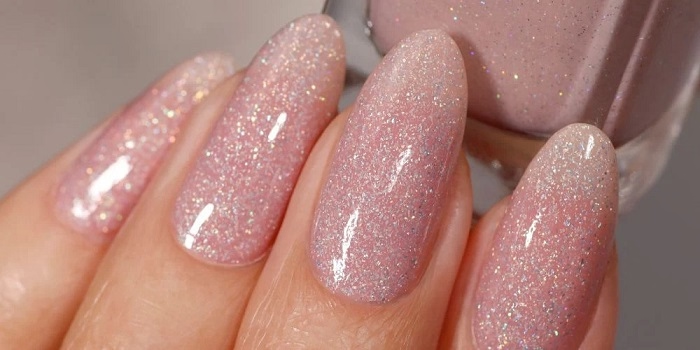
Good Candidates
- People with naturally healthy, thick nails
- Anyone frustrated with short-lasting regular gel manicures
- Those willing to invest time in finding a properly trained technician
- Clients who can commit to 4–6 week gaps between appointments to allow recovery
Who Should Think Twice
People with certain conditions should avoid Russian manicures, including those with blood disorders that may affect healing or increase the risk of bleeding, as well as those with active skin infections or conditions around the nails. If you have psoriasis, eczema around the nail folds, or a history of nail infections, this technique carries real extra risk for you.
Anyone with thin or brittle nails should also be cautious — the filing process can be too aggressive for already-compromised nail plates.
Board-certified dermatologist Dr. Elizabeth Kiracofe, who tried the technique herself so her patients would know what to expect, noted that if you are going to try Russian manicures, you may not want to get them back to back — giving your cuticles a break between appointments.
How to Find a Safe Russian Manicure Technician
This part most articles skip entirely, and it might be the most important section here.
Check for specific training. Ask your technician directly where they trained in Russian manicure technique and how long they’ve been doing it. General nail school doesn’t cover this — look for specialized e-file manicure education.
Ask about sterilization. Russian manicure artists use hot sterilization tactics for their tools, not just disinfection. There’s a meaningful difference between autoclave sterilization and simply wiping tools with disinfectant. Ask what method they use.
Look at their portfolio. A skilled technician will have photos of completed work showing clean, even cuticle lines with no visible redness, inflammation, or skin damage around the nail folds.
Read reviews carefully. Look specifically for mentions of pain during the service, post-service swelling or redness, or signs of infection after appointments. A few reviews like that and you should walk away.
Your first appointment should not hurt. When done by a trained professional, it shouldn’t hurt. Clients may feel mild pressure, but true pain usually means the technique is too aggressive. If something hurts, say something immediately.
Russian Manicure Aftercare: How to Protect Your Investment
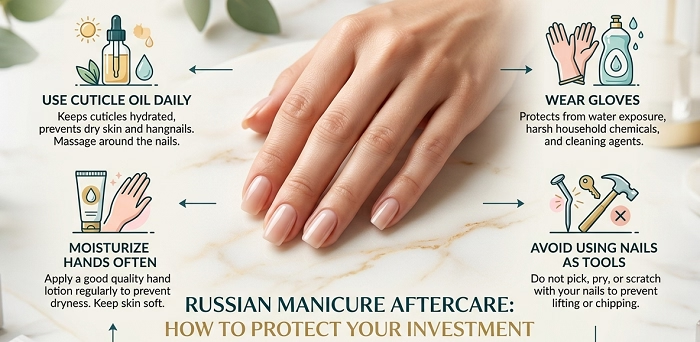
Getting the manicure is only half of it. Aftercare matters a lot.
- Apply cuticle oil daily. This is non-negotiable. The cuticle area needs consistent hydration after e-file work. Look for oils containing jojoba or vitamin E.
- Avoid prolonged water exposure for the first 24–48 hours. Dishes, long baths, and swimming can compromise the gel seal before it’s fully set.
- Don’t pick or peel. If your gel starts lifting at the edges, file it gently or return to the salon. Peeling takes layers of nail plate with it.
- Limit frequency to once every 4–6 weeks, allowing the cuticle and nail to recover between sessions.
- Watch for warning signs. Any redness, swelling, pain, or pus around the nail folds after your appointment warrants a call to a dermatologist, not a return visit to the salon.
Safer Alternatives to Consider
If the risk profile concerns you but you still want longer-lasting, cleaner-looking nails, there are middle-ground options worth knowing about.
Gel manicure with careful cuticle prep — A skilled traditional gel tech can push back cuticles (not remove them) carefully and apply gel close to the nail fold without an e-file. Not as dramatic a result, but meaningfully safer.
Hard gel overlay — Applied over your natural nail without aggressive cuticle work, hard gel adds strength and extends wear without the same level of cuticle manipulation.
Regular cuticle care at home — Consistent use of cuticle oil softens the dead skin naturally over time. Combined with a gentle monthly manicure, this can dramatically improve how your nails look without salon risk.
Gentle cuticle pushbacks with non-invasive tools like wood sticks or stainless steel pushers can also improve nail appearance while avoiding skin injury.
Frequently Asked Questions For Russian Manicure
Q: Does a Russian manicure hurt? It shouldn’t, when done properly. Most clients feel mild pressure during the cuticle work. Pain is a signal that the technique is being applied too aggressively or by someone who isn’t properly trained.
Q: Can I get a Russian manicure on natural nails without gel? Yes. The Russian manicure is versatile and suitable for all types of nail services, including regular polish, gel polish, and nail enhancements. The technique is about preparation, not the product applied on top.
Q: How often should I get a Russian manicure? Every 4–6 weeks is the general recommendation. Going more frequently doesn’t give the cuticle and surrounding skin enough time to recover properly between sessions.
Q: Can I do a Russian manicure at home? Technically you can buy an e-file, but this is strongly not recommended without extensive training. The margin for error is very small, and the consequences of doing it wrong — including infection, permanent nail damage, or cutting living skin — are real and serious.
Q: Is a Russian manicure legal everywhere? Not necessarily. Invasive manicures are prohibited in many states, provinces, or countries. Check your local regulations, and be aware that a salon offering this service should be operating within whatever rules apply in your area.
Q: Does the Russian manicure damage your nails over time? It can — especially if done too frequently or by an undertrained technician. Repeated appointments can result in over-filed nail plates and thinning of the nail, with trauma that accumulates over time and may not become visible until several sessions in. Taking breaks between appointments and monitoring your nail health is essential.