

Introduction
Induction sealing is a widely used method in the packaging industry to ensure product safety, prevent leakage, and extend shelf life. Induction sealing machines use electromagnetic induction to create a hermetic seal on containers with foil liners. This technology is prevalent in industries such as food and beverage, pharmaceuticals, cosmetics, and chemicals. In this guide, we will explore how induction sealing machines work, their components, benefits, and best practices for operation.
What is Induction Sealing?
Induction sealing is a non-contact method of bonding a foil seal to the opening of a container. It is commonly used to seal plastic and glass bottles, preventing contamination and tampering. The process involves applying heat generated by an electromagnetic field to melt a sealing material that adheres to the container’s rim.
Components of an Induction Sealing Machine
An induction sealing machine consists of several key components:
- Power Supply Unit:Converts electrical energy into high-frequency electromagnetic energy.
- Induction Coil:Generates an electromagnetic field that induces eddy currents in the foil liner.
- Sealing Head:Houses the induction coil and directs energy to the container’s cap.
- Foil Liner:A multi-layered material typically consisting of an aluminum layer, polymer, and paperboard.
- Conveyor System:Moves containers under the sealing head for continuous operation.
How Induction Sealing Machines Work
The induction sealing process involves several steps:
1. Preparation
The container is filled with the product and capped with an induction-sealable closure. The cap contains a foil liner, which comprises several layers, including:
- A backing material (paperboard or foam)
- An aluminum foil layer
- A heat-sealable polymer coating
2. Electromagnetic Induction Process
When the sealed container passes under the induction coil:
- The power supply generates a high-frequency alternating current.
- The induction coil converts this current into an electromagnetic field.
- The field induces eddy currents in the aluminum foil liner, generating heat.
- The heat melts the polymer layer, bonding it to the container’s rim.
3. Cooling and Bonding
Once the polymer layer melts, the container moves along the conveyor and cools naturally or with assistance. The polymer solidifies, forming a hermetic seal between the foil and the container opening.
Types of Induction Sealing Machines
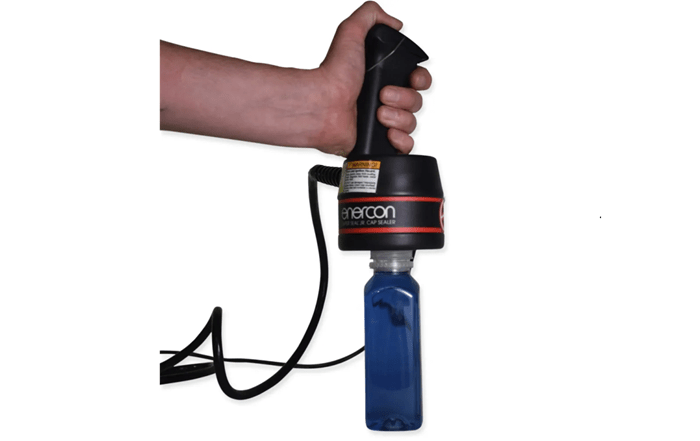
- Handheld Induction Sealers :Compact and portable, used for small-scale production or laboratory applications.
- Semi-Automatic Induction Sealers :Require manual container placement but offer higher efficiency than handheld sealers.
- Fully Automatic Induction Sealers :Integrated into production lines, capable of sealing hundreds or thousands of containers per hour.
Benefits of Induction Sealing
Induction sealing machines offer numerous advantages, including:
- Leak Prevention:Creates a secure, airtight seal that prevents leaks.
- Tamper Evidence:Provides visible proof that a product has not been opened.
- Extended Shelf Life:Protects products from moisture, oxygen, and contaminants.
- Increased Productivity:High-speed operation enhances efficiency in production lines.
- Compatibility:Works with a variety of container materials, including PET, HDPE, and glass.
- Non-Contact Process:Reduces contamination risks since there is no direct contact with the heat source.
Applications of Induction Sealing Machines
Induction sealing is utilized across multiple industries:
- Food & Beverage:Seals juice bottles, dairy products, sauces, and condiments.
- Pharmaceuticals:Ensures the safety of medicines and supplements.
- Cosmetics:Secures creams, lotions, and personal care products.
- Chemicals:Prevents hazardous material leakage in industrial packaging.
Best Practices for Operating an Induction Sealing Machine
To ensure optimal performance and longevity, follow these best practices:
- Use Quality Liners:Choose liners compatible with your container material.
- Ensure Proper Alignment:Position containers accurately under the sealing head.
- Optimize Power Settings:Adjust the machine’s power based on container and liner specifications.
- Maintain Consistent Conveyor Speed:Avoid excessive speed variations to achieve uniform sealing.
- Regular Maintenance:Inspect the induction coil and power unit to prevent malfunctions.
- Conduct Seal Integrity Tests:Periodically check seals for consistency and strength.
Common Challenges and Troubleshooting
Despite their efficiency, induction sealing machines may encounter issues such as:
- Incomplete Seals:Caused by improper power settings or misaligned containers.
- Overheating:Results in damaged liners or burned seals; adjust power levels accordingly.
- Loose Caps:Caps must be tightened appropriately to ensure effective heat transfer.
- Machine Downtime:Regular maintenance prevents unexpected breakdowns.
Conclusion
Induction sealing machines play a crucial role in modern packaging, ensuring product integrity, safety, and shelf life. By understanding how they work, businesses can optimize their sealing processes, improve efficiency, and reduce product loss. Proper maintenance and adherence to best practices will help maximize the benefits of induction sealing technology, making it a valuable investment for any packaging operation.