

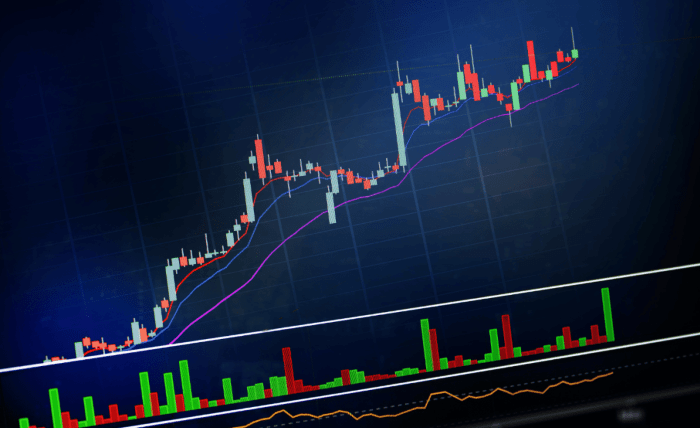
When it comes to trading, most people focus on price. But volume is equally important. Volume tells us how many shares are being traded, and that can often reveal more than the price itself. It shows the strength behind a move, whether buyers are serious or if the action is just noise. Ignoring volume can mean missing the full picture.
In this article, we’ll discuss whether volume matters more than price and how both can shape smarter trading decisions.
Understanding Volume and Price
The term “volume” refers to the total number of trades made for a security during a set period, while “price” indicates the rate at which those trades are executed.
Volume helps assess the strength of a market move, whereas price indicates its direction. For example, if a stock rises from ₹500 to ₹550 with heavy volume, it often signals strong investor conviction.
But if the same move happens with low volume, the price change may lack reliability or broad market support.
When Volume Matters More?
Volume often acts as a pulse check on market conviction. While price tells you what is happening, volume shows you how much belief the market has behind that movement. This becomes especially important when identifying potential breakouts or emerging trends. A sudden surge in price without volume may not hold, but when a breakout is supported by strong volume, it usually signals real interest and staying power.
Traders often use volume as a filter. For instance, if a stock crosses a key resistance level but does so with below-average activity, the move might lack strength. On the other hand, high volume stocks breaking out of consolidation zones tend to draw more attention from institutional investors, increasing the chances of continued momentum.
Volume also plays a subtle role ahead of major news. It’s not uncommon to see unusual spikes in volume before announcements or earnings releases. It could indicate broader market anticipation. Likewise, when volume increases dramatically without any obvious reason, it often precedes price reversals or significant directional moves.
In all these cases, volume helps confirm what price alone cannot fully explain.
When Price Takes the Lead?
In certain market conditions, price speaks louder than volume. It acts as the most direct reflection of investor sentiment and asset valuation. When you’re analyzing a stock, especially in thinly traded markets, price action often offers clearer signals than volume alone.
A steady climb or sudden drop in price, even on modest volume, can indicate a shift in fundamentals or sentiment that volume might not immediately confirm.
Low-volume stocks can be tricky. They may still exhibit significant price moves based on insider activity, earnings surprises, or sector-wide news. Here, volume lags behind price, making it crucial to observe pricing trends closely.
Also, volume spikes without matching price movement can mislead. These instances often stem from short-term speculation or algorithmic trades.
That’s why using the best stock screener with filters for both price momentum and liquidity can help cut through the noise and focus your strategy on actionable signals.
Volume vs. Price: A Complementary Approach
Relying on either volume or price in isolation often leads to incomplete or misleading conclusions.
Here’s a quick comparison to illustrate how they complement each other:
| Factor | Volume Tells You | Price Tells You |
| Market Sentiment | Strength of conviction behind a move | Direction of market perception |
| Trend Reliability | Confirms whether a price move has strong backing | Shows the trend, but not always its strength |
| Breakout Signals | Validates if breakout is genuine or weak | Shows when a breakout occurs |
| Reversal Clues | A sudden volume spike may precede a reversal | Reveals how far the price has strayed from the mean |
| Decision Timing | Indicates urgency or hesitation in the market | Suggests entry/exit based on levels or signals |
Conclusion
Volume and price are both important, but relying on one without the other can lead to mistakes. Volume shows market interest, while price reflects value. Together, they give a clearer picture. Smart traders use both to make better decisions. Balance is key when analyzing market moves and trends.