

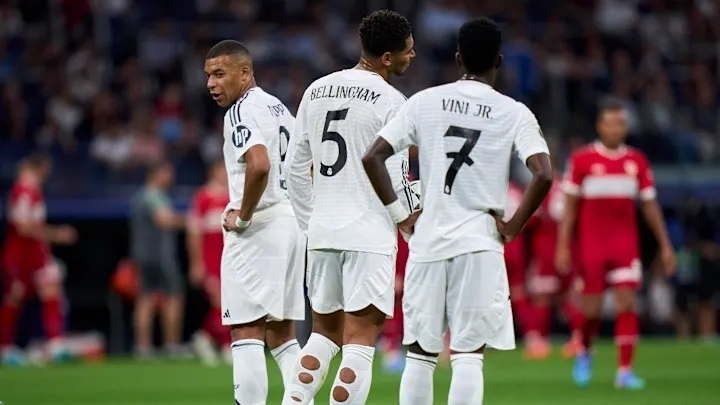
In the annals of European football, Real Madrid and VfB Stuttgart may not have the kind of frequent rivalry that some other clubs share, but when these two historic teams meet, it’s always a fascinating clash of cultures and footballing philosophies. Real Madrid, the most decorated club in European football with a record number of UEFA Champions League titles, represents Spanish footballing elegance and dominance. VfB Stuttgart, a club with a rich tradition in German football, brings the tactical discipline and resilience often associated with teams from the Bundesliga. Whether it’s a European competition or a pre-season friendly, this fixture holds significance due to the contrasting styles and storied histories of the two clubs.
Real Madrid: Kings of Europe
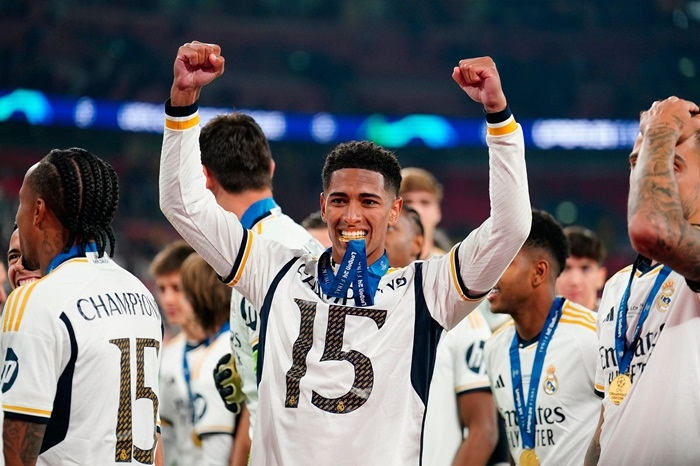
Real Madrid’s legacy in European football is unparalleled. The club, founded in 1902, has built a reputation for not just winning, but doing so in style. Over the decades, Los Blancos have fielded some of the greatest players the world has ever seen: from Alfredo Di Stefano and Ferenc Puskas in the 1950s to modern icons like Cristiano Ronaldo and Luka Modric. Their footballing philosophy has long been about attacking flair, creative midfield play, and a “never-say-die” attitude, especially in European competitions.
The club’s trophy cabinet is filled with accolades, including 14 UEFA Champions League titles (as of 2024) and 35 La Liga titles, among countless others. Real Madrid’s commitment to excellence and their ability to rebuild and remain competitive year after year make them one of the most feared and respected teams in world football.
VfB Stuttgart: A Proud German Tradition
VfB Stuttgart, based in the southwest of Germany, may not have the same international prestige as Real Madrid, but it is one of the oldest and most respected clubs in the Bundesliga. Founded in 1893, Stuttgart has won five German championships, three DFB-Pokal titles, and a UEFA Intertoto Cup. Known for producing top-tier talents, the club has served as a launching pad for many notable players, including the likes of Jürgen Klinsmann, Sami Khedira, and Mario Gómez.
While not always a dominant force in German football, Stuttgart’s style has been defined by tactical discipline, physicality, and a reliance on youth development. Their commitment to nurturing young talent and their strategic approach to matches have earned them respect in the Bundesliga, even when they haven’t been at the top of the table.
Also Read: Fall Brunch Ideas
Memorable Encounters
Though Real Madrid and VfB Stuttgart don’t share a long-standing rivalry, their meetings in European competitions have provided memorable moments. One of the most notable encounters between the two teams came during the 1989-90 UEFA Cup (now Europa League). The two-legged semi-final clash remains a standout in their limited head-to-head history.
1989-90 UEFA Cup Semi-Final
The first leg, played at the Santiago Bernabéu, saw Real Madrid take a commanding 3-1 victory, with goals from Hugo Sánchez and Martín Vázquez. Real Madrid’s attack, led by their Mexican talisman Sánchez, proved too much for Stuttgart’s defense, but the Germans still managed to secure a crucial away goal, keeping their hopes alive for the return leg.
The second leg at Stuttgart’s Neckarstadion was a fiercely contested affair. Stuttgart came out determined to overturn the deficit and played with typical German grit and determination. They managed a 1-0 victory in the match, but it wasn’t enough to overcome Real Madrid’s aggregate lead. Real advanced to the final with a 3-2 win on aggregate, continuing their European dominance during that era.
While the Spanish side emerged victorious, Stuttgart’s fighting spirit left a lasting impression. The encounter showcased the tactical acumen of the Bundesliga side and the attacking prowess of Real Madrid. It was a clash that epitomized the differences between Spanish and German football—fluid attacking play versus disciplined, resilient defending.
Playing Styles: A Contrast in Philosophies
One of the most intriguing aspects of a match between Real Madrid and VfB Stuttgart is the contrast in their playing styles. Real Madrid has traditionally been known for its “galáctico” approach—signing world-class players to build an attacking juggernaut. The club’s philosophy revolves around possession-based football, with a focus on quick transitions, creative midfield play, and individual brilliance. Their star-studded lineups over the years have often relied on dazzling displays of skill and attacking prowess to overwhelm their opponents.
On the other hand, VfB Stuttgart, like many German clubs, often embodies the Bundesliga’s tactical discipline and work ethic. Stuttgart’s style has typically been more direct, with an emphasis on physicality and organized defending. German teams are known for their efficiency and tactical awareness, and Stuttgart has been no exception. Over the years, they’ve often fielded young, hungry players eager to prove themselves on the big stage. Their focus on developing homegrown talent and instilling a strong team ethic has allowed them to compete, even when they’ve been underdogs against bigger European sides.
When these two teams meet, it’s always a case of contrasting footballing philosophies: the flair and creativity of Real Madrid against the structure and discipline of VfB Stuttgart.
Notable Players Across Both Clubs
Though Real Madrid and VfB Stuttgart are separated by their national leagues, there have been notable connections between the two clubs over the years. Perhaps the most famous link between the two is Sami Khedira, who began his professional career at Stuttgart before making a high-profile move to Real Madrid in 2010.
Khedira was a key part of Stuttgart’s midfield, helping the team secure a Bundesliga title in 2007. His performances caught the attention of Real Madrid, and during his time in Spain, Khedira played a crucial role in the team’s midfield, particularly in their La Décima Champions League win in 2014. Khedira’s blend of physicality, tactical intelligence, and technical skill made him a perfect fit for both clubs, exemplifying the kind of player who could thrive in both the disciplined world of German football and the more fluid style of Spanish football.
Legacy and Impact of Their Encounters
While Real Madrid and VfB Stuttgart do not share an extensive history of encounters, their meetings have left an impact on both clubs’ European journeys. For Real Madrid, these games serve as further chapters in their storied history of continental dominance. For VfB Stuttgart, matches against titans like Madrid have always been opportunities to test themselves against the best, gaining valuable experience and building resilience.
The 1989-90 UEFA Cup semi-final, in particular, stands as a reminder of Stuttgart’s potential to challenge Europe’s biggest clubs, even in eras where they were not seen as favorites. These encounters also underscore the broader narrative of European football, where clubs from different countries, with varying resources and footballing philosophies, come together to create moments of drama, tension, and brilliance.
A fixture between Real Madrid and VfB Stuttgart, though rare, is always an intriguing clash between footballing powerhouses. Real Madrid, with their tradition of European dominance and flair, and Stuttgart, representing the heart of German football, offer fans a glimpse into two contrasting approaches to the beautiful game. Whether in the past or in the future, this is a match that symbolizes the diversity and excitement of European football at its best.