

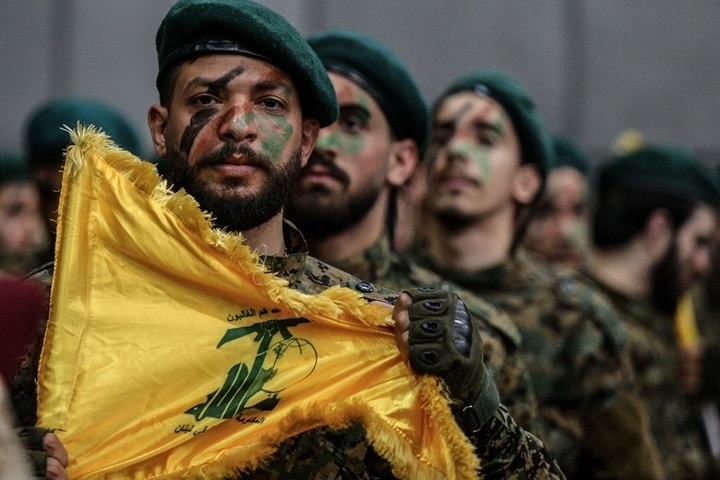
Hezbollah, a powerful and controversial political and military organization based in Lebanon, has long been a significant player in Middle Eastern geopolitics. Known for its resistance to Israel and its ties to Iran, Hezbollah’s influence extends beyond Lebanon’s borders, affecting regional and global politics. Over the years, Hezbollah has been labeled as both a terrorist organization and a legitimate political entity, depending on perspectives and affiliations.
In this article, we will explore Hezbollah’s origins, its political and military activities, its role in the broader Middle East, and how it has shaped international relations. We will also examine its complex relationship with key global powers, including the United States, Iran, and Israel, and consider its future amid ongoing regional tensions.
Origins of Hezbollah
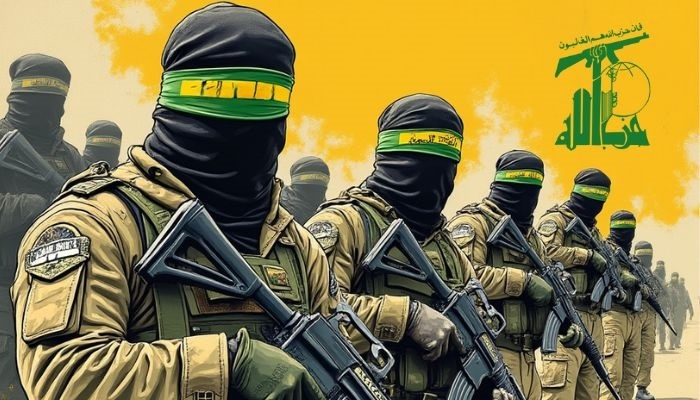
Hezbollah, meaning “Party of God” in Arabic, was founded in the early 1980s during the Lebanese Civil War. Its formation was catalyzed by several key factors:
1. Israeli Invasion of Lebanon (1982)
One of the primary events leading to Hezbollah’s creation was the Israeli invasion of Lebanon in 1982. The Israeli Defense Forces (IDF) entered Lebanon with the goal of expelling the Palestinian Liberation Organization (PLO), which had used southern Lebanon as a base for operations against Israel. However, the invasion also impacted Lebanon’s Shiite Muslim population, which had been marginalized politically and economically.
2. Iranian Influence
Hezbollah’s ideological roots and material support come largely from Iran. The Iranian Revolution in 1979, which brought a Shiite Islamist government to power, inspired Shiite movements across the Middle East. Iran’s leadership sought to export its revolutionary ideals, and Hezbollah became a primary vehicle for this in Lebanon. Iran’s Islamic Revolutionary Guard Corps (IRGC) played a direct role in training and funding Hezbollah during its early years, providing not only military expertise but also financial and logistical support.
3. Shiite Marginalization in Lebanon
In Lebanon’s confessional political system, which divides power along religious lines, the Shiite community was historically underrepresented. Hezbollah emerged as a response to this marginalization, positioning itself as both a defender of Lebanon’s Shiite population and a force of resistance against external intervention, particularly from Israel.
Also Read: Fall Brunch Ideas
Hezbollah’s Structure and Ideology
Hezbollah is a multifaceted organization with political, military, and social components. It operates as both a political party and a paramilitary group, making it unique among resistance movements in the Middle East.
1. Political Wing
Hezbollah’s political wing has grown into one of the most powerful political parties in Lebanon. Since the 1990s, the group has participated in elections, and it holds significant influence in the Lebanese parliament. Hezbollah’s political platform emphasizes resistance to Israeli occupation, defending Lebanese sovereignty, and promoting social justice for Lebanon’s marginalized Shiite community.
Despite its involvement in politics, Hezbollah does not follow the same democratic norms as other political parties. It retains a militaristic command structure, with Hassan Nasrallah serving as the organization’s Secretary-General since 1992. Nasrallah is seen as the spiritual and political leader of the movement, whose decisions heavily influence the direction of both the political and military arms of Hezbollah.
2. Military Wing
Hezbollah’s military wing, often referred to as the “Islamic Resistance,” is the backbone of the organization. The group is well-armed and has been involved in numerous conflicts with Israel, particularly in southern Lebanon. Hezbollah’s fighters are highly trained, thanks in part to Iranian military support and training from the IRGC.
Hezbollah’s most notable military success came in 2000 when it forced Israel to withdraw from southern Lebanon after nearly two decades of occupation. This victory bolstered Hezbollah’s standing both in Lebanon and across the Arab world, portraying the group as an effective resistance force against Israeli aggression.
In 2006, Hezbollah again fought Israel in a month-long conflict that resulted in heavy casualties on both sides. While the war devastated parts of Lebanon, Hezbollah was able to claim a political and symbolic victory by preventing an outright Israeli military victory.
3. Social Services
Hezbollah’s influence in Lebanon is not solely due to its military or political activities. The group operates an extensive network of social services, including hospitals, schools, and welfare programs. These services, particularly in southern Lebanon and the Bekaa Valley, where the Lebanese government’s presence has historically been weak, have earned Hezbollah considerable support from the local population.
Hezbollah’s ability to fill gaps left by the Lebanese state has been a crucial part of its strategy to maintain legitimacy and influence within Lebanon’s Shiite community.
Hezbollah’s Role in the Middle East
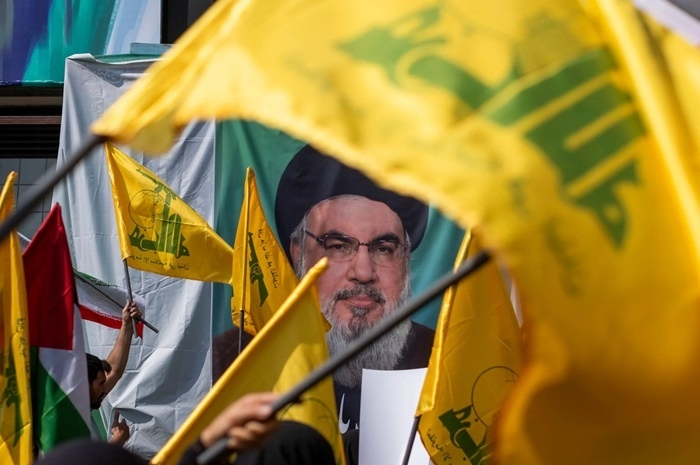
Hezbollah’s activities extend well beyond Lebanon. Over the past four decades, it has evolved into a regional power broker, influencing conflicts across the Middle East.
1. Syrian Civil War
Hezbollah’s involvement in the Syrian Civil War has been one of the most significant examples of its regional reach. Hezbollah has provided military support to the regime of Syrian President Bashar al-Assad, sending thousands of fighters to bolster Syrian government forces. This alliance is partly due to Hezbollah’s close ties to both Syria and Iran, as Syria has been a vital conduit for Iranian weapons and aid to Hezbollah.
The war in Syria has been costly for Hezbollah, both in terms of human losses and its reputation. While its intervention has helped Assad retain power, it has also alienated some of Hezbollah’s supporters, particularly those who view the war as a brutal suppression of Syria’s Sunni majority.
2. Iranian Proxy
Hezbollah is often described as an Iranian proxy, advancing Tehran’s interests in the region. Iran views Hezbollah as a strategic asset in its confrontation with Israel and the broader Western presence in the Middle East. Through Hezbollah, Iran exerts influence over Lebanon and challenges Israel’s security, while also using the group to project power in regional conflicts such as those in Syria, Iraq, and Yemen.
3. Conflict with Israel
At the heart of Hezbollah’s mission is its opposition to Israel. Since its founding, Hezbollah has fought numerous battles with Israeli forces, most notably in the 2000 and 2006 conflicts. Hezbollah frames itself as a “resistance” movement dedicated to liberating Arab lands from Israeli occupation, particularly in southern Lebanon.
However, Hezbollah’s relationship with Israel is complex. While it maintains a hostile stance toward Israel, the two sides have, at times, engaged in indirect negotiations, such as prisoner exchanges and ceasefire agreements. Nonetheless, Hezbollah’s continued military presence along the Israeli border remains a significant point of tension in the region.
Global Designation: Terrorist Organization or Legitimate Political Entity?
The perception of Hezbollah varies greatly depending on the country or international organization. Many Western countries, including the United States, Canada, and the European Union, have designated Hezbollah’s military wing as a terrorist organization due to its involvement in attacks against civilians and its ties to Iran.
The United States, in particular, has been a vocal critic of Hezbollah, imposing sanctions on the group and its members. The U.S. government views Hezbollah as a threat to regional stability and a key player in Iran’s “axis of resistance,” which also includes groups in Iraq, Syria, and Yemen.
However, Hezbollah’s political wing is viewed differently in some parts of the world. In Lebanon, Hezbollah is seen as a legitimate political party representing a significant portion of the population. Its social services, charitable work, and role in resisting Israeli occupation have earned it support, especially among the Shiite population. Many countries in the Middle East view Hezbollah as a legitimate actor and a defender of Arab and Muslim interests, particularly in its stance against Israel.
Hezbollah’s Relationship with Key Global Powers
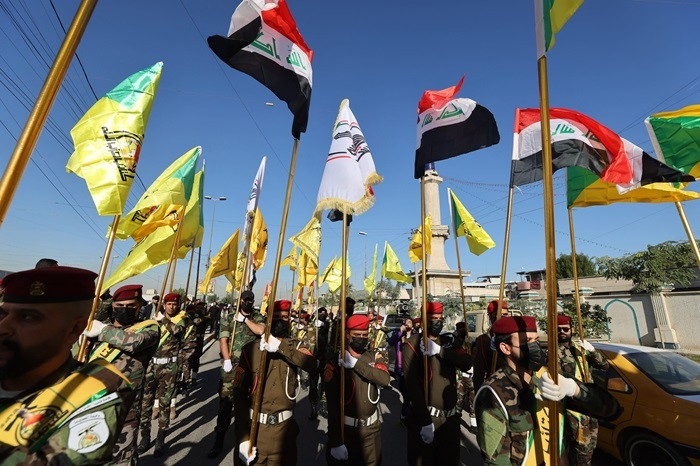
Hezbollah’s activities and alliances are deeply intertwined with the broader geopolitical landscape of the Middle East, particularly the influence of key global powers.
1. Iran
Iran is Hezbollah’s primary patron, providing financial support, weapons, and training to the group. The relationship between Iran and Hezbollah is both ideological and strategic. Iran views Hezbollah as a key component of its regional strategy, using the group to project power and counterbalance Israel’s influence.
The extent of Hezbollah’s dependence on Iran has led many to view it as a proxy of Tehran, but Hezbollah has its own local and regional ambitions as well. While it benefits from Iranian support, Hezbollah’s leadership has demonstrated an ability to act independently when its interests diverge from those of its Iranian benefactors.
2. Syria
Syria has historically been an important ally of Hezbollah, providing logistical support and serving as a conduit for Iranian weapons. The close relationship between Hezbollah and Syria’s ruling regime is based on mutual interests: Syria benefits from Hezbollah’s military expertise and support, while Hezbollah relies on Syrian territory to maintain its operations against Israel.
3. United States and Europe
The U.S. and many European countries have taken a hardline stance against Hezbollah, largely due to its involvement in terrorist activities and its connections to Iran. U.S. sanctions have targeted Hezbollah’s finances and its ability to operate internationally. However, European countries, such as France, have occasionally sought dialogue with Hezbollah’s political wing, recognizing its role in Lebanese politics.
Hezbollah’s Future Amid Ongoing Regional Tensions
Hezbollah’s future is closely tied to the broader geopolitical shifts in the Middle East. As long as tensions between Iran and Israel remain high, Hezbollah will continue to play a key role in the region’s power dynamics. The group’s involvement in the Syrian Civil War and other regional conflicts has increased its military capabilities but has also stretched its resources thin.
Internally, Hezbollah faces growing challenges. Lebanon is in the midst of a severe economic crisis, and Hezbollah’s involvement in regional conflicts has alienated some of its traditional base of support. At the same time, its military strength and control over key areas in Lebanon make it a dominant force in the country’s political landscape.
Hezbollah is a complex organization with deep roots in Lebanon and significant influence across the Middle East. Its role as both a political party and a military force has made it a key player in regional politics, particularly in its opposition to Israel and its alliance with Iran. While many countries view Hezbollah as a terrorist organization, its support base in Lebanon and its role in providing social services have cemented its position as a powerful and enduring force in the region.
As regional dynamics continue to evolve, particularly with shifting alliances and ongoing conflicts, Hezbollah’s future will remain closely tied to both its local support in Lebanon and its broader role as a proxy in the Middle East’s geopolitical struggles.