


When working with various materials, you may often need to convert cubic yards to pounds, especially in fields like construction, landscaping, and engineering. Converting volume (cubic yards) to weight (pounds) requires understanding the material’s density, as the weight of a given volume depends entirely on the material in question. In this article, we’ll explore how to make this conversion accurately and why it matters in various applications.
What is a Cubic Yard?
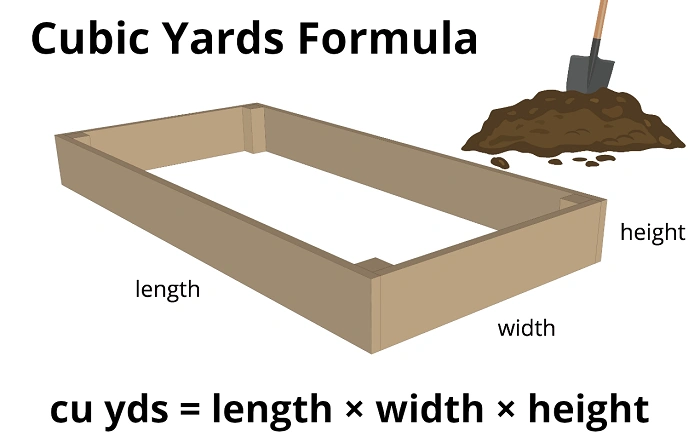
A cubic yard is a unit of volume, typically used in measuring bulk materials such as dirt, gravel, or concrete. It is defined as the volume of a cube with sides that are each one yard (3 feet) long. A cubic yard is equivalent to:
- 27 cubic feet
- 764.6 liters
- 0.7646 cubic meters
This measurement is crucial when ordering materials in bulk, as it helps determine how much material you’ll need for a specific area.
The Relationship Between Cubic Yards and Pounds
To convert cubic yards to pounds, we must account for the density of the material being measured. Density refers to how much mass is contained within a unit volume. Each material has a different density, so the weight of one cubic yard of a material can vary significantly.
Formula for Converting Cubic Yards to Pounds
The formula for converting cubic yards to pounds is:
Weight (pounds)=Volume (cubic yards)×Density (pounds per cubic yard)\text{Weight (pounds)} = \text{Volume (cubic yards)} \times \text{Density (pounds per cubic yard)}Weight (pounds)=Volume (cubic yards)×Density (pounds per cubic yard)
Where:
- Volume is in cubic yards
- Density is in pounds per cubic yard (lbs/yd³)
Example Conversion
If you have a cubic yard of soil with a density of 2,000 pounds per cubic yard (this is a rough estimate and can vary), the weight would be:
Weight=1 cubic yard×2,000 lbs/yd³=2,000 pounds\text{Weight} = 1 \, \text{cubic yard} \times 2,000 \, \text{lbs/yd³} = 2,000 \, \text{pounds}Weight=1cubic yard×2,000lbs/yd³=2,000pounds
This means one cubic yard of this soil weighs 2,000 pounds.
How to Find the Density of Different Materials
Different materials have different densities, which is why understanding the specific material’s density is essential when converting cubic yards to pounds. Here are the approximate densities of common materials:
Common Materials and Their Densities
- Soil: 2,000 to 3,000 lbs/yd³
- Gravel: 2,500 to 3,000 lbs/yd³
- Sand: 2,600 to 3,000 lbs/yd³
- Concrete: 4,000 to 4,500 lbs/yd³
- Mulch: 400 to 800 lbs/yd³
These values can vary depending on factors like moisture content and composition. For example, wet sand is denser than dry sand, which means a cubic yard of wet sand will weigh more than the same volume of dry sand.
Why is Converting Cubic Yards to Pounds Important?
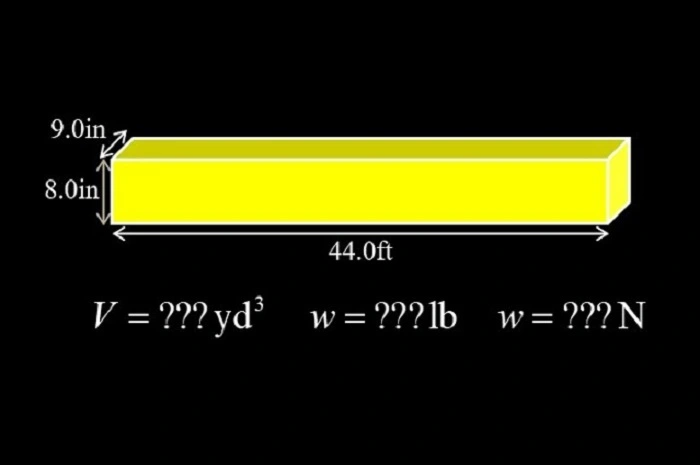
Understanding how to convert cubic yards to pounds is critical for several reasons:
1. Material Estimation for Projects
For construction or landscaping projects, knowing the weight of the materials you are working with is crucial. This helps in estimating transportation costs, equipment needs (like cranes or dump trucks), and ensures that you don’t exceed the weight limits on trucks or other equipment.
2. Accurate Budgeting
The weight of materials often correlates with cost, especially when transportation is involved. By understanding the weight of materials in pounds, you can more accurately estimate shipping and handling costs for bulk materials.
3. Safety Considerations
Handling heavy materials can be dangerous if not managed properly. Knowing the weight of materials allows for better planning, including ensuring that the proper tools and safety measures are in place to handle heavy loads.
Factors That Affect the Conversion
Several factors influence the conversion from cubic yards to pounds, and it’s important to take them into account for accurate estimations.
1. Moisture Content
Moisture significantly affects the density of many materials. For example, wet concrete is much heavier than dry concrete because the additional water increases its mass. If you’re working with materials like soil or sand, it’s important to consider whether it’s wet or dry to get an accurate weight.
2. Compaction
Materials like gravel or soil can become more compact when pressure is applied. If you are working with compacted soil or gravel, the density will be higher, and as a result, the weight per cubic yard will also increase.
3. Material Type
Different materials have different densities, so it’s important to know exactly what material you’re working with. While soil and sand might seem similar, their densities can vary significantly, impacting their weight.
How to Convert Cubic Yards of Specific Materials to Pounds
Let’s go through some examples to illustrate how the conversion works for various materials.
Example 1: Gravel
If you have 3 cubic yards of gravel with an approximate density of 2,700 pounds per cubic yard, the weight would be:
Weight=3 cubic yards×2,700 lbs/yd³=8,100 pounds\text{Weight} = 3 \, \text{cubic yards} \times 2,700 \, \text{lbs/yd³} = 8,100 \, \text{pounds}Weight=3cubic yards×2,700lbs/yd³=8,100pounds
Example 2: Sand
If you have 2 cubic yards of sand with a density of 2,600 pounds per cubic yard, the weight would be:
Weight=2 cubic yards×2,600 lbs/yd³=5,200 pounds\text{Weight} = 2 \, \text{cubic yards} \times 2,600 \, \text{lbs/yd³} = 5,200 \, \text{pounds}Weight=2cubic yards×2,600lbs/yd³=5,200pounds
Example 3: Concrete
For 1.5 cubic yards of concrete with a density of 4,200 pounds per cubic yard, the weight would be:
Weight=1.5 cubic yards×4,200 lbs/yd³=6,300 pounds\text{Weight} = 1.5 \, \text{cubic yards} \times 4,200 \, \text{lbs/yd³} = 6,300 \, \text{pounds}Weight=1.5cubic yards×4,200lbs/yd³=6,300pounds
FAQs About Cubic Yards to Pounds
How do I convert cubic yards to pounds?
You can convert cubic yards to pounds by multiplying the volume (in cubic yards) by the density of the material (in pounds per cubic yard).
What is the density of concrete in pounds per cubic yard?
The density of concrete is typically around 4,000 to 4,500 pounds per cubic yard.
How does moisture content affect the weight of materials?
Moisture content increases the density of materials like soil, sand, and concrete, making them heavier than their dry counterparts.
What are the common materials used for which cubic yards are measured?
Common materials include soil, sand, gravel, concrete, mulch, and wood chips.
How can I calculate the weight of a material if I don’t know its density?
You can look up the typical density for that material in online resources or materials handbooks. Many suppliers also provide this information when selling bulk materials.
Converting cubic yards to pounds requires knowing the density of the material in question. By using the formula and understanding how factors like moisture and compaction affect density, you can accurately determine the weight of bulk materials. Whether you’re planning a construction project, landscaping your yard, or ordering materials for any other purpose, being able to convert cubic yards to pounds ensures better preparation, budgeting, and safety.