

Let’s be real. You walk into a restaurant. Then the first face you typically see is the face of a host. They greet you with a smile. And ask how many are in your party. Then they show you to a table. On the surface, it sounds easy enough. But the reality is hosts do a lot more than smile and greet. They are responsible for making sure that the dining section is running smoothly, seating the guest at the right seat, and everyone off to the right start.
Restaurants would be chaotic and untamed without hosts. Guests could wait indefinitely, tables could be double-booked, and customers could leave unhappy. Hosts are the go-between for guests and the rest of the restaurant personnel.
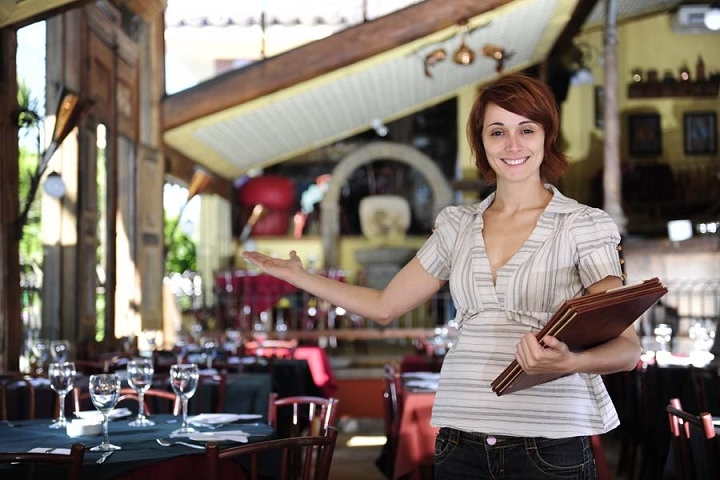
A smiling restaurant host at the front desk, standing with menus, greeting customers upon arrival.
Why Restaurants Need Hosts

Hosts are the initial contact for a restaurant. They serve an important function on three levels: organization, customer service, and atmosphere.
- Organization: Hosts manage reservations, walk-ins, and waiting lists. They know which tables are free and which servers are working.
- Customer Service: A warm greeting can establish the tone for the meal. Hosts greet customers as soon as they arrive.
- Atmosphere: Hosts control the extent to which the restaurant gets overwhelmed by seating people in a manner in which servers don’t get overwhelmed.
I used to think, when I was new to the restaurant business, that servers did everything. But after observing an experienced host work, I realized that the entire guest experience begins and ends with them.
Major Duties of a Restaurant Host
There is so much that hosts do, and they do all this without losing their temper or being unwelcoming. Some of the things that they do on a daily basis are:
- Greeting Guests: The hosts welcome everyone with a smile and make them feel welcome right away.
- Processing Reservations: Hosts check the reservation book and prepare the tables for individuals who reserved in advance.
- Seating Guests: They decide where to seat which parties, filling the dining area so that servers don’t get too overwhelmed.
- Managing the Waitlist: Hosts put people on a waiting list when the restaurant is most busy, give approximate waiting times, and inform people in case of any change.
- Answering Calls: Hosts answer the phone, make reservations, and sometimes take take-out orders.
- Assisting with Menus: They distribute menus and sometimes read specials before servers come by.
- Cleaning Up: Hosts sometimes clear tables or bring out plates during busy times to help keep things flowing.
Visual: A host reviewing a seating chart as a waiting family is poised.
Skills Any Good Host Needs to Have
Not just anyone is a good host. It does require some skills to make it happen.
- Friendliness: Guests must feel welcome right away.
- Communication: Hosts are always talking to guests and staff.
- Organization: Tables, reservations, and waitlists take time to organize.
- Calmness: Restaurants get crazy and busy, but hosts must stay calm.
- Problem Solving: Hosts deal with it right then and there when two customers are arguing over a table or a customer complains.
A good host infuses calm and professionalism into the restaurant even when it is packed.
Why Being a Host is Important to Customers
Hosts can make or break the dining experience for customers.
- First Impressions: With a welcoming host, there goes out a warm message.
- Shorter Waits: As hosts plan ahead with the list, waiting becomes fair.
- Better Seating: Hosts try to seat customers where they would feel most comfortable.
- Good Communication: Guests appreciate it when hosts give wait times realistically.
There is no restaurant without a host. Customers don’t know where to sit, and the restaurant would be disorganized.
Restaurant Host Daily Wins

Hosts also make the patrons’ and the restaurant staff’s lives easier. Some of the daily wins are:
- Save Time: They seat tables at a reasonable rate so that there are fewer empty tables.
- Keep Peace: They placate unhappy customers before they can become disruptive.
- Support Staff: By staggering guests, servers can more readily deliver better service.
- Improve Experience: Hosts offer a simple start that gets meals underway on the correct note.
Pro tip: If you’re frustrated waiting too long, just remember the host is trying to do dozens of things at once. Patience is a virtue.
Real Talk: What People Actually Say About Hosts
The good:
- “They greeted me right away and even remembered my name.”
- “They said the wait would be 20 minutes and it actually was 20 minutes.”
- “I appreciated that they were so welcoming and laid-back even though the restaurant was full.”
The not so good:
- “Once, our host put us on hold.”
- “They were rushed and unfriendly.”
- “We waited half an hour after being told ten minutes.”
The funny:
“A host once seated us in a booth and I realized it was the same one from our very first date years ago. Complete coincidence but made the night special.”
Being a Host: Advantages and Disadvantages
Advantages:
- Great for meeting people and customer service.
- Essential role that allows the restaurant to remain in business.
- Less physical than working as the server or cook.
- Can be a great entry-level job for teens or those new to the hospitality field.
Disadvantages:
- Can be high-stress during intense rush periods.
- Guests will blame hosts for something that isn’t their fault and take it out on them.
- Pay is typically less than servers who receive tips.
- Must stand for extensive periods in the front.
Tips to Hosts for Success
In the event that you are a host or planning on applying for the position, the following tips will assist:
- Welcome visitors with a smile and an eye contact.
- Keep the seating chart minute-by-minute updated.
- Be truthful about wait times. Honesty is preferred by guests over not knowing.
- Inform servers ahead of time so that they can prepare themselves.
- Remain calm under pressure. A calm host makes the entire restaurant calm.
Bonus tip: Wherever possible, do not forget to remind repeat guests. A welcome back goes a long way in making individuals feel special.
Fun Facts About Restaurant Hosts
- The host position is the typical entry-level hospitality career path for most.
- Upscale restaurants call them “maître d’,” literally meaning master of the house.
- In very busy restaurants, there is more than one host who works together.
- Hosts are more aware of restaurant traffic than restaurant patrons might think.
- Some restaurants provide hosts with some conflict resolution basics to handle angry guests.
Visual: A host greeting guests at the door and another host checking the wait list on a tablet.
FAQs
Do hosts take orders?
No, food and beverage orders are usually taken by servers, though hosts will sometimes take phone orders for take-out.
Do hosts receive tips?
Not always. While hosts do share tips with servers at some restaurants, they are generally only paid an hourly wage.
Is hosting an easy job?
It is crazy on a crush, but in general less stressful than cooking or serving.
How old can you be to host?
You can host at 16, but it also depends on local labor laws.
What do you wear being a host?
Every restaurant requires clean and tidy clothing like black pants and button-down shirts, and sometimes the restaurant’s logo.
Hosts have a very important role to play in restaurants. They greet the guests, regulate the flow of the dining section, and make sure that all things continue to run smoothly. Without them, both the patrons and the staff would be lost.
Are they perfect? No, humans can make mistakes and waiting irritates people. But overall, hosts are the pulse of creating order and ease in disorderly restaurants.
The next time you go out to eat and the host is occupying your space at the door, there is more to it than seating you at the table. They’re the ones who get your whole dining experience headed in the right direction.
Have you ever been seated or had a positive experience with one? Post your comments on how hosts made your meal more enjoyable. I would love to hear how hosts made your meal more enjoyable.
Final photo of a happy group of diners being seated at their table by a welcoming host in a warm lit dining room.