

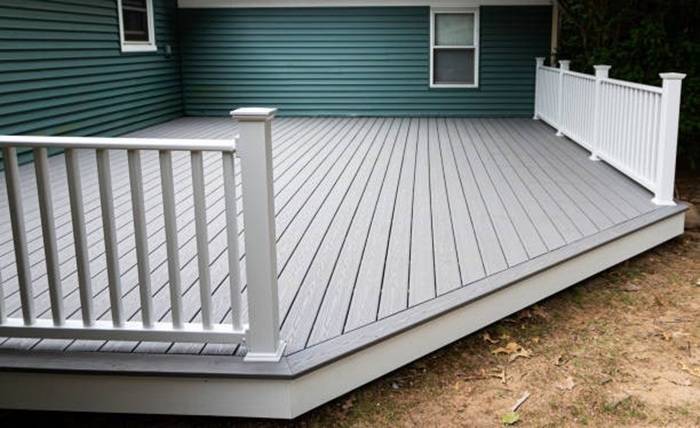
Would you like a lovely deck without compromising the surroundings? Many homeowners enjoy outdoor areas but worry about using too much wood. Cutting trees for decks might damage ecosystems and plant species. So, what is the best green choice?
Composite decking, made from recycled materials, would be excellent for a sustainable house. It helps save trees, reduces waste, requires less maintenance, and lasts longer than wood. This means fewer repairs and less harm to nature.
Composite decking is the solution if you want a robust, reasonably priced, environmentally friendly deck.
Let’s investigate the reasons behind this finest sustainable choice for your outdoor space.
-
Made from Recycled Materials
One of the best things about a composite deck is that it is made from recycled materials. It combines wood fibers and plastic waste to create strong decking boards. This lessens the demand for fresh-cut timber and helps decrease landfill trash.
Many composite decking builders use sawdust, shopping bags, and discarded plastic bottles. Businesses transform these materials into something valuable rather than dumping them in the trash. This recycling program reduces plastic pollution and helps preserve trees, reducing the number of trees cut down for decking.
Waste material recycling lessens environmental damage. In landfills, plastic trash can take hundreds of years to degrade. Using recycled plastic in decks helps to avoid extra garbage accumulating. This maintenance maintains the surroundings.
Selecting composite decking promotes environmental protection and recycling. It also creates an excellent, fashionable deck without damaging the surroundings, making it a wise and environmentally friendly option for householders.
-
Long-lasting and Durable
Composite decking holds far more durability than conventional wood decks. While composite materials are made to last, wood can fade over time or rot and break. With little upkeep, most composite decks should last 25 to 30 years. Fewer repairs and less waste follow from this.
Composite decking is not commonly replaced because it does not break down quickly, which saves resources and reduces garbage. However, since boards on a wooden deck might need to be replaced every few years, more trees might need to be removed. For decades, composite decking has remained sturdy and attractive.
A longer lifespan results in less resource use over time, which results in long-term financial savings and less environmental impact. Unlike wood, composite decking does not split and resists dampness, so families with children and pets would find it safer.
A long-lasting product is a preferable choice for the environment. Less energy and raw materials are required when fewer decks need replacement. Composite decking is the most excellent option for a durable deck.
-
Requires Less Maintenance
Traditional wood decks must be routinely stained, painted, and sealed to keep them in good condition. These treatments often include toxic compounds that might contaminate the surroundings. Conversely, composite decking requires minimal care.
Composite decks don’t require sealants or paint. They resist moisture, preventing rotting or mold growth. They are also safer to walk on, as they don’t split or crack. Cleaning them is simple: Use soap and water.
Less maintenance means fewer chemicals and housework for homeowners. It also reduces the use of dangerous goods that might enter the soil or water. Composite decking allows you to conserve the environment while enjoying a lovely outdoor area without work.
Less maintenance means fewer repairs as well. Often wood decks call for fresh nails, screws, or boards. Both the manufacturing and transportation of these materials need energy. Composite decking eliminates this problem. It stays firm for many years without extra work.
Choosing composite decking will save you money and time. It will also benefit the environment by reducing waste and using fewer dangerous chemicals.
-
Reduces Deforestation
Many places suffer from significant deforestation. Trees are cut down to produce wood for furniture, paper, and building materials. Using conventional wood decking adds to this problem. However, composite decking lessens deforestation.
Composite decking reduces the need for new lumber by using recycled wood fibers. This helps protect the creatures dependent on forests and their surroundings. Maintaining forests in their entirety is crucial for biodiversity, clean air, and freshwater.
Forests absorb carbon dioxide, helping to slow global warming. Trees that are removed spew this gas back into the atmosphere, adding to global warming. However, choosing composite decking helps trees remain standing, benefiting the earth.
Choosing composite decking means choosing sustainability. You support the protection of forests, benefiting the earth. Every composite deck reduces the number of trees cut down, a crucial first step towards a better future.
-
Energy-Efficient Manufacturing
Composite decking requires less energy to manufacture than conventional wood decking. However, removing trees and turning them into timber requires a lot of energy. Cutting, moving, and treating wood require ample fuel and electricity.
However, composite decking is made from recyclable goods, which lowers the energy required to create fresh raw materials. Several producers also apply environmentally friendly manufacturing techniques to reduce their carbon footprint. Some even use solar or wind energy in their factories.
Fewer energy consumption results in fewer carbon emissions, maintaining a healthier environment and slowing global warming. Composite decking is the best choice for a better decking solution for the earth.
Composite decking also lessens the requirement for fresh manufacturing since it lasts longer. This implies that fewer resources are used over time. A product’s sustainability increases with increasing lifetime. Composite decking would be best suited for those who wish to minimize their environmental impact.
-
No Harmful Chemicals
Chemical treatments are often necessary on many timber decks to fight rot, mold, and vermin. These compounds can be harmful to plants, animals, and even humans. After rain, the chemicals can wash off and contaminate the ground and water.
Composite decking does not require chemical treatment. It withstands dampness and pests organically. Families, dogs, and the surroundings will also find this a safer option.
Composite decking helps keep outdoor areas free from pollution by avoiding dangerous chemicals. Thus, you can enjoy your deck without concern for harmful chemicals harming your house or yard. It is a wise decision for everyone who wishes for a cleaner and safer outdoor environment.
Toxic chemicals in traditional wood treatments can harm fish and plants in nearby rivers or lakes. One avoids these hazards with composite decking. This is a green approach to enjoying a deck without harming the surroundings.
Conclusion
Composite decking is a wise choice for people who value their surroundings. Made from recyclable materials, it requires minimum maintenance and lasts longer. It also saves energy, lessens deforestation, and avoids dangerous chemicals.
Composite decking is best for a firm, lovely, and environmentally responsible deck. It lets you appreciate the outdoors while preserving the environment. When you select sustainable products, you help the earth.
Switch to composite decking and build a greener future today!