

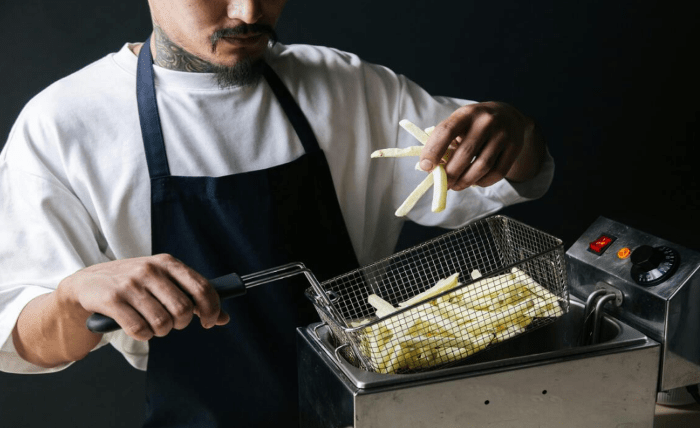
A fast-moving commercial kitchen environment demands priority focus on efficiency combined with safety standards and top-tier product quality. Your selected process for cooking oil filtration affects all three key variables including efficiency safety and product quality. Your business choice of appropriate cooking oil filtration systems delivers economic benefits and food refinement along with machine durability enhancement.
When many different options exist for your business, which filter stands out as the most suitable choice?
Why Filtering Cooking Oil Matters
The topic of different oil filters starts with grasping the main reason why you should use filtered cooking oil. High cooking temperatures together with food particles and carbon debris and other residue cause cooking oil to degrade in quality. The presence of debris harms both food quality and safety standards and leads to higher expenses for your business operation.
Regular oil filtration enables you to eliminate contaminants that lead to healthy food consistency while eliminating waste and improving oil longevity. Sustained kitchen performance, together with decreased operational expenses, becomes possible through regular oil filter usage.
Key Factors to Consider When Choosing a Oil Filter
Each commercial kitchen needs specific equipment, so the appropriate oil filter depends on your quantity of use, alongside your available funds and kitchen layout configuration. The following factors must guide your final option:
The number of times you use oil along with the change frequencies plays a role in your selection process.
- Frequency of oil use and changes
- Type of food being prepared
- The size of your fryer and oil capacity
- Budget and maintenance costs
- Space and portability requirements
The following section details the principal categories of cooking oil filters with recommended usage cases.
1. Manual Oil Filter Systems
Low-volume commercial kitchens and small kitchens use entry-level manual filters as their filtration systems. The systems consist of a filter cone holder that works with disposable filter papers. The filtering process moves oil to paper where the process catches crumbs and carbons that have formed in the oil.
Pros:
- Cost-effective
- Easy to set up and use
- No power required
Cons:
- Labour-intensive
- Limited filtration depth
- Not ideal for large volumes
Best for: Small cafés, food trucks, and businesses with minimal frying needs.
2. Portable Oil Filter Machines
The portable oil filter machine enhances both convenience and operational efficiency. Such wheeled units operate between your fryer to filter hot oil by removing debris through their filtering mechanisms. Portable oil filter machines exist in different sizes and support operations for multiple units of fryers.
Pros:
- Speeds up the oil cleaning process
- Reduces manual handling of hot oil
- Filters large volumes quickly
- Improves oil quality and lifespan
Cons:
- Higher upfront cost
- Requires storage space and maintenance
Best for: Medium to large restaurants, fast food chains, and commercial kitchens with multiple fryers.
3. Built-in Fryer Oil Filtration Systems
The recent market offers commercial fryers which integrate built-in oil filtration technology. A closed loop operation together with built-in automatic filtration enables safer handling of hot oil without subjecting operators to potential safety hazards.
Pros:
- Seamless integration
- Extremely safe and user-friendly
- Maintains consistent oil quality
Cons:
- Significantly more expensive
- The technology has restrictions for applying to particular fryer brands and specific models.
The system provides optimal benefits to establishments that operate big commercial kitchens while ensuring absolute safety, together with precise processing and maximum operational effectiveness.
Best for: Large-scale commercial kitchens and franchises prioritising safety, consistency, and efficiency.
4. Gravity-fed Oil Filters
Soil moves through filter bags or mesh using gravity inside a stainless-steel filtering vessel. The slow operation, combined with budget affordability, makes gravity-fed oil filters a sensible option for facilities seeking to decrease their oil waste levels.
Pros:
- Low maintenance
- Affordable
- Doesn’t require electricity
Cons:
- Slower process
- Not suited for high-volume kitchens
Best for: Smaller operations looking for budget-friendly, eco-conscious solutions.
Choosing the Right Option for Your Kitchen
Businesses should evaluate their oil changing frequency, their fried volume and their available personnel and space to pick the right cooking oil filter solution.
Small food establishments, along with mobile kitchens, find manual filters appealing due to their affordability and average operational accessibility, while needing frequent human intervention.
Medium to large kitchens will benefit from portable oil filter machines due to their effective operation yet they have a price tag in the average to high range.
High-volume or chain restaurants should select built-in filtration systems because they guarantee seamless operation, combined with very high ease of use, yet they involve a substantial investment.
Low-volume users who prioritise budget restrictions find gravity-fed filters to be the most suitable option.
Final Thoughts
Your selection of cooking oil filtering equipment affects all critical aspects of your kitchen operations, including productivity and operational safety, as well as business financial outcomes. The regular process of filtering food matter supports both equipment maintenance and food safety regulations, in addition to boosting food appearance and taste.
A manual solution combined with full oil filter machines proves to be a wise investment since their long-term benefits include cleaner oil and longer equipment lifespan.
Selecting appropriate filter technology enables both better business practices and sustainability goals achievement. Better oil clarity results in reduced waste levels and fewer equipment substitutions that produce joyful customers.
Your business efficiency, together with its reputation, will increase through making the right decision.