


When it comes to measuring ingredients or liquids, knowing how to convert units accurately is crucial. One common conversion people often need is from grams to liters. Whether you’re cooking, working in a lab, or performing other tasks that require precise measurements, understanding this conversion is important. In this article, we’ll delve into the relationship between grams and liters, explore the steps to convert between these units, and clarify any confusion you may have regarding this conversion.
What is a Gram?

A gram is a unit of mass used in the metric system. It is a standard unit of measurement for small quantities, commonly used for measuring weight or mass in cooking, scientific experiments, and more. The gram is defined as one one-thousandth of a kilogram, making it a practical unit for measuring small items.
In general, the gram is used to measure the mass of solid substances. For instance, you may weigh ingredients like sugar, flour, or vegetables in grams when cooking.
What is a Liter?
A liter (also spelled litre in British English) is a unit of volume. Unlike grams, which measure mass, liters measure the amount of space a substance occupies. A liter is often used to measure liquids, such as water, milk, or soda. It is also widely used in scientific fields to measure volumes of liquids or gases.
In terms of volume, one liter is equal to 1,000 cubic centimeters (cm³) or one cubic decimeter (dm³). When measuring liquids or gases, the liter is a practical and universally recognized unit.
Understanding the Conversion from Gram to Liter
To convert grams to liters, we need to take into account the substance being measured, because the conversion factor between grams and liters depends on the density of the material.
The general formula for conversion between mass (grams) and volume (liters) is:
Volume (liters)=Mass (grams)Density (grams per liter)\text{Volume (liters)} = \frac{\text{Mass (grams)}}{\text{Density (grams per liter)}}Volume (liters)=Density (grams per liter)Mass (grams)
This formula indicates that, to convert grams to liters, you must divide the mass of the substance by its density. The density is the amount of mass per unit volume, and it varies depending on the substance.
Why Density is Important in Conversion
Different materials have different densities. For example, the density of water is about 1 gram per milliliter (g/mL) or 1,000 grams per liter (g/L). This means that 1 liter of water weighs 1,000 grams. However, for other substances like oil, flour, or honey, the density is different.
Thus, for any substance, to convert grams to liters, you need to know the density of that substance. For example:
- Water: 1 g = 1 mL, and 1 liter = 1,000 grams.
- Honey: The density of honey is approximately 1.42 g/mL, so 1 liter of honey weighs around 1,420 grams.
Common Examples of Conversion from Grams to Liters

Water Conversion
For water, the conversion is straightforward due to its density of 1 g/mL. Therefore:
- 1 gram of water = 1 milliliter (mL)
- 1 liter of water = 1,000 grams
So, for water, converting from grams to liters is as simple as dividing the number of grams by 1,000.
Flour Conversion
Flour has a density of approximately 0.593 g/mL. To convert grams of flour to liters:
Volume (liters)=Mass (grams)593\text{Volume (liters)} = \frac{\text{Mass (grams)}}{593}Volume (liters)=593Mass (grams)
For example, 500 grams of flour would be equivalent to about 0.843 liters of flour.
Milk Conversion
Milk has a density close to that of water, approximately 1.03 g/mL. Thus:
- 1 liter of milk weighs approximately 1,030 grams.
So, for milk, converting grams to liters involves dividing the grams by the density of milk (1,030).
Steps to Convert Grams to Liters
Converting grams to liters requires the following steps:
Identify the substance you are converting (water, oil, honey, etc.).
Determine the density of that substance. You can find density information from scientific references or reliable sources online.
Apply the formula: Divide the mass in grams by the density of the substance in grams per liter to get the volume in liters.
For example, to convert 500 grams of flour to liters:
Volume (liters)=500 grams593 grams per liter≈0.843 liters\text{Volume (liters)} = \frac{500 \text{ grams}}{593 \text{ grams per liter}} \approx 0.843 \text{ liters}Volume (liters)=593 grams per liter500 grams≈0.843 liters
Factors Affecting the Gram to Liter Conversion
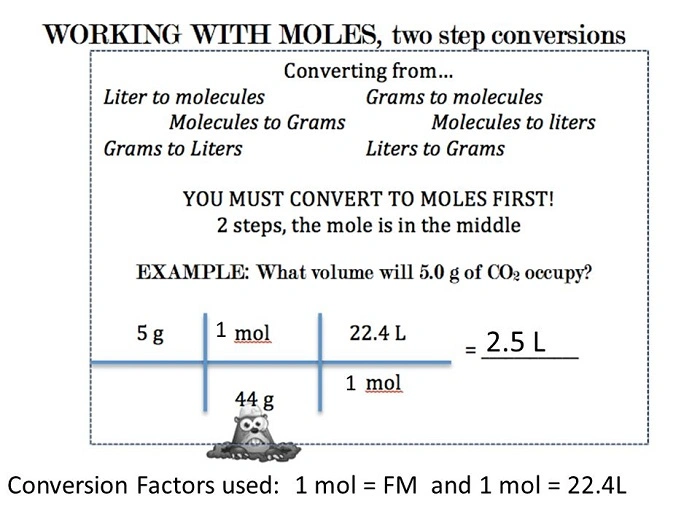
The key factor that determines the conversion between grams and liters is the density of the substance. If the substance is denser, a smaller volume will have the same mass as a larger volume of a less dense substance.
For instance:
- Water is denser than oil, so 1 liter of water weighs more than 1 liter of oil.
- Substances like air or foam are much less dense than water, meaning it would take a larger volume of these substances to reach the same weight as 1 liter of water.
Applications of Gram to Liter Conversion
Understanding the gram to liter conversion is essential in many fields:
Cooking: When baking or cooking, accurate measurements are important, especially in recipes that require both weight and volume.
Chemistry and Science: In laboratories, precise measurements of liquids and solids are crucial for experiments and analysis.
Industrial Applications: Many industries use the conversion from grams to liters for bulk handling of substances like chemicals, oils, and food products.
Environmental Studies: Environmental studies often involve measuring pollutants, liquids, or gases, and understanding their densities is important for accurate calculations.
FAQs
How do I convert grams to liters for water?
To convert grams to liters for water, simply divide the number of grams by 1,000 since 1 liter of water weighs 1,000 grams.
What is the formula for converting grams to liters?
The formula is:
Volume (liters)=Mass (grams)Density (grams per liter)\text{Volume (liters)} = \frac{\text{Mass (grams)}}{\text{Density (grams per liter)}}Volume (liters)=Density (grams per liter)Mass (grams)
Can I convert grams to liters for any substance?
Yes, as long as you know the density of the substance, you can convert grams to liters using the formula.
What is the density of water?
The density of water is 1 g/mL or 1,000 g/L. This makes the conversion from grams to liters for water straightforward.
How can I convert 500 grams of flour to liters?
To convert 500 grams of flour to liters, divide 500 by 593 (the density of flour). This equals approximately 0.843 liters.
Converting grams to liters may seem complicated at first, but once you understand the importance of density, it becomes quite simple. The conversion process varies depending on the substance being measured. For liquids like water, the conversion is straightforward, while for other substances, it requires knowledge of their specific densities. By applying the proper formula, you can easily convert between grams and liters for any material, making it an essential skill in many fields, from cooking to science.