

Understanding kitchen measurements is essential for both professional chefs and home cooks. One of the most common conversion questions is how many ounces are in a cup. While this might seem straightforward, the answer depends on the ingredient being measured, as fluid ounces and dry ounces differ. This guide will help you understand the different conversions, ensuring accurate measurements in your cooking and baking.
Understanding Cups and Ounces
Cups and ounces are two fundamental units of measurement used in cooking and baking. A cup is a unit of volume, while an ounce can measure either weight or volume, depending on the ingredient. The distinction between fluid ounces and dry ounces is crucial for accurate conversions.
Fluid Ounces vs. Dry Ounces
- Fluid ounces measure volume – Used for liquids such as water, milk, and oil.
- Dry ounces measure weight – Used for dry ingredients such as flour, sugar, and nuts.
Since different ingredients have different densities, the weight in dry ounces may not match the volume in fluid ounces.
How Many Fluid Ounces in 1 Cup?
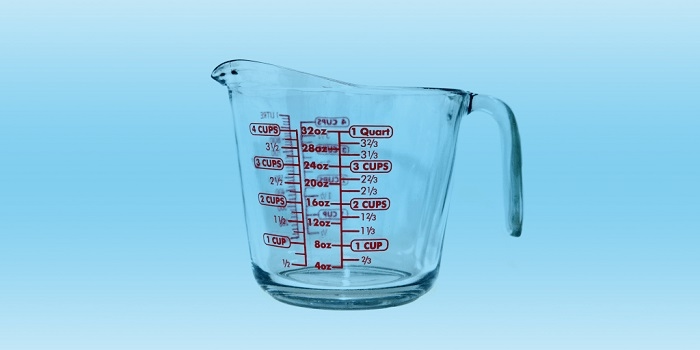
For liquid ingredients, the conversion is simple:
- 1 cup = 8 fluid ounces
This applies to most liquids, including water, milk, juice, broth, and oil.
How Many Dry Ounces in 1 Cup?
The number of dry ounces in a cup varies based on the ingredient being measured. Here are conversions for common dry ingredients:
| Ingredient | 1 Cup (US) in Dry Ounces |
| All-purpose flour | 4.25 oz |
| Granulated sugar | 7 oz |
| Brown sugar | 7.5 oz |
| Butter | 8 oz |
| Cocoa powder | 3.5 oz |
| Chopped nuts | 4 oz |
| Rice | 6.5 oz |
These values help in determining accurate measurements without a kitchen scale.
Converting Cups to Ounces for Common Ingredients
Flour Cup to Ounces Conversion
Flour is a common ingredient in baking, but it is lightweight and can be compacted when scooped. To measure accurately:
- 1 cup of all-purpose flour = 4.25 oz
- 1 cup of whole wheat flour = 4 oz
- 1 cup of cake flour = 4 oz
Fluffing the flour before scooping prevents excess weight from improper packing.
Sugar Cup to Ounces Conversion
Sugar is denser than flour, meaning one cup of sugar weighs more than one cup of flour.
- 1 cup of granulated sugar = 7 oz
- 1 cup of brown sugar = 7.5 oz (packed)
- 1 cup of powdered sugar = 4 oz
Brown sugar is measured by packing it into the cup, while granulated and powdered sugar should be loosely scooped.
Butter Cup to Ounces Conversion
Butter measurements are easy to remember because butter sticks are pre-marked with ounce measurements.
- 1 cup of butter = 8 oz
- 1 stick of butter = 4 oz
This conversion helps when substituting butter in baking.
Milk and Liquid Cup to Ounces Conversion
Since milk and other liquids follow volume measurements, the conversion remains consistent.
- 1 cup of milk = 8 fluid ounces
- 1 cup of water = 8 fluid ounces
- 1 cup of heavy cream = 8.25 fluid ounces
This standard applies to all fluids measured in US customary cups.
Why Accurate Measurements Matter in Cooking and Baking
Consistency in Recipes
Accurate measurements ensure that recipes turn out the same every time. In baking, even small deviations can affect texture and taste.
Precision in Nutrition
Knowing exact measurements helps track calories and nutrients, which is important for portion control and diet management.
Better Cooking Results
Using the correct cup-to-ounce ratio improves the overall outcome of dishes, especially when following recipes with precise ingredient requirements.
How to Measure Cups and Ounces Correctly
Measuring Liquids
For liquid ingredients:
- Use a clear liquid measuring cup with a spout.
- Check the measurement at eye level to avoid errors.
- Pour slowly to prevent spills.
Measuring Dry Ingredients
For dry ingredients:
- Use dry measuring cups that allow leveling off.
- Spoon ingredients into the cup rather than scooping.
- Level off with a flat edge for accuracy.
Common Kitchen Measurement Conversions
US Cup to Ounce Conversion Chart
| Cups | Fluid Ounces | Dry Ounces (Varies by Ingredient) |
| 1/4 cup | 2 fl oz | 1.06 – 1.75 oz |
| 1/3 cup | 2.67 fl oz | 1.41 – 2.33 oz |
| 1/2 cup | 4 fl oz | 2.12 – 3.5 oz |
| 3/4 cup | 6 fl oz | 3.18 – 5.25 oz |
| 1 cup | 8 fl oz | 4.25 – 7.5 oz |
This chart serves as a handy reference for cooking and baking.
FAQs
How many fluid ounces are in one cup?
One cup equals eight fluid ounces.
Is one cup of dry ingredients the same as one cup of liquid?
No, dry and liquid ingredients have different densities, so their weight in ounces varies.
How many ounces are in a half-cup?
A half-cup contains four fluid ounces.
How can I measure without a measuring cup?
Use a tablespoon or a kitchen scale for dry ingredients. One cup equals sixteen tablespoons.
Is a US cup the same as a metric cup?
No, a US cup equals 240 milliliters, while a metric cup equals 250 milliliters.
Understanding how many ounces are in a cup is essential for accurate cooking and baking. Whether measuring liquids in fluid ounces or dry ingredients in weight, using correct conversions ensures consistency in recipes. Keep this guide handy for quick and easy reference in the kitchen.