

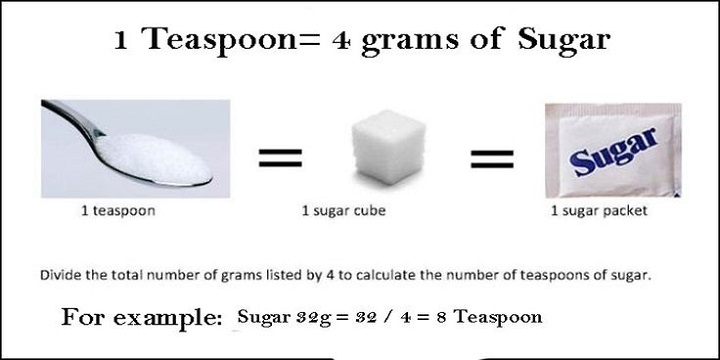
Accurate measurements are essential in cooking and baking. Many recipes list ingredients in grams, but not everyone has a kitchen scale. Converting grams to teaspoons helps ensure precise ingredient measurements, especially for home cooks. This guide provides an easy and practical approach to converting grams into teaspoons for common ingredients.
Understanding Gram to Teaspoon Conversion
Grams measure weight, while teaspoons measure volume. Since different ingredients have different densities, a direct conversion isn’t always possible without knowing the specific ingredient.
For example, sugar is denser than flour, meaning one teaspoon of sugar weighs more than one teaspoon of flour. Knowing these differences helps in making accurate conversions.
Common Gram to Teaspoon Conversions
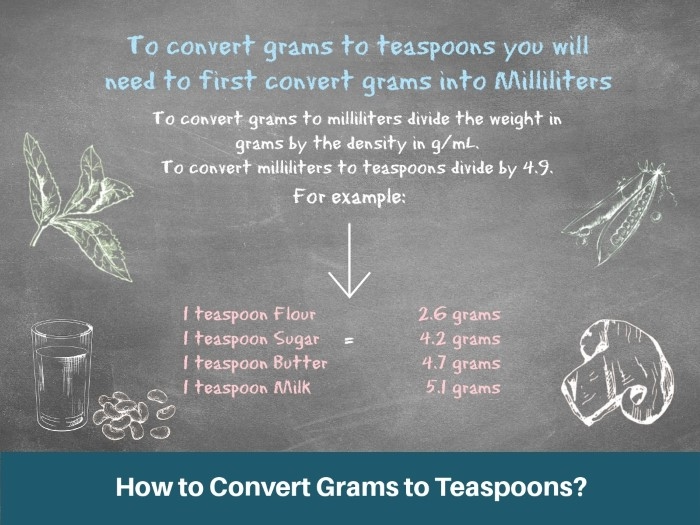
Below are the general gram-to-teaspoon conversions for commonly used kitchen ingredients.
Sugar Gram to Teaspoon Conversion
- One gram of sugar is equal to 0.25 teaspoons
- Five grams of sugar is equal to 1.25 teaspoons
- Ten grams of sugar is equal to 2.5 teaspoons
- Twenty grams of sugar is equal to 5 teaspoons
Flour Gram to Teaspoon Conversion
- One gram of flour is equal to 0.4 teaspoons
- Five grams of flour is equal to 2 teaspoons
- Ten grams of flour is equal to 4 teaspoons
- Twenty grams of flour is equal to 8 teaspoons
Butter Gram to Teaspoon Conversion
- One gram of butter is equal to 0.21 teaspoons
- Five grams of butter is equal to 1 teaspoon
- Ten grams of butter is equal to 2 teaspoons
- Twenty grams of butter is equal to 4 teaspoons
Salt Gram to Teaspoon Conversion
- One gram of salt is equal to 0.16 teaspoons
- Five grams of salt is equal to 0.8 teaspoons
- Ten grams of salt is equal to 1.6 teaspoons
- Twenty grams of salt is equal to 3.2 teaspoons
Baking Powder Gram to Teaspoon Conversion
- One gram of baking powder is equal to 0.22 teaspoons
- Five grams of baking powder is equal to 1.1 teaspoons
- Ten grams of baking powder is equal to 2.2 teaspoons
- Twenty grams of baking powder is equal to 4.4 teaspoons
Honey Gram to Teaspoon Conversion
- One gram of honey is equal to 0.14 teaspoons
- Five grams of honey is equal to 0.7 teaspoons
- Ten grams of honey is equal to 1.4 teaspoons
- Twenty grams of honey is equal to 2.8 teaspoons
Why Accurate Gram to Teaspoon Conversions Matter
Precision in Baking
Baking requires exact measurements for the perfect texture and consistency. Too much or too little of an ingredient can affect the final result.
Consistency in Cooking
Using proper gram-to-teaspoon conversions ensures that dishes turn out as expected, avoiding ingredient imbalances.
Nutritional Awareness
Many people track their daily intake of sugar, salt, and other ingredients. Accurate measurements help in portion control and maintaining a balanced diet.
How to Measure Grams Without a Scale
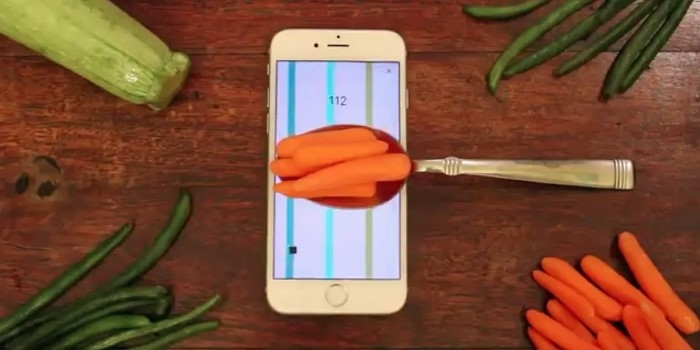
If a kitchen scale isn’t available, here are some useful ways to measure grams using teaspoons.
Use Standard Measuring Spoons
Measuring spoons provide a close approximation of grams to teaspoons. For dry ingredients, level off the spoon using a knife for accuracy.
Understand Ingredient Density
Different ingredients have different weights, so knowing their approximate gram-to-teaspoon conversion helps in estimating correct amounts.
Avoid Packing Ingredients Tightly
For ingredients like flour, spoon the ingredient into the measuring spoon lightly without pressing it down. Packing can result in inaccurate amounts.
Common Mistakes in Gram to Teaspoon Conversions
Assuming All Ingredients Convert Equally
One teaspoon of sugar does not weigh the same as one teaspoon of flour. Always check individual ingredient conversions.
Not Leveling Off Dry Ingredients
Scooping directly from a container can cause excess ingredient amounts. Always level off dry ingredients for accurate measurement.
Ignoring Moisture Content
Moisture affects ingredient weight. For example, damp brown sugar is heavier than dry granulated sugar in the same volume.
Quick Gram-to-Teaspoon Conversion Chart
| Grams | Sugar (tsp) | Flour (tsp) | Butter (tsp) | Salt (tsp) | Baking Powder (tsp) |
| 1 | 0.25 | 0.4 | 0.21 | 0.16 | 0.22 |
| 5 | 1.25 | 2 | 1 | 0.8 | 1.1 |
| 10 | 2.5 | 4 | 2 | 1.6 | 2.2 |
| 20 | 5 | 8 | 4 | 3.2 | 4.4 |
This table provides a quick reference for converting grams to teaspoons for commonly used ingredients.
FAQs
How many teaspoons are in ten grams of sugar?
There are approximately 2.5 teaspoons of granulated sugar in ten grams.
Is one gram of salt the same as one gram of sugar in teaspoons?
No, one gram of salt is about 0.16 teaspoons, whereas one gram of sugar is about 0.25 teaspoons. Salt is denser than sugar.
How do I measure grams of baking powder without a scale?
A standard teaspoon holds about 4.6 grams of baking powder, so adjust accordingly using teaspoons.
Can I use the same gram-to-teaspoon conversion for all types of flour?
No, different types of flour have different densities. For example, whole wheat flour is denser than all-purpose flour, so conversions vary slightly.
How do I convert grams of liquid ingredients to teaspoons?
Liquids have different densities. For example, one gram of honey is about 0.14 teaspoons, while one gram of water is about 0.2 teaspoons.
Converting grams to teaspoons is essential for accurate cooking and baking. Since ingredient densities vary, using correct conversions ensures precision in recipes. Keep this guide handy for quick and reliable measurements in the kitchen.