

Halloween presents unique safety hazards that can result in injuries necessitating medical treatment and legal claims. Costume-related accidents are a major source of these injuries every year in the United States. Data shows thousands suffer Halloween costume injuries annually – over half are children.
Most common are lacerations, contusions, fractures, sprains, and concussions from trips, slips, and falls while walking or running in costumes. Vision-blocking masks, ill-fitting shoes, dragging capes, sharp plastic edges, and flammable materials contribute to these accidents.
Proper planning and prevention are key to avoiding Halloween costume mishaps and keeping families safe. If accidents do occur, understanding options to pursue injury claims can help limit harm. By exercising caution, both children and adults can fully enjoy Halloween festivities.
Halloween Costume Accidents: A Scary Reality
The data shows Halloween costume mishaps are more common than you may think:
- According to the U.S. Consumer Product Safety Commission (CPSC), there were an estimated 3,800 Halloween costume-related injuries treated in hospital ERs in 2021.
- More than half of these injuries occurred in children under 18 years old.
- The most common injuries were lacerations, followed by contusions/abrasions. But fractures, strains/sprains, and even concussions also occurred.
- More than 65% of injuries occurred while individuals were walking or running in their costumes, with trips, slips, and falls being common causes.
These statistics highlight the safety risks posed by Halloween costumes. If an accident does occur, consulting a qualified Nevada personal injury lawyer can help advise you on options for seeking compensation. Costume issues that can lead to accidents include:
- Masks obstructing vision.
- Oversized footwear causes trips and falls.
- Long capes or trains lead to tripping hazards.
- Sharp edges on plastic masks and accessories.
- Flammable materials that can easily ignite.
Proper planning and prevention are key to avoiding Halloween costume mishaps and ensuring the safety of families. Here’s a chart displaying the count of Halloween costume-related injuries in the last 5 years:
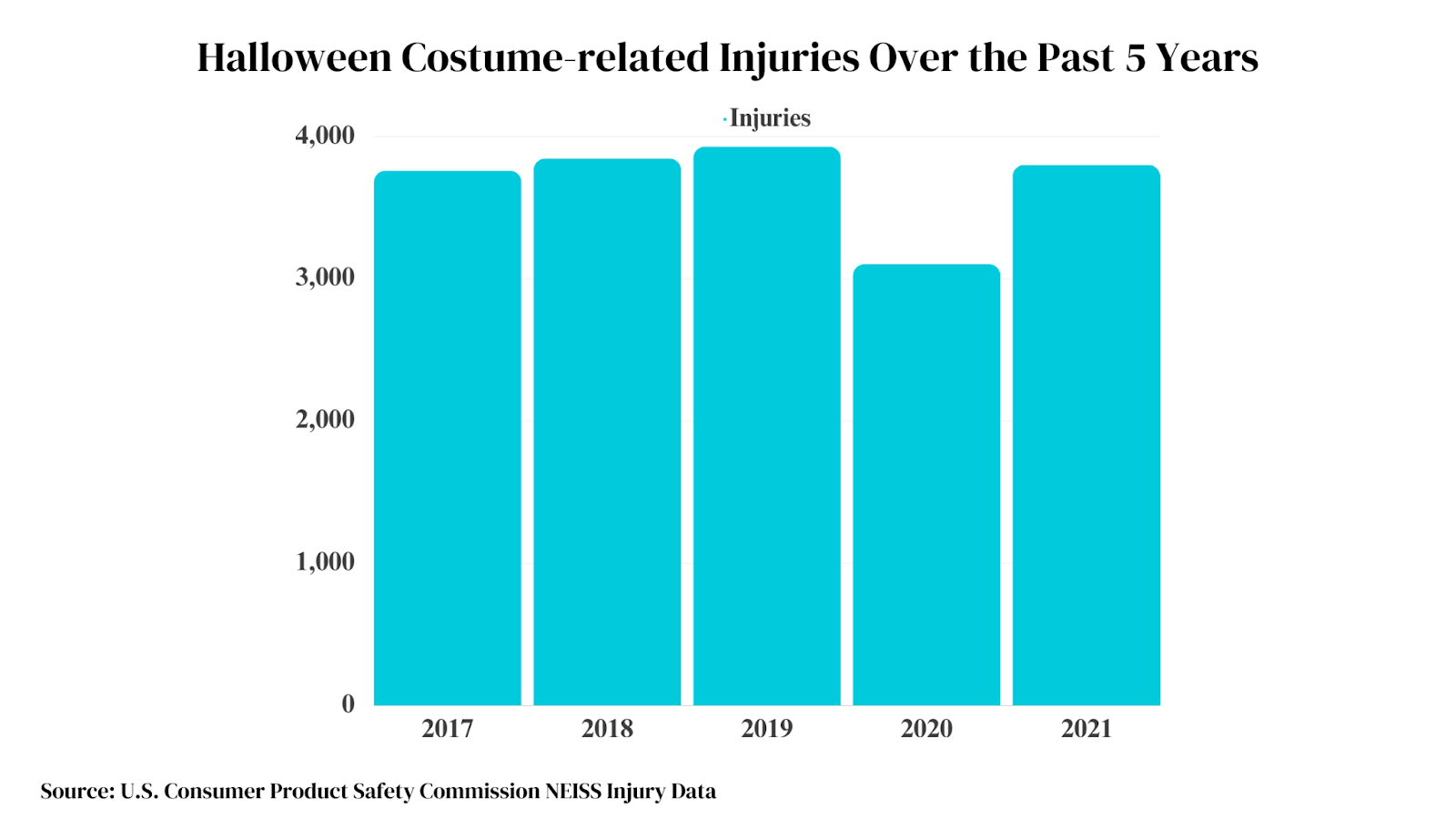
Data Source: U.S. Consumer Product Safety Commission NEISS Injury Data
Preventing Child Injuries in Halloween Costumes
Children are especially vulnerable to costume-related accidents. Follow these tips to keep kids safer:
- Choose flame-resistant costumes and avoid billowy fabrics that can easily catch fire if they come into contact with jack-o-lanterns, bonfires, or other ignition sources.
- Make sure masks have large eye holes that don’t limit peripheral vision. Avoid masks for kids under 3 years old.
- Check the length of capes and trains so they don’t cause tripping. Hem long capes to reduce drag.
- Select costumes with soft, flexible materials. Avoid sharp edges on plastic masks, swords, or other accessories.
- Ensure costumes aren’t so long that kids trip on the hems while walking or running.
- Use flexible, rubber-soled footwear. Avoid oversize shoes that make walking difficult.
- Add reflective tape to darker costumes to make kids more visible at night.
- Always accompany young children while trick-or-treating. Hold hands to provide stability.
Dedicating time to identifying and addressing potential hazards can significantly enhance Halloween celebrations’ safety.
Preventing Adult Halloween Costume Injuries
- Choose comfortable, loose-fitting costumes. Avoid heavy, bulky outfits that restrict movement.
- Ensure masks allow full peripheral vision and breathing. Test before wearing for long periods.
- Inspect accessories like swords or pitchforks. Make sure the edges are smooth and flexible, not sharp.
- Carefully check sizing guides when buying or renting costumes online.
- Wear supportive, low-heeled footwear. Make sure shoes fit properly to avoid blisters.
- Hem or trim long capes and gowns so they don’t drag on the ground.
- Use flexible props instead of real ones. Weigh down hats so they don’t blow away.
- Apply reflective tape to dark costumes to increase visibility at night.
- Secure wigs, beards, and jewelry with spirit gum or bobby pins to prevent them from detaching.
- Avoid open flames from candles, bonfires, etc. to reduce fire risks.
- Periodically check costumes remain securely attached and fitted.
- Stay sober – alcohol affects the coordination required for safe walking.
- Trick-or-treat with friends who can assist if costume issues arise.
Through thoughtful preparation and care, adults can prevent costume-related injuries.
What to Do After a Halloween Costume Accident
If a Halloween costume accident does occur, prompt action is important:
Seek Medical Attention
Even if an injury seems minor, have it evaluated by a doctor to identify any hidden issues and get proper treatment? Keep records of all diagnoses, test results, and prescribed treatment.
Document the Accident
Take photos of unsafe conditions that caused the accident. For example, cracks in a sidewalk. Also, photograph any costume defects. Like sharp edges. Save receipts for costumes. And rental agreements too.
Report Serious Injuries
Report serious injuries to the CPSC website SaferProducts.gov. Do this if the injury requires hospitalization. Or if it is fatal. This helps identify dangerous costumes. It prevents other families from similar hazards.
Consult a Personal Injury Attorney
Speak with a personal injury lawyer for serious injuries. They can advise if you can make a legal claim. Claims may be from costume defects. Or property dangers. Or someone else was negligent. A lawyer can handle talks with insurance companies.
Keep Records
Save paperwork about medical bills. Lost income too. Plus prescriptions. Appointments for therapy. Other accident expenses. Keep copies of police reports. And accident photos. Also rental agreements. Costume receipts. Any other relevant documents. All these support injury claims.
Thorough evidence gathering and reporting after a costume accident creates a paper trail to verify damages for potential legal action.
The Halloween Costume Accident Legal Process
The process of pursuing a personal injury claim for a Halloween costume accident involves several steps:
- Investigation:
Your attorney will gather evidence to identify liable parties and build a compelling case.
- Demand Letter:
The lawyer sends a demand letter to the responsible parties requesting compensation for your damages.
- Settlement Negotiations:
Your legal team engages in negotiations for a potential pre-trial settlement. It’s worth noting that over 90% of injury claims are resolved out of court.
- Lawsuit:
If no settlement is reached, your attorney files a personal injury lawsuit seeking compensation from the defendants.
- Discovery:
Both sides exchange relevant evidence through requests for production, interrogatories, depositions, and more.
- Trial:
If no settlement happens during discovery, the case proceeds to a civil trial before a judge or jury who determines liability and damages.
- Settlement:
Even after a trial starts, many cases still settle on the courthouse steps.
- Judgment:
If no settlement occurs, the jury returns a verdict or the judge issues a final judgment on the compensation owed.
This process ensures you receive maximum compensation if negligence or misconduct of another party caused your family’s Halloween injuries.
FAQs
What types of compensation can I claim for a Halloween costume accident injury?
You can potentially recover damages for medical bills, lost income, pain and suffering, disability, disfigurement, emotional distress, loss of enjoyment, and other accident-related costs. An attorney can fully assess viable damages.
What is the time frame for filing a Halloween costume accident claim?
Deadlines called statutes of limitations limit how long you have to pursue a personal injury claim. These vary by state – in Florida, it is 4 years, but only 2 years in Kentucky. Act quickly to preserve your right to take legal action.
Can I still file a claim if my child’s Halloween injury was partially their fault?
Yes, you can likely still recover damages under comparative negligence laws, which assign percentages of fault. Your compensation would be reduced by your child’s percentage of blame. An attorney can advise how contributory negligence may impact your specific case.
What evidence should I save from my child’s Halloween costume accident?
Save medical records, accident photos, police reports, costume receipts, rental agreements, medical expenses, therapy notes, income loss documentation, and anything else related to the injuries and effects. All this documentation helps prove liability and damages.
Who pays the legal fees for my Halloween costume accident claim?
Personal injury lawyers typically work on contingency, meaning they only collect a fee if they obtain compensation for you. So you pay nothing upfront – their fee comes out of your final settlement or award.
Conclusion
Halloween should be an enjoyable time, not one filled with injuries. But accidents do happen, often because of defective or dangerous costumes. Thoroughly documenting the accident and promptly consulting an attorney can help ensure you receive the maximum compensation if a Halloween costume mishap injures you or a family member.
Take precautions to ensure safety, but also be aware of your legal options if an accident does occur. Through proper preparation, you can ensure that Halloween remains enjoyable and free of accidents requiring emergency room visits.