

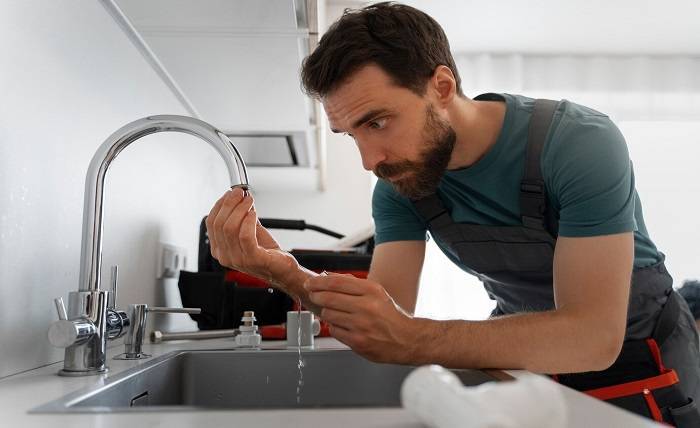
Faucets, an integral part of our everyday life, are often overlooked until we encounter a drip, leak, or other issue that disrupts our routine. In fact, these issues are quite common and may occur due to various reasons, from wear and tear to improper installation.
This guide aims to detail 5 common faucet problems that homeowners frequently face and provide practical, step-by-step instructions on addressing and fixing them.
To fix most leaks, you can perform simple home repairs by disassembling the faucet and cleaning mineral deposits; for more guidance on such repairs, consider checking out Diamondback Plumbing and Cooling.
1. Leaks
Leaky faucets can waste hundreds of gallons of water each day, leading to costly plumbing repairs if left unchecked. Luckily, most leaks can be easily fixed with simple DIY tools and parts; be sure to shut off the water supply valves behind the fixture before beginning any repair efforts.
One common cause of leaky faucets is worn washers. Every time the faucet is used, a rubber washer pushes against the valve seat to create an effective seal; over time, this can wear or even fracture its material and require replacement or installation of new cartridges.
Water pressure issues may be due to mineral deposits or debris buildup in fixtures over time, requiring vinegar cleaning to restore full water flow.
A weak stream or completely closed faucet could indicate that your shutoff valve under the sink has become inactive or clogged – turning on and off may help temporarily. Still, you should consult a professional to address the issue fully.
2. Noisy faucet
An unsightly or persistently buzzing faucet might sound like the kind of noise your parrot would make, but in actuality, it could be an indicator of serious inner chamber and valve issues.
A noisy or chattering faucet could indicate any number of issues with the inner chambers or valves of the unit itself; sometimes, this means clogged sprayer diverters or aerators need cleaning. Soaking these devices in vinegar may help loosen mineral deposits that limit water flow. For those using separate units, remove and clean as soon as possible to keep those issues under control.
Other causes of noisy faucets include faulty cartridges or stems, issues with water supply lines and excessive pressure causing shut-off valves and pipe walls to bang together, creating what is known as water hammer noise – usually heard when turning on taps or flushing toilets.
If the cartridge is at fault, removing it with either its plastic spanner cap (included with replacement cartridges) or using needle-nose pliers should help. Once detached, replacement washers, o-rings, and seals should resolve your leaky faucet issue.
3. Squeaky handles
Over time and through regular use and wear and tear, faucet handles may become loose or wobbly over time. Usually, the cause is a loose set screw located at the back of each handle that holds them firmly onto their stem extending from the cartridge.
This problem can be both frustrating and embarrassing in the bathroom, yet it is simple to address. The first step should be inspecting the handle and base for damage or obstructions. If the handles are loose, they require tightening with a screwdriver until secure.
Squeaking from your handle may indicate more serious problems, such as rust or cracked metal; in such instances, it is wise to consult a licensed plumber immediately.
4. Low water pressure
Low water pressure is one of the most infuriating problems a homeowner can encounter, often caused by mineral buildup or debris blocking up your faucet’s aerator. Luckily, this issue can easily be addressed by cleaning it out regularly.
To clean an aerator, first shut off your water supply to your faucet. Next, take steps to disassemble it using either a plastic spanner cap (usually included with a new cartridge) or needle-nose pliers tips to loosen and rotate the cartridge. Once loose, take steps to remove it and then clean out the assembly.
It is advised that you contact a plumber if your water pressure is noticeably declining, as it might be challenging to locate the problem without taking apart your faucet and can need more involved repair than anticipated.
5. Rust
Rust is another common problem that plagues many faucets—especially older ones. It is usually caused by a reaction between metal and oxygen in the presence of moisture, which is an abundant commodity in bathrooms and kitchens. While rust may appear as an aesthetic issue initially, it can cause significant damage over time, leading to leaks or even complete failure of the faucet.
To fix a rusty faucet, identify the extent of the rust. If it’s a minor surface issue, you can often remove it using a rust removal product, followed by a thorough cleaning. Apply the rust remover as per the instructions on the bottle, typically leaving it on for a specified period before scrubbing it off with a brush.
If rust has penetrated deeper into the faucet, it might be necessary to replace the entire unit. If you’re comfortable with DIY tasks, you can tackle this one yourself. Start by shutting off the water supply and carefully removing the old faucet. You’ll then need to install the new faucet following the manufacturer’s instructions.
If DIY isn’t your thing, or the problem seems more severe, it’s always a good idea to call in a professional plumber. They have the expertise and tools to handle this sort of job efficiently and effectively. Remember – it’s critical to address rust issues promptly to prevent further damage.