

Children with autism often engage in activities that provide them with sensory comfort and structured engagement. While every child is unique in their preferences and strengths, certain activities tend to be universally enjoyable among children on the autism spectrum.
These activities can help with sensory processing, communication skills and emotional regulation. Understanding what activities children with autism enjoy can not only enhance their daily routines but also help them develop essential skills.
Below are ten common activities that many children with autism love to do and how they can be beneficial.
-
Sensory Play with Textures and Materials
Sensory play is a favorite activity for many children with autism because it allows them to engage with different textures and consistencies. Activities like playing with kinetic sand, slime, or rice bins provide a soothing sensory experience. This can help children with autism regulate their emotions and focus their attention.
These activities are particularly beneficial for children who have sensory processing challenges, as they offer a safe way to become comfortable with different sensations.
In addition to providing comfort and stimulation, sensory play can also help improve fine motor skills and hand-eye coordination. When they are squeezing, pouring, and molding materials, children develop better control over their hand movements. Parents can learn about these special interests to help their child thrive and perform well in different situations.
-
Trampoline Jumping
Many children with autism love activities that involve repetitive physical movement, and trampoline jumping is one of their favorites. Jumping on a trampoline provides deep pressure input and proprioceptive stimulation, which can be calming for children with sensory processing differences.
The rhythmic bouncing motion helps them self-regulate, improving focus and reducing anxiety. Beyond its sensory benefits, trampoline jumping is also a great way to build muscle strength, coordination, and balance.
Some children with autism may struggle with motor planning, and activities like jumping can help improve body awareness.
-
Playing with Fidget Toys
Fidget toys are highly popular among children with autism because they provide tactile stimulation and help with self-regulation. Items like stress balls, pop-its, fidget spinners, and textured cubes can help children focus, reduce anxiety, and channel excess energy in a non-disruptive way.
Fidget toys are especially useful in classroom settings or social environments, where children may feel overwhelmed. These small, portable tools allow them to stay engaged without becoming overstimulated.
-
Watching Repetitive Videos or Playing with Light-Up Toys
Children with autism often enjoy watching repetitive visual stimuli, such as spinning objects, flashing lights, or animated videos with rhythmic patterns. This type of activity provides predictability and comfort, which can help children feel more secure and engaged.
Many children enjoy watching their favorite scenes from movies repeatedly or playing with light-up toys that change colors in a calming manner.
These activities can also serve as a tool for communication and learning. Parents and therapists can use a child’s favorite videos to encourage language development or introduce new concepts.
-
Water Play and Swimming
Water-based activities are a favorite for many children with autism because they provide calming sensory input. Whether it’s splashing in a bathtub, playing with a water table, or swimming in a pool, water play offers a soothing and enjoyable experience. The pressure of water against the body can help children feel more grounded and relaxed, making it an excellent activity for stress relief.
Swimming, in particular, is beneficial for children with autism as it helps with motor coordination, strength, and spatial awareness. Many children find swimming to be deeply enjoyable and therapeutic, and some even participate in aquatic therapy sessions to improve sensory integration and body control.
-
Playing with Puzzles and Sorting Games
Many children with autism enjoy structured activities like puzzles and sorting games because they provide a clear sense of order and completion. These activities help develop problem-solving skills, focus, and cognitive abilities while also offering a relaxing and engaging experience.
Sorting games, such as organizing objects by color, shape, or size, can also support visual processing and categorization skills. Completing puzzles gives children a sense of accomplishment, which can help boost confidence and patience while strengthening their ability to follow structured tasks.
-
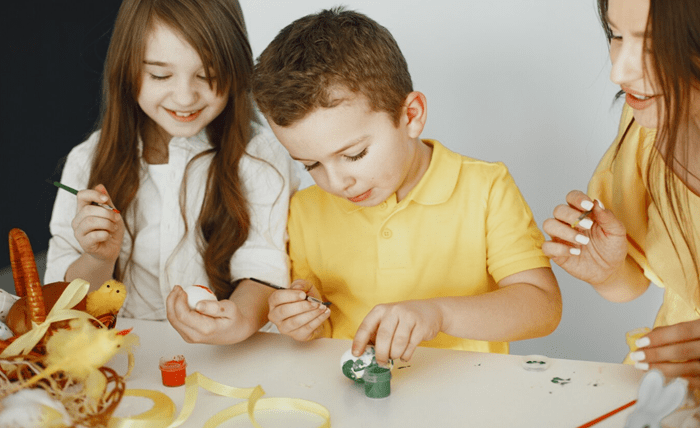
Engaging in Arts and Crafts
Children with autism often love creative activities like drawing, painting, or working with clay. These activities provide an excellent way to express emotions nonverbally while also improving fine motor skills and hand coordination. Some children enjoy repetitive strokes or patterns in drawing, while others prefer the sensory experience of finger painting.
Artistic activities can also be used as a communication tool, helping children express their thoughts and feelings in a way that feels natural to them. Many therapists incorporate arts and crafts into therapy sessions to encourage social interaction, imagination, and relaxation.
-
Listening to or Playing Music
Music is a powerful tool for children with autism, as it can provide predictability, comfort, and emotional regulation. Many children enjoy listening to familiar songs, repeating certain melodies, or even playing musical instruments like drums or xylophones. The structured rhythm of music helps with language development, memory, and social interaction.
Some children may also benefit from music therapy, which can improve sensory integration, communication, and cognitive skills. Music often serves as a universal language that allows children to connect with others while experiencing joy and relaxation.
-
Reading or Looking Through Picture Books
While some children with autism may struggle with verbal communication, many enjoy looking through picture books, storytelling, or being read to. Picture books with clear, repetitive patterns can be particularly engaging, as they provide a structured way to process information.
Reading can help improve comprehension, vocabulary, and attention span. For nonverbal children, books with interactive elements, such as touch-and-feel textures or lift-the-flap pages, can provide a sensory-rich experience that encourages exploration and engagement.
-
Building with Blocks or Legos
Building activities, such as using blocks, Legos, or stacking cups, are popular among children with autism. These activities provide a structured way to create and explore, allowing children to problem-solve, practice fine motor skills, and develop spatial awareness.
Many children find repetitive stacking and arranging to be a calming experience. These activities also encourage imaginative play, helping children develop creativity while following their own sense of order and structure.