

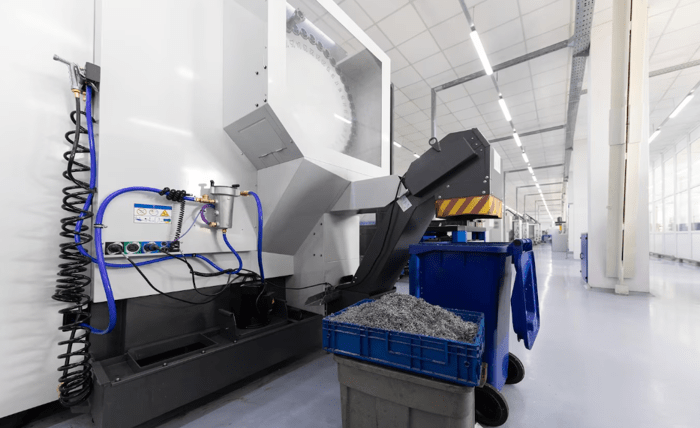
As global OEMs struggle to keep pace with increasing demands for product performance, reliability, and time to market, component manufacture now sits at the heart of innovation. Two industries at the forefront of this revolution are forging manufacturers and plastic injection molding companies. Despite differing materials and processes, however, both industries have a key role in building the goods that power today’s lifestyle and everything from industrial machines to electric vehicles and consumer durables to medical devices.
Why Forging Still Matters in a Digital World
Forging can be easily imagined as a legacy process from old, rough, and appropriate only for rudimentary parts. But forging manufacturers in today’s era are far from old-fashioned. Forging in current times is driven by computer-aided design (CAD), simulation software, and CNC-machined dies. The outcome? Better mechanical strength, grain alignment, and reliability for high-stress applications.
Forging is most valued in key industries like
-
Aerospace
-
Automotive (particularly drivetrain and suspension)
-
Oil and gas
-
Construction and heavy machinery
The most notable benefit that forging manufacturers can boast of is their metallurgical integrity. Being different from both casting and machining, forging is denser, resulting in higher fatigue resistance and most suited for components such as connecting rods, gears, and crankshafts.
The Rise of Plastic Injection Moulding Companies in Precision Manufacturing
In parallel to the developments in metalworking, the plastic components sector itself has seen its own evolution. Nowadays, a plastic injection moulding company employs advanced tooling, automation, and simulation software to produce high-precision components in large quantities. Such companies cater to a wide range of industries, such as:
-
Medical devices and diagnostics
-
Consumer electronics
-
Packaging and FMCG
-
Automotive interiors and lighting
What distinguishes a plastic injection moulding company as a vital entity is that it can merge speed with complexity. Whether a small gear for a wearable item or a big dashboard panel, injection molding gets it done accurately, with repeatability, as well as economically.
Material Matters: Strength vs. Versatility
One of the most fundamental differences between forging manufacturers and plastic injection molding companies is the palette of materials and their properties.
-
Forging: It works mostly with metals such as steel, aluminum, brass, and titanium. It aims to produce high strength-to-weight ratios, resistance to fatigue, and longevity.
-
Plastic Moulding: Provides access to a broad variety of polymers like ABS, polycarbonate, nylon, PEEK, and bioplastics. The materials offer flexibility, transparency, thermal resistance, or biocompatibility, depending upon applications.
OEMs tend to employ forged components for structural or load-carrying applications as well as molded plastic for enclosures, connectors, or functional aesthetics. The ability to procure both consistently is essential in upholding a solid, multi-material product planning approach.
How Modern Manufacturers Align with OEM Goals
What world OEMs desire is not a component but a solution. The top forging manufacturers and plastic injection molding companies have transformed to become allies who support product development rather than production. This is how most successful OEM-supportive suppliers operate:
-
DFM & Prototyping: Providing design for manufacturability (DFM) to lower time-to-market and improve production cost.
-
Tooling Excellence: In-house die design reduces changeovers to a minimum and maximizes accuracy.
-
Quality Control: Certifications like ISO 9001, IATF 16949, and AS9100 ensure consistency and compliance.
-
Process Monitoring: Leveraging IoT and automation to monitor parameters, minimizing defects and downtime.
When a sourcing partner can offer forging manufacturers and plastic injection moulding companies together in a single combined quality and logistics framework, it overcomes operational complexity as well as strengthens coordination throughout the BOM.
Example in Action: Agricultural Equipment Manufacturer
A multinational farm machine manufacturer required light yet strong pieces for their new series of intelligent reapers. Forged levers, hydraulic components, and drive pins were purchased from a federation of forging manufacturing companies in India. At the same time, control panel enclosures, sensor brackets, and handle grips were bought from a reputable plastic injection moulding company.
By engaging a contract manufacturing business that handled supplier qualification, quality auditing, and logistics in both areas, the OEM minimized project management overheads and saved 22% of costs without any adverse impact on quality.
India’s Value Proposition for Global OEMs
India is also becoming a strategic location for high-quality industrial components. Here’s why:
-
Skilled Engineering Talent: Specialized experience in metallurgy, polymer technology, and tool-making.
-
Cost-Effective Infrastructure: Reduced tooling and labor expense with international standard quality.
-
Process Innovation: Lean manufacturing, implementation of Kaizen, and adoption of Industry 4.0 tools.
-
End-to-End Project Management: With partners such as India Synergy, OEMs have access to verified forging manufacturers as well as plastic injection moulding companies in complete transparency with support.
Looking Ahead: Sustainability and Innovation
For both forging manufacturers and plastic injection moulding companies, there is a transition towards satisfying increasing demands for eco-friendly production.
-
Forging: Induction heating to reduce energy usage, as well as near-net-shape forging to reduce scrap.
-
Injection Moulding: More widespread adoption of bioplastics, closed-loop recycling, and energy-saving machines.
Furthermore, increasingly, digital twin-enabled smart factories, predictive maintenance, and quality control through AI-based systems are becoming prevalent, further increasing Indian manufacturers’ appeal at a global level.
Conclusion:
Whether high-strength forged components for mobility solutions or precision-molded parts for intelligent devices, international original equipment manufacturers rely on forging manufacturers’ companies’ and plastic injection molders’ technical competence and reliability. Combining these capabilities with India’s contract manufacturing base provides unrivaled value, speed, and innovation.
Need to simplify your sourcing of forgings as well as injection-molded parts? Collaborate with India Synergy to access verified forging manufacturers as well as plastic injection moulding companies in a single, unified supply chain system. Discover what we can do or contact our professionals to initiate your project today.