

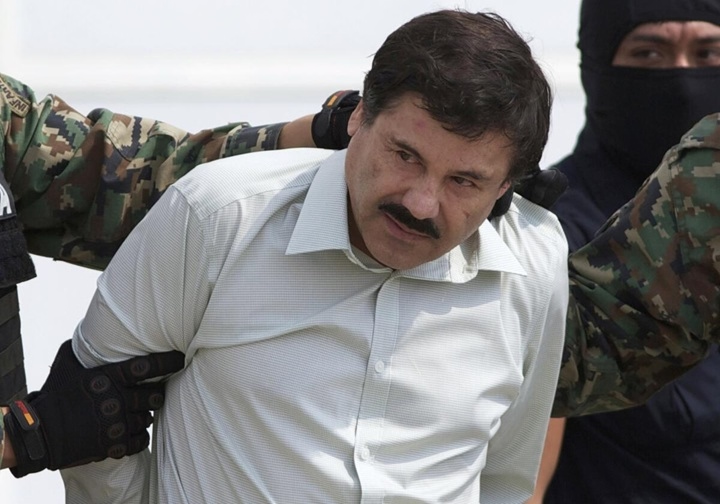
When you hear the name El Chapo, what springs to mind? A drug lord? A modern-day Robin Hood? Or just a guy with an uncanny talent for escaping maximum-security prisons? Whatever your mental image is, one thing’s for sure: Joaquín “El Chapo” Guzmán is no ordinary criminal. He’s a legend but not the kind you’d want to invite over for dinner.
Who Is El Chapo?
El Chapo, which means “Shorty” in Spanish (a nod to his 5-foot-6-inch frame), is one of the most notorious drug traffickers in history. Born in the rural mountains of Sinaloa, Mexico, in 1957, Joaquín Guzmán Loera rose from humble beginnings to become the leader of the Sinaloa Cartel arguably the most powerful and violent drug trafficking organization the world has ever seen.
If you think that sounds like the plot of a gritty Netflix series, you’re not far off. His life is filled with jaw-dropping moments, wild escapes, and a cat-and-mouse game with law enforcement that spans decades.
Early Life: From Farmer’s Son to Crime Boss?

Growing up in a poor mountain village, El Chapo was no stranger to hardship. Imagine working on your family’s small farm, barely scraping by, and then getting pulled into the darker side of life. For many, the lure of easy money is a siren call too strong to resist.
Legend has it that young Joaquín started out as a low-level marijuana and opium poppy farmer, helping his family cultivate crops that would eventually end up smuggled across the border. But he wasn’t content to stay small-time. Ambition or maybe desperation pushed him into the drug trade’s deeper waters.
Picture this: a young man learning the ropes, hustling to survive, and slowly climbing the ranks. By the 1980s, El Chapo was already carving out a name for himself, showing a mix of ruthless cunning and business savvy that would serve him well in the years to come.
The Rise of the Sinaloa Cartel
Now, drug cartels aren’t just about smuggling dope across borders. They’re complex, multi-billion-dollar enterprises, complete with hierarchies, alliances, betrayals, and a sprinkle of good ol’ violence.
Under El Chapo’s leadership, the Sinaloa Cartel expanded its influence like wildfire. They controlled massive drug routes into the United States, distributing cocaine, methamphetamine, heroin, and marijuana with chilling efficiency.
One thing’s for sure: this wasn’t your average street gang. Guzmán’s cartel was a global powerhouse, moving tons of narcotics, wielding immense political influence, and intimidating anyone who dared to stand in their way.
The Art of the Escape: El Chapo’s Legendary Prison Breaks
If El Chapo was a character in a movie, his prison escapes would be the climax scenes. Seriously, the guy escaped twice from maximum-security Mexican prisons and once from the seemingly inescapable Altiplano prison through a mile-long tunnel equipped with lighting, ventilation, and a motorcycle on rails. I mean, who builds a tunnel like that? It’s like something out of a spy thriller!
The first escape happened in 2001, reportedly hiding in a laundry cart. The second in 2015 was the tunnel masterpiece, and both embarrassingly highlighted the corruption and inefficiency within the Mexican penal system.
You have to admire the audacity. It’s almost like the guy thought, “Locks? Pfft, I’ll dig my way out.”
Capture and Trial: The Fall of a Drug Lord
El Chapo’s luck finally ran out in 2016 when Mexican authorities arrested him again. This time, the U.S. was dead serious about bringing him to justice. After a dramatic extradition to the United States in 2017, he faced a mountain of charges: drug trafficking, money laundering, murder, and more.
The 2019 trial in New York was a media circus. Witnesses spilled chilling details about the cartel’s operations, betrayals, and brutal tactics. It was like peeling back the curtain on one of the world’s darkest underbellies.
Eventually, he was convicted on multiple counts and sentenced to life plus 30 years locked up in the supermax prison ADX Florence in Colorado, known as the “Alcatraz of the Rockies.” This time, there’s no tunnel, no laundry cart, and no chance of an encore escape.
The Legacy of El Chapo: Why We’re Still Fascinated
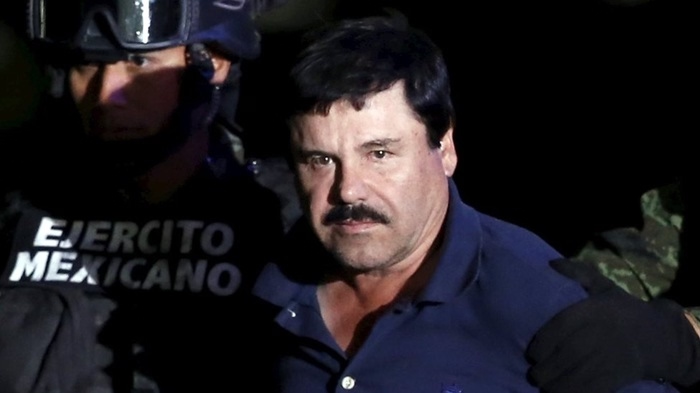
So, why does the story of El Chapo captivate us so much? Maybe because it’s a blend of myth and reality, a real-life saga that touches on power, greed, violence, and the pursuit of freedom.
Or perhaps it’s because, despite all his crimes, El Chapo’s story reminds us of how complicated the war on drugs really is. It’s a tangled web involving poverty, corruption, demand, and the harsh realities of life on both sides of the border.
And let’s be honest, there’s a part of us that can’t help but be curious about how one man could build an empire so vast, and then fall so spectacularly. It’s like watching a giant teeter on the edge will he rise again? Or will the weight of his sins finally pull him under?
What Can We Learn From El Chapo?
Looking at El Chapo’s life, you can’t help but reflect on the bigger picture. Drug cartels are more than just criminal organizations; they’re symptoms of deeper societal problems. Fighting them means addressing poverty, corruption, addiction, and the demand that fuels this shadow economy.
At the same time, his story is a cautionary tale about the seductive power of money and the inevitable consequences of living a life on the wrong side of the law. No matter how clever or daring you are, eventually, the music stops.
So yeah, El Chapo’s story is wild, fascinating, and, frankly, a bit tragic. But it’s also a reminder that behind the headlines and Hollywood dramatizations, there are real lives affected families torn apart, communities destroyed, and a world grappling with how to break this vicious cycle.