

Acquiring first aid skills is one of those important areas that should not be compromised in any organization aimed at maintaining a safe workplace. It is important to select the right training provider to guarantee that people are ready to manage an emergency, which can go a long way towards avoiding severe or fatal consequences.
The availability of many choices makes it necessary to make considerations when selecting a provider. Choosing the most suitable training provider for organizations is not simply done by making a price comparison, but it requires serious consideration of all the factors that will make the training useful and necessary for the employees.
1. Assess Your Organization’s Specific Needs
It is important to assess the specific training needs of your organization before undertaking the search for a first aid training provider. Do your employees operate in a high-risk area of employment like construction or manufacturing where employees are likely to get injured? Or are you situated in an office environment where a first aid requirement might not be the same as that of a construction site? Determining these factors will assist in eliminating all the remaining providers who do not undergo the specific training required in your workplace.
2. Ensure the First Aid Training Provider Is Accredited and Certified
To undertake first aid training, it is advisable to select a service provider who is accredited and certified by relevant bodies. This reduces the chances of hiring instructors with a curriculum that have not met the stipulated regulations on first aid, CPR, and AED courses. An accredited provider can also help make sure your employees get the right certification; this is important because sometimes, the law requires them to have these certifications for workplace safety.
3. Asses the Training Processes and Tools
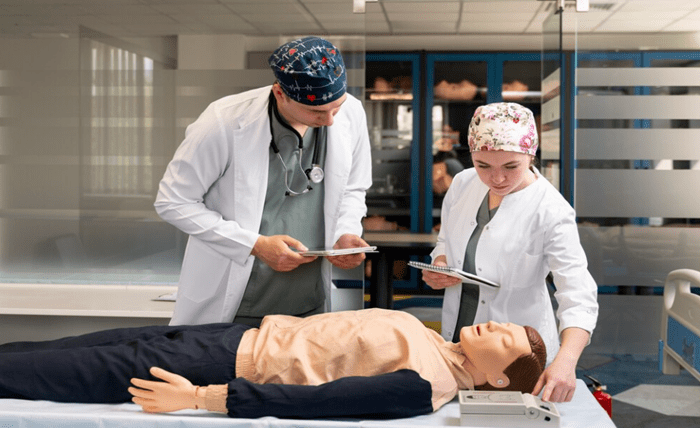
Seek qualified personnel who will integrate practical experience with theoretical knowledge. Practical training includes the main objective of helping to generate confidence among the employees, even during emergencies. There might also be programs that allow students to choose whether they would like to follow up online classes with occasional face-to-face meetings.
4. Check the Experience and Qualification of the Instructors
Another determinant of the effectiveness of the training is the background and academic achievements of the trainers involved. Trainers should possess practical experience in emergency response, healthcare, or a similar field. When considering any institution, it is pertinent to ask about the credentials of the teachers and their experience.
It is also helpful to go through some reviews or talk to other organizations that have ever worked with the provider. This may help provide a glimpse into what kind of teaching to expect as well as how satisfied former participants were when they completed the course.
5. Consider Cost and Flexibility
Price is always a dilemma when selecting a first aid training service provider. Costs do matter, yet, do not go for a provider just because he/she is cheap. Experience has shown that quality training could save millions of dollars in the event of an emergency and therefore it is worth spending money on.
Moreover, choose companies that are willing to adapt to your schedule and have flexible training programs. Your organization may require training at different times, and check that the provider can accommodate this.