

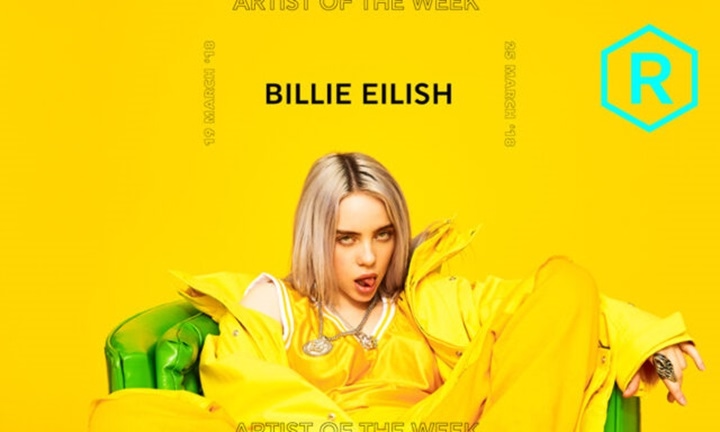
Billie Eilish is one of the most influential and groundbreaking artists of the 21st century. With her distinctive sound, unapologetic persona, and boundary-pushing creativity, she has captured the attention of audiences around the world. At just 18 years old, Eilish became the youngest artist to sweep the Grammy Awards in 2020, winning all four major categories: Best New Artist, Record of the Year, Song of the Year, and Album of the Year. But her journey to global superstardom was a complex and fascinating one, shaped by her unique upbringing, musical style, and the bold choices that define her career.
Early Life: A Creative Household

Billie Eilish Pirate Baird O’Connell was born on December 18, 2001, in Los Angeles, California, into a highly creative and supportive family. Her parents, Maggie Baird and Patrick O’Connell, were both actors and musicians, and they nurtured Billie and her brother Finneas in an environment filled with artistic expression. Homeschooled for most of her life, Billie was encouraged to explore her creativity from an early age.
At just 8 years old, Billie joined the Los Angeles Children’s Chorus, where she began developing her vocal skills. This early exposure to music, combined with her family’s artistic background, helped shape the artist she would later become. Her brother, Finneas, played a crucial role in her musical journey, acting as her producer and co-writer on many of her songs. Together, they formed a powerful creative partnership that would lead to some of the most innovative music in modern pop.
Breakthrough with “Ocean Eyes”
Billie Eilish’s career began to take off in 2015 when she uploaded the song “Ocean Eyes” to SoundCloud. Originally written by Finneas for his band, the hauntingly beautiful track was recorded by Billie at just 13 years old. The song quickly went viral, garnering millions of listens and catching the attention of music industry executives.
The ethereal, melancholic tone of “Ocean Eyes” set the stage for Billie’s unique style—one that would come to define her as an artist. The song’s success led to a record deal with Interscope Records, and it became clear that Billie Eilish was not just another teenage sensation but an artist with a deep well of talent and vision.
Debut EP “Don’t Smile at Me”
In August 2017, Billie released her debut EP, Don’t Smile at Me, a collection of songs that showcased her range as an artist. The EP featured tracks like “Bellyache,” “idontwannabeyouanymore,” and “My Boy,” each blending pop, alternative, and electronic elements in a way that was fresh and unexpected. The lyrics reflected Billie’s introspective and often dark view of the world, a stark contrast to the bubblegum pop that dominated the charts at the time.
Don’t Smile at Me was a critical and commercial success, catapulting Billie further into the public eye. Her unconventional image—often dressed in oversized, androgynous clothing and with a no-nonsense attitude—set her apart from other pop stars. Fans were drawn not only to her music but to her authenticity and refusal to conform to industry standards.
When We All Fall Asleep, Where Do We Go? – A Groundbreaking Debut Album

In 2019, Billie Eilish released her debut studio album, When We All Fall Asleep, Where Do We Go?, and it became a cultural phenomenon. The album debuted at number one on the Billboard 200 chart, making her the first artist born in the 2000s to achieve this feat. The album’s lead single, “Bad Guy,” became a worldwide hit, and its minimalist production, combined with Billie’s whispery, almost haunting vocals, stood out against the more polished, upbeat pop songs of the time.
The album’s themes of fear, anxiety, and vulnerability resonated deeply with listeners, especially younger audiences who related to Billie’s raw and unfiltered portrayal of mental health struggles. Songs like “bury a friend,” “wish you were gay,” and “you should see me in a crown” dealt with dark and complex emotions, blending pop, electropop, and industrial sounds to create a soundscape that was wholly original.
Billie’s brother, Finneas, once again played a significant role in the creation of the album, producing it in their home studio. Their close collaboration and shared vision helped shape the album’s unique sound, and together, they redefined what pop music could be. The album received widespread critical acclaim and earned Billie six Grammy nominations, cementing her place as one of the most exciting new voices in music.
Grammy Sweep: Making History
The 2020 Grammy Awards were a defining moment in Billie Eilish’s career. At just 18 years old, she became the youngest artist ever to win the four major Grammy categories—Album of the Year, Record of the Year, Song of the Year, and Best New Artist—in a single night. She also took home the award for Best Pop Vocal Album, bringing her total Grammy wins that night to five.
Her historic sweep at the Grammys was not only a testament to her talent but also a recognition of her impact on the music industry. Billie’s sound, image, and artistic choices had disrupted the pop landscape, and her Grammy wins solidified her status as a generational talent. Despite the immense success, Billie remained humble and grounded, often expressing surprise at the accolades she received.
The “Happier Than Ever” Era: Evolving as an Artist
In 2021, Billie Eilish released her sophomore album, Happier Than Ever, which marked a departure from the darker tones of her debut. While still introspective, the album explored new emotional territory, dealing with themes of fame, self-reflection, and personal growth. The title track, “Happier Than Ever,” was a standout, starting as a soft ballad before exploding into a powerful, emotionally charged anthem.
The album showcased Billie’s growth as an artist, both in terms of her songwriting and vocal performance. She continued to push boundaries with songs like “Your Power,” which addressed issues of abuse and manipulation, and “NDA,” which explored the pressures of fame. Happier Than Ever received critical acclaim for its maturity and emotional depth, proving that Billie Eilish was far from a one-hit-wonder.
The accompanying visuals for the album also demonstrated Billie’s evolving image. No longer sporting her signature neon green hair, Billie opted for a more subdued, blonde look, signaling a new chapter in her career. However, she remained as fiercely independent and unapologetic as ever, refusing to conform to industry standards of beauty or femininity.
Fashion and Identity: Breaking the Mold

Billie Eilish’s impact extends far beyond her music. From the beginning of her career, she has used fashion as a means of self-expression and as a way to challenge societal norms. Known for her oversized clothing and androgynous style, Billie has spoken openly about her choice to dress in baggy clothes as a way to avoid being objectified or judged based on her body.
Her distinctive style became a symbol of her resistance to the pressures often placed on young women in the entertainment industry. By refusing to conform to conventional standards of beauty and femininity, Billie empowered fans to embrace their individuality and reject societal expectations.
In 2021, Billie shocked the world when she appeared on the cover of Vogue in a more traditionally glamorous and feminine look. While the cover sparked conversation and controversy, Billie made it clear that her fashion choices were about her own empowerment and autonomy. She showed the world that she could embrace different facets of her identity without being confined to one style or image.
Mental Health Advocacy: Using Her Platform for Good
Throughout her career, Billie Eilish has been an outspoken advocate for mental health awareness. She has been candid about her own struggles with depression, anxiety, and body dysmorphia, using her platform to break the stigma surrounding mental health issues. Billie’s openness about her experiences has resonated with millions of fans, many of whom look to her as a source of comfort and inspiration.
Her songs often reflect the complexities of mental health, and she has encouraged young people to seek help and support if they are struggling. In interviews and public appearances, Billie has used her voice to advocate for greater mental health resources and to promote self-care and self-acceptance.
Billie Eilish’s rise to fame has been nothing short of extraordinary. From her early beginnings in a creative household to becoming a global icon, she has redefined what it means to be a pop star. With her distinctive sound, bold fashion choices, and commitment to mental health advocacy, Billie has carved out a space for herself in the music industry that is both unique and powerful.
Her ability to push boundaries and challenge norms has made her a voice for a generation, and her influence shows no signs of slowing down. As Billie Eilish continues to evolve as an artist and as a person, one thing is certain: she will remain a force to be reckoned with for years to come.