

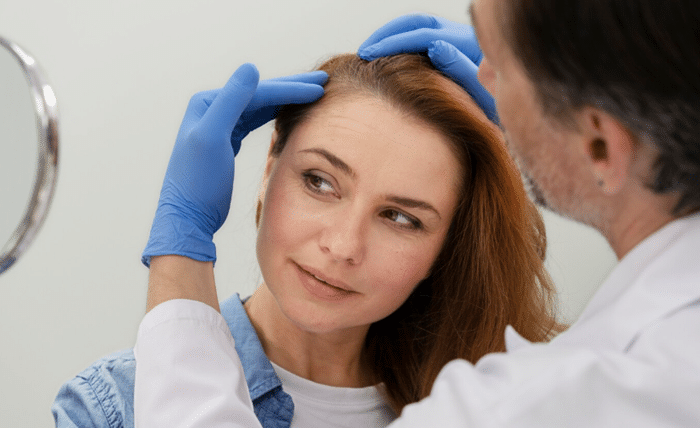
Hair loss rarely has a single explanation. Hormonal changes, physical stress, illness and medical treatment can all contribute to increased shedding or reduced density. The visible effect may look similar, but the underlying cause matters when deciding what to do next.
Among the newer options attracting clinical interest are topical treatments based on stem cell-derived proteins and growth factors. Despite the shorthand often used to describe them, these treatments do not necessarily contain live stem cells. Instead, they use signalling substances produced by stem cells, with the aim of supporting activity within the scalp and hair follicles.
Early clinical experience suggests that this approach may be useful for certain people with mild to moderate hair loss. It may also complement procedures such as hair transplantation. However, practitioners emphasize that suitability, consistent application, and realistic expectations remain essential.
What does “stem cell hair treatment” mean?
Stem cells are studied for their ability to support repair and regeneration. In haircare, the focus can be on the substances these cells release rather than on transplanting the cells themselves.
Calecim Professional’s technology arose from work involving mesenchymal stem cells obtained from red deer umbilical cord tissue. Cell biologists observed that compounds produced by these cells appeared to have a positive effect on hair growth and regeneration.
The company subsequently developed PTT-6, a patented mixture of stem cell-derived growth factors and cytokines. Some of these signalling proteins are packaged within exosomes, which are extracellular vesicles that carry information between cells.
Data from Calecim’s clinical research suggest that, PTT-6 increased hair-follicle stem-cell activity by 24 per cent and reduced inflammation by 30 times. These findings come from research conducted by the brand and should be understood in that context.
PTT-6 is included in the Calecim Advanced Hair System, a topical programme designed specifically for thinning hair. Its purpose is to deliver the proprietary ingredient to the scalp, where it can interact with the hair-follicle environment.
Why delivery matters
A promising ingredient still needs to reach the intended area. For that reason, the Advanced Hair System is used with a derma stamp or professional microneedling, depending on the setting.
Dr Patrick Treacy, cosmetic doctor and director of Dublin’s Ailesbury Clinic, has used Calecim serum with patients since 2012. He says earlier formulations were intended more broadly for skin rejuvenation, although clinicians also recognised the potential of their stem cell-derived growth factors and exosomes for stimulating hair follicles.
In his experience, the later introduction of a dedicated hair system provided a more focused way to deliver PTT-6 directly to the relevant areas. He reports that this has produced more consistent and faster outcomes than the clinic’s earlier, less specialised applications.
Microneedling and derma stamping should not be treated as interchangeable in every situation. The appropriate delivery method depends on the individual, the nature of the hair loss and whether treatment is being performed at home or under professional supervision.
Which types of hair loss may respond?
Treacy reports using the system for clients with mild to moderate hair loss, including telogen effluvium, postpartum shedding and alopecia areata. Telogen effluvium can occur following physical or emotional stress, while postpartum hair loss is associated with the period after pregnancy.
The clinic has also received positive feedback from women experiencing thinning during perimenopause or after illness. Men with early-stage androgenetic alopecia have reported darker and denser regrowth. Treacy additionally mentions anecdotal accounts of grey hairs regaining pigment.
Many clients have noticed reduced shedding and the appearance of new vellus hairs within six weeks, according to Treacy. This is earlier than the three-to-six-month period he associates with many other hair treatments. It does not mean every user will see the same change within that timeframe. The cause and severity of hair loss, treatment adherence and individual response can all influence what happens.
The system has also been applied to donor and recipient areas following hair transplantation. Treacy says this use has helped support graft survival and faster recovery in his patients, positioning the serum as a possible addition to surgical treatment rather than necessarily an alternative to it.
Clinical assessment still comes first
Dr Deirdre Fitzgerald and Dr Róisín Fitzgerald, who use the Advanced Hair System at Fitzgerald Private Clinics in Dublin and Donegal, stress that patient selection is central to successful treatment.
A consultation can help identify the pattern of hair loss and determine whether the system is appropriate. It also creates an opportunity to discuss the commitment involved. The Fitzgerald clinicians note that patients need to be able to follow a long-term maintenance programme, rather than viewing treatment as a quick, one-off intervention.
That distinction matters because “hair loss” describes a visible symptom, not a single condition. A treatment used for stress-related shedding may not be suitable in precisely the same way for postpartum changes, alopecia areata or androgenetic alopecia.
What does the experience look like in practice?
Kieran Walsh, founder of National Beauty, approached the treatment with both professional and personal experience. He had worked in the hair industry for 15 years and had undergone a hair transplant at a Dublin clinic three years before discussing his results.
Walsh says the scientific rationale first drew his attention to the system. After becoming one of its early users in Ireland, he reported improvements in hair regeneration, density and overall condition, which he could see when comparing photographs taken before and after treatment.
His account illustrates why consistent visual documentation can be useful. Day-to-day changes in hair are difficult to judge in the mirror, particularly when regrowth is gradual. Photographs taken under similar conditions can offer a clearer record, although an individual result cannot guarantee the same response for someone else.
Practitioners also report that clients value the absence of downtime and the sourcing of the stem cell-derived ingredients. These practical considerations make Calecim Professional’s hair loss treatment easier to incorporate into an ongoing routine, provided the person is prepared to maintain it.
A measured way to consider regenerative haircare
Stem cell-derived hair treatments occupy a space between conventional topical care and more invasive procedures. The available accounts from clinicians and users are encouraging, particularly for reduced shedding, early vellus growth and improved density. At the same time, the evidence cited here includes brand research, practitioner observations and individual experiences, all of which should be interpreted with appropriate caution.
Anyone considering this approach should begin by establishing what kind of hair loss they have. The next question is whether an at-home programme or professionally delivered treatment is more suitable. Clear expectations are equally important: visible changes may appear within weeks for some people, but maintenance and follow-up remain part of the process.
The technology may be sophisticated, but the soundest decision still begins with a careful diagnosis, appropriate patient selection and a treatment plan that can be followed consistently.