


Stainless steel is a frequently used metal.
It can be found in your home kitchen, medical equipment, your car / plane, the building you are in and even bridges! But why? What is it about it that makes it so stainless? The key is in a particular metal in it – chromium.
What is Stainless Steel?
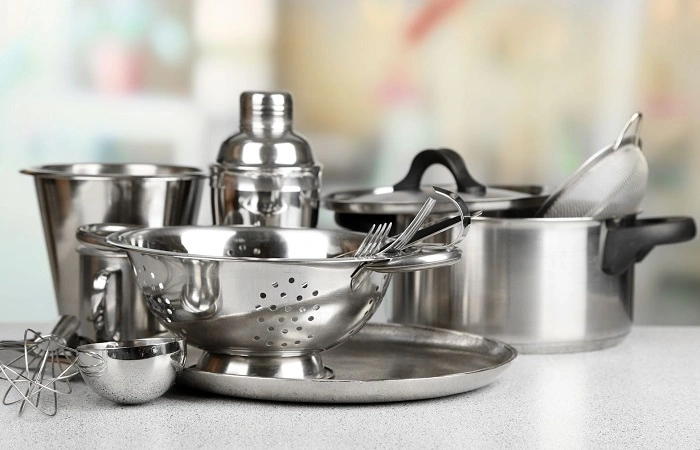
This is a metal made from a combination of metals. This is known as an alloy. This combination is mostly iron. But there are other metals that can comprise stainless steel. The metals that can be included in stainless steel are some of:
- Iron
- Chromium
- Carbon
- Nickel
- Molybdenum
- Manganese
This resistance to staining is the differentiator between stainless and other metals. This is what led to this alloy being known as “stainless steel.” At least 10.5 percent chromium must be in an alloy for it to be stainless steel.
Why is Chromium important in Stainless Steel?
Chromium is in the presence of air. It is able to react with oxygen forming a surface layer of chromium oxide. This layer:
- Is transparent
- Is waterproof, will not absorb water
- Improves the ability of the steel to withstand rust and other types of corrosion
The layer formed is extremely thin, but extremely strong and protects the steel underneath. This will also heal and so scratched or worn areas will heal themselves. Hence the protection will be re-established and re-formed whenever the steel is exposed to oxygen.
Why is “Regular” Steel not “Stainless”?
Regular steel (carbon steel) has either a small amount or no chromium, and will not develop that oxide layer. So, regular steel is extremely susceptible to rust and other forms of corrosion. Typically, the oxygen reacts with the iron and creates an oxide film commonly known as rust on the surface of the steel (iron). This iron oxide layer is not “sticky” as is the chromium oxide layer above. It peels off from the steel. It exposes fresh iron to the water and oxygen. This further helps to create the rusting effect.
Is it possible for it to rust?
It will not prevent rust but as described above will be able to resist it. Stainless steel can corrode when the following situations exist:
- It is damaged by the protective oxide film. The surface is damaged by the protective oxide film.
- Other materials (iron) have been added to the steel.
- With very corrosive materials present
- When exposed to salt water
- If the wrong grade of stainless steel is used for an application
If you don’t establish the conditions above. Then you will be able to ensure that your stainless steel will not rust.
Also Read: Simplify Your Digital Life
What are the number of types of stainless steel?
- steel comes in various grades. The most common types are:
304 Stainless Steel
It is the most popular grade. This kind is employed in the manufacturing of kitchen sinks, utensils and different pieces of gear. It has a high corrosion resistance, good suitability for use in kitchens.
316 Stainless Steel
Another popular variety of stainless steel is this one. It has a higher resistance to corrosion than the previous one. It is applied in making medicines, surgical instruments, chemical processing machinery, to even marine accessories.
430 Stainless Steel
Stainless steel 430 is the other popular type of stainless steel. This grade is not as resistant to corrosion as the 300 series stainless steels, but is also a less expensive grade. It is used for making kitchenware.
Some ways to prevent damage

Here are some common things you should avoid doing. In order to last your stainless-steel equipment for a longer period. The most frequent causes of damage are:
- Exposure to bleach
- Exposure to acids
- Use of steel wool to clean it
- Cleaning with chlorides and other chemicals
- Exposure to salt water
Taking care of it
Here are some factors to consider when it comes to maintenance to ensure that you don’t end up harming the surface of your equipment. The most crucial maintenance tips are:
- To clean the equipment regularly and dry it.
- To use soft clothes to clean equipment.
- To remove water spots (and other staining)
- In order not to be in contact with harmful substances.
Some of the applications of the stainless-steel
An extremely useful and malleable metal. The most popular applications of stainless-steel are:
- Making of home appliances and utensils
- Making of medical and surgical equipment
- The process of manufacturing water bottles. The process of manufacturing water bottles.
- Ongoing research and development of water storage and processing equipment is taking place.
- Making of buildings and other structures
- Making of vehicles
- Making of industrial equipment
Let’s see what makes stainless steel “stainless”? One particular ingredient, though – chromium – is the answer to that question. When stainless steel is brought into contact with oxygen, an oxide film will be produced that will prevent contact between the water and other corrosive materials. When scratched, this layer self repairs and stainless steel is a durable material. Metal stainless steel is not completely corrosion-proof. But it should stand up to rusting under normal conditions for a long time.