

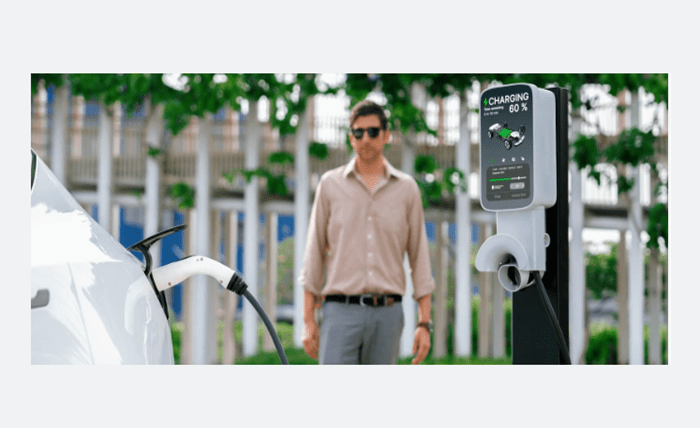
As electric vehicles (EVs) gain ground in mainstream automotive markets, the expectations of the American workforce are beginning to shift accordingly. Increasing numbers of professionals now drive EVs, and with that comes a new set of logistical needs. Among the most significant of these is access to reliable, efficient charging infrastructure during the workday. For employers, this presents both a challenge and an opportunity. Those that embrace these shifts early stand to attract top talent and align with forward-looking environmental values.
The presence of EV chargers at work is no longer just a perk; it is steadily becoming a necessity. Employees are viewing charging access as they would health benefits or gym memberships. For workers with long commutes or limited at-home charging options, the ability to plug in at the office can make or break the decision to buy an electric car in the first place. Forward-thinking companies are beginning to recognize this evolving demand, integrating EV charging infrastructure into their broader sustainability and wellness programs.
Moreover, this shift signals a deeper societal transformation toward cleaner energy and smarter urban planning. As public policy and consumer behavior converge around carbon reduction, businesses that lag behind in adapting to these demands risk not only reputational damage but also operational inefficiencies. Implementing EV infrastructure is not simply an act of environmental goodwill; it is a strategic maneuver in a climate-conscious economy.
Operational Benefits Beyond Green Credentials
While the environmental rationale for EV chargers in workplaces is compelling, the operational benefits are equally persuasive. For one, EV charging stations represent a tangible commitment to modernization, sending a clear message to stakeholders that a company is embracing the future of mobility. This messaging can translate into stronger relationships with clients, investors, and community leaders who prioritize corporate responsibility.
From an HR perspective, EV infrastructure can serve as a powerful retention and recruitment tool. As millennials and Gen Z professionals enter the workforce in greater numbers, sustainability is not just an ideal but an expectation. The companies that install charging units are viewed as more attractive, progressive, and attuned to the values of their employees. In a tight labor market, small differentiators like this can tip the scales in favor of an employer.
Furthermore, with proper planning, EV infrastructure can actually create new revenue streams. Through tiered access systems, companies can charge for usage or offer loyalty programs to employees. Integrating smart energy management systems enables real-time data analytics, helping facilities teams optimize energy distribution across buildings. These capabilities empower companies not only to reduce costs but also to take control of their energy consumption profiles in an increasingly electric world.
Infrastructure Realities: What It Takes to Make It Work
Installing EV charging stations is not a plug-and-play process. It demands a serious commitment to infrastructure upgrades, particularly for companies housed in older buildings. High-powered DC chargers, in particular, may require dedicated circuits, transformer upgrades, and close coordination with local utilities. These challenges are manageable, but they require foresight, budgeting, and the right technical partners.
At this juncture, companies are turning to experts who can deliver adaptable and high-performance solutions. Manufacturers like ChargeTronix exemplify this new standard. Known for their robust, modular EV charging systems, ChargeTronix provides scalable installations that can support large employee populations. Their distributed architecture, which allows a single power cabinet to energize multiple dispensers, has proven especially useful for enterprise environments. The company’s emphasis on intelligent customization, from payment integration to cord management, makes it a viable option for employers aiming to future-proof their charging capabilities without sacrificing reliability.
Beyond the hardware, success hinges on smart deployment. Location mapping, employee feedback loops, and maintenance protocols must be baked into the rollout plan. Companies that treat EV charging as a set-it-and-forget-it amenity often find themselves facing underutilization, outages, or employee dissatisfaction. Sustainable infrastructure, after all, is only as effective as the planning that supports it.
Legal, Regulatory, and Policy Considerations
The evolving legislative landscape around EV adoption adds another layer of urgency and complexity to the conversation. In many jurisdictions, local and state governments are introducing mandates for EV infrastructure in commercial buildings. Some regions offer tax incentives or rebates to businesses that install chargers, effectively reducing capital expenditures and encouraging faster adoption.
Simultaneously, there is increasing pressure from sustainability regulations and reporting frameworks. Environmental, Social, and Governance (ESG) disclosures are becoming standardized across industries, compelling corporations to account for their carbon footprints and mitigation strategies. Incorporating EV charging into facility management plans can contribute favorably to these reports, providing tangible metrics in the “E” category of ESG. This allows companies to align their infrastructure investments with broader compliance goals.
However, the regulatory patchwork is complex and often fragmented. Employers must navigate zoning laws, utility partnerships, and evolving standards around charger interoperability. Legal teams and facility managers must work hand-in-hand to ensure that installations are not only compliant but also adaptable to future legislative shifts. Choosing vendors and platforms that prioritize flexibility and upgradeability becomes critical in this context.
Corporate Image and the Optics of Sustainability
In today’s media-savvy culture, visible environmental initiatives can powerfully shape public perception. EV charging stations, particularly when branded or publicly accessible, serve as a physical manifestation of corporate sustainability commitments. They signal that a company is not just talking the talk but actively investing in the green transition.
This visibility is especially valuable for companies in consumer-facing industries or those based in eco-conscious urban centers. Having rows of charging stations outside a corporate campus can feature prominently in sustainability reports, promotional videos, and media coverage. It’s a branding win that reinforces trust with customers and enhances shareholder value by tying environmental action to financial performance.
Still, perception alone is not enough. Stakeholders today are savvier than ever and demand authenticity. Superficial gestures are quickly scrutinized, and companies that fall short of comprehensive integration risk backlash. A well-implemented charging strategy, backed by data transparency and employee engagement, helps ensure that sustainability claims withstand public and investor scrutiny.
The Future is Electric: Planning for Long-Term Viability
EV adoption is poised to accelerate dramatically over the next decade, fueled by advancements in battery technology, federal incentives, and increasing fuel costs. As these trends converge, businesses must begin treating EV infrastructure not as a luxury but as a long-term operational necessity. Those who hesitate risk facing future disruptions and missed opportunities.
Forward-thinking companies are building not only for current demand but for the EV ecosystem of tomorrow. This includes accommodating future vehicle-to-grid technologies, integrating renewable energy sources like solar arrays, and preparing for peak-load management scenarios. Infrastructure investments made today must be scalable, upgradeable, and modular to handle tomorrow’s demands.
Ultimately, the case for workplace EV charging is no longer hypothetical. It is grounded in economic logic, employee satisfaction, and long-term sustainability. The companies that rise to meet this challenge will not only power the cars of the future but drive the cultural and corporate transformation necessary for a more electrified, responsible world.