

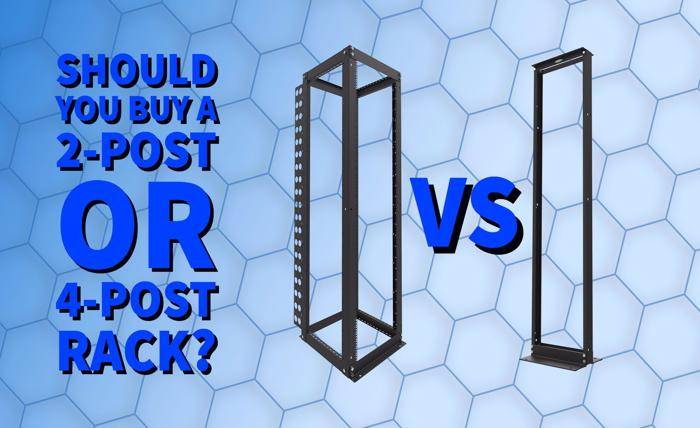
Choosing the right server rack is essential for optimizing space, ensuring proper airflow, and maintaining stability in your IT environment. Among the most common types are 2-post and 4-post racks. Understanding their differences and advantages can help you make an informed decision based on your equipment, space, and usage needs.
What is a 2-Post Rack?
A 2-post rack, also known as a relay enclosure, features two vertical rails and is primarily used for lighter equipment that can be center-mounted or flush-mounted. Advantages of 2-post racks:
- Space-saving design: Takes up less floor space, ideal for tight server rooms or network closets.
- Cost-effective: Typically more affordable than 4-rail racks.
- Easy accessibility: Offers quick access for cabling and maintenance.
- Suitable for telecom and lightweight equipment: Perfect for patch panels, switches, and routers.
The 2-post rack server from Sysracks is a reliable and space-saving solution designed for lightweight network and telecom equipment. With its two vertical mounting posts, it supports both center and flush mounting, making it ideal for patch panels, switches, and routers. Thanks to its compact footprint, the Side 2-post rack is perfect for small server rooms, IT closets, and distribution points. Durable construction, easy access for maintenance, and a cost-effective design make it a smart choice for streamlined infrastructure that doesn’t compromise on quality.
What is a 4-Post Rack?
A 4-post rack features four vertical rails that provide front and rear support for mounting deeper and heavier equipment.
Advantages of 4-rail enclosures:
- Greater stability: Supports heavy servers, UPS systems, and storage arrays.
- Full-depth support: Allows mounting of standard-depth IT equipment securely.
- Compatibility with accessories: Ideal for shelves, cable managers, and cooling systems.
- Better cable management: More room for structured routing of power and data cables.
2-Post vs. 4-Post: Key Differences Explained
Choosing between a 2-support and a four-column rack depends on your equipment type, available space, and technical requirements. Below is a concise comparison that outlines the main factors to consider.
- Mounting style: The 2-post design supports front-only installation (center or flush mounted). In contrast, the 4-support configuration allows both front and rear support, ideal for deeper equipment.
- Load capacity: Suitable for lighter devices like switches and patch panels, the 2-post frame is best for basic setups. Heavier units, such as servers and UPS systems, require the sturdier 4-rail option.
- Depth support: Limited depth makes the 2-post enclosure ideal for shallow equipment, while the 4-post accommodates full-sized hardware up to 1200 mm.
- Space efficiency: With a smaller footprint, the 2-post model fits well in compact environments. The four-column rack takes more room but ensures greater stability and flexibility.
- Accessory compatibility: The 2-post version has fewer built-in mounting options and may require additional brackets. The 4-post allows seamless integration with shelves, cable organizers, and cooling systems.
- Cable management: Basic cable routing is possible with the 2-post but often needs external guides. The 4-rail enables cleaner and more organized wiring thanks to rear support.
- Cost: More affordable and efficient for small-scale installations, the 2-post is budget-friendly. The 4-support, while pricier, delivers enhanced capacity and expandability.
- Common use cases: The 2-rail frame is commonly used in telecommunications and network closets. The four-column setup is preferred in server rooms and enterprise-level data centers.
If you’re working with lightweight, shallow equipment in a compact space, a 2-post rack may be all you require. However, for full-size servers, scalability, and long-term infrastructure, a 4-post rack provides superior support and flexibility. Evaluate your current and future needs to make the best choice for your setup.