

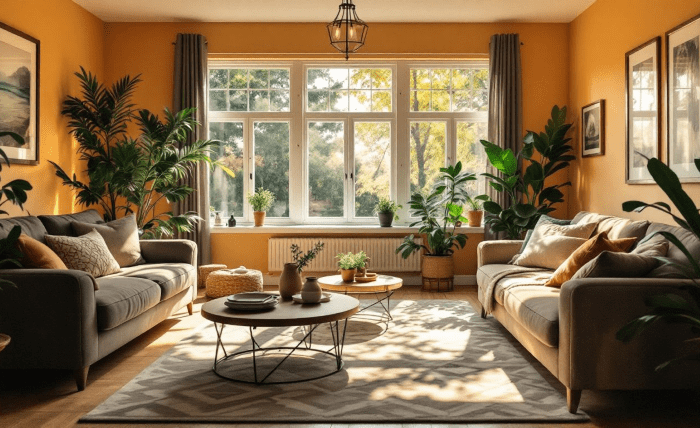
Choosing the right paint color can feel tricky, especially when natural light changes how it looks. Light affects mood, energy, and even your home’s vibe. This blog will show you how to pick colors that work with sunlight for beauty and efficiency.
Keep reading—you’ll see your space in a whole new light!
Key Takeaways
- Natural light changes how paint colors look during the day. Test colors in different lighting to pick the best hue.
- Lighter shades and reflective finishes like satin or semi-gloss brighten rooms by bouncing sunlight, reducing shadows, and saving energy.
- South-facing windows enhance warm tones; east-facing spaces glow with soft morning light; west-facing areas deepen reds and oranges in late afternoon sun.
- Light-colored walls and reflective surfaces can make rooms feel bigger, cozier, and reduce reliance on artificial lights.
- Strategic paint choices can lower energy use by reflecting natural light better while balancing warmth in cooler north-facing areas.
The Influence of Natural Light on Paint Colors
The sun doesn’t just light a room; it changes how colors look. A shade that feels warm in the morning may seem cooler by sundown.
Brightening and warming effects
South-facing windows soak in sunlight all day, making rooms feel brighter and cozier. This natural lighting enhances lighter paint colors, like soft creams or pastels, giving them a fresh glow.
West-facing rooms catch warm afternoon light, boosting tones with golden hues that make walls appear richer.
East-facing spaces enjoy cooler morning light that gives colors a crisp look. Pairing this with satin or semi-gloss finishes adds reflection to amplify brightness further. Strategically chosen paints can maximize these warming effects while keeping energy consumption low.
Shifts in color perception throughout the day
Morning light, especially in east-facing rooms, makes colors appear soft and warm. Pastels like pale blues or creams glow gently under this lighting. As the sun moves higher, midday light brings a cooler tone, making whites sharper and colors more accurate.
North-facing spaces often keep a steady coolness all day due to indirect sunlight.
By late afternoon, west-facing rooms take on golden tones that deepen reds and oranges but dull blues. Artificial lighting at night shifts colors again depending on the bulbs used.
LED bulbs can mimic daylight with high color temperatures or create warmth with softer options, affecting how paint looks after sunset. Testing paints during these changes helps find hues that suit every time of day.
Maximizing Aesthetics with Natural Light
Natural light can transform a room’s vibe, making it feel open and airy. Thoughtful paint choices can amplify this effect, creating spaces that shine throughout the day.
Choosing reflective paint finishes
Satin and semi-gloss finishes bounce light around the room, making spaces feel brighter. These reflective surfaces work great in rooms with limited natural light or north-facing walls.
They enhance illumination by reflecting sunlight, reducing reliance on artificial lighting during the day.
Besides improving brightness, they are practical for busy homes. Reflective paint is easier to clean than matte options, perfect for kitchens or kids’ rooms. Pair these finishes with lighter wall colors to maximize energy savings and create a fresh look that feels open and airy.
Enhancing room dimensions with lighter shades
Lighter colors like whites, creams, and soft pastels make rooms feel bigger. They reflect natural light, brightening the space and reducing shadows. This method works well for small rooms or spaces with low ceilings.
Pair light-colored walls with white or beige furniture to enhance the effect. Add reflective surfaces like mirrors or glass decor to spread sunlight further. This strategy creates an open feeling while also reducing reliance on artificial lighting during daylight hours.
Energy Efficiency Through Strategic Paint Selection
Choosing the right interior paint can cut down energy costs. Light-colored walls reflect natural light, brightening spaces without much artificial lighting. Satin and semi-gloss finishes boost reflection even more, making rooms feel well-lit.
This reduces reliance on LED bulbs and other fixtures during daylight hours, shrinking electricity bills.
East-facing rooms catch soft morning light; lighter shades enhance that glow beautifully. South-facing ones bask in sunlight most of the day—pale earthy tones balance this brightness and keep spaces cool.
North-facing spots get less sun; warmer hues can amplify what little light gets through sheer curtains or solar tubes. The result? Cozier interiors with reduced heating needs and healthier living environments year-round!
Conclusion
Natural light has a big impact on how paint looks in your home. It can brighten spaces, shift moods, and even save energy. Lighter shades paired with reflective finishes make rooms feel spacious and alive.
Thoughtful color choices can also reduce energy use, helping both your wallet and the planet. Use natural light smartly to create a beautiful and efficient space that lifts your spirits every day.