

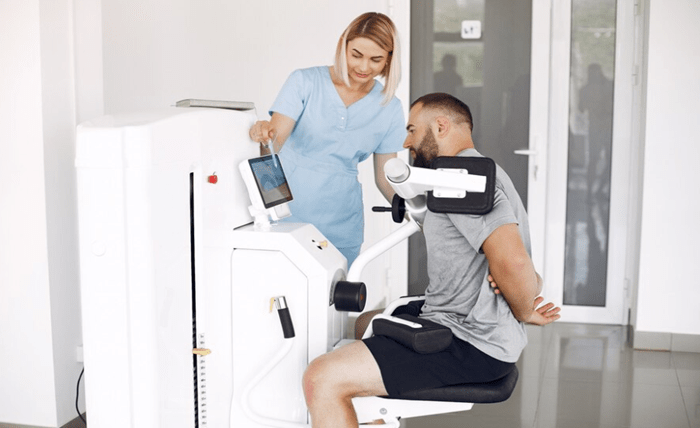
Robotics for functional rehabilitation is becoming increasingly widespread and appreciated in the field of neuromotor rehabilitation aimed at recovering disabilities generated following neurological pathologies such as brain lesions, spinal cord injuries, strokes, multiple sclerosis, Parkinson’s disease and all orthopedic pathologies due to severe trauma to the central nervous system. Studies and experience confirm that robotic rehabilitation is more effective than traditional rehabilitation.
What is functional rehabilitation robotics?
Robotics for functional rehabilitation is the discipline that enables the recovery of disabilities acquired following trauma to the central nervous system.
A fundamental element of robotic rehabilitation is the presence of therapists capable of perfectly managing robotic systems and modulating them according to patients’ needs. Indeed, the real strength of functional rehabilitation robotics lies in the ability to vary the parameters that make the rehabilitation pathway suitable for the patient. The combination of highly efficient machines and trained operators is therefore essential.
The best medical centers in Turkey are equipped with the latest generation of functional robotic rehabilitation systems and operators who deal with patients suffering from motor deficits on a daily basis.
A complete rehabilitation service also includes, in some cases, other neuropsychological speech and language rehabilitation activities. This calls for collaboration between the robotic rehabilitation operator and professionals such as orthopedists, speech therapists and podiatrists.
Robotic rehabilitation in Turkey
Robotic rehabilitation in Turkey has become an important part of the healthcare landscape, with advanced technologies being integrated into physical therapy. Robotic systems such as exoskeletons, robotic arms, and gait trainers are increasingly used in hospitals and rehabilitation centers to assist patients recovering from strokes, spinal cord injuries, and musculoskeletal disorders. These technologies provide precise and repetitive movement exercises, helping patients regain motor functions and independence. With Turkey’s growing investment in healthcare innovation and technology, robotic rehabilitation is expected to continue evolving, offering effective and accessible solutions for rehabilitation patients.
Why is rehabilitation robotics important?
The effectiveness of rehabilitation robotics has been demonstrated by clinical trials on subjects suffering from damage to the central nervous system caused, for example, by a stroke. These patients show great potential for recovery following repetitive rehabilitation, such as that provided by the robot. In fact, repetitiveness, frequency and intensity are the elements most conducive to functional recovery.
This type of movement stimulates the implementation of correct neuromotor sequences, which are automatically assimilated by the individual.
Robotics is proving more effective than traditional therapy, particularly in the recovery of certain movements, such as shoulder abduction and forearm flexion, where the recovery process appears to be faster and more efficient.
What is the procedure for robotic rehabilitation treatment in Turkey?
Robotic rehabilitation treatment in Turkey is preceded by a physiatric visit, during which the rehabilitation project is drawn up and the methods and objectives are shared with the patient.
The program is then defined with the team’s other operators, and the most appropriate rehabilitation modalities are identified.
In our centers, patients can undergo manual and instrumental rehabilitation using :
- Reo-Ambulator robotic system for gait rehabilitation
- Reo-Go robotic system for upper limb rehabilitation
- radial shockwave therapy
- Vibratory Focused Therapy
- tecartherapy
- proprioceptive rehabilitation on computerized platform
- mats for dynamic proprioceptive rehabilitation
- electrotherapy for pain relief and neuromuscular stimulation
Robotic functional re-education treatments generally require a great deal of time and regularity, but thanks to the intensity and repetitiveness of the actions induced and required, excellent and often permanent results can be achieved.