

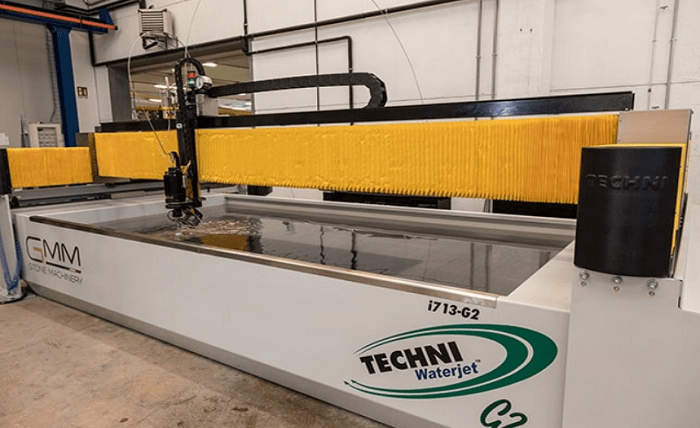
Water jet cutting stands out as a versatile, precise, and efficient technology used across various industries. From aerospace to fashion, the ability to cut a wide range of materials without thermal distortion is a significant advantage. Through this guide, TECHNI Waterjet® will explore how this technology uses high-pressure water to make precise cuts and discuss the wide range of applications that benefit from its unique capabilities.
What is Water Jet Cutting?
Water jet cutting is a process that uses a high-pressure stream of water, sometimes combined with an abrasive material, to slice through different materials. Unlike traditional cutting methods, water jet cutting does not generate heat, thus preventing the alteration or warping of materials. This section will explain the fundamental operating principles that underpin this technology.
How Does Water Jet Cutting Work?
The water jet cutting process involves several critical stages:
- Pump generation: The process begins with a high-pressure pump that generates the water pressure needed for cutting.
- Water acceleration: The water is then accelerated through a small-diameter nozzle to increase its velocity.
- Material interaction and cutting process: The high-speed water stream interacts with the material, cutting it precisely without mechanical stresses.
The Critical Role of High-Pressure Water Jet Pumps
At the heart of the water jet cutting system is the high-pressure pump, which is pivotal in achieving the necessary water velocity and pressure. This section will explore how these pumps drive the process and influence the cutting capabilities.
How Do High-Pressure Water Jet Pumps Operate?
High-pressure water jet pumps operate through a combination of mechanical and hydraulic functions. The intricacies of these functions enable the pump to elevate normal water pressure to the high levels required for effective cutting.
Key Components of High-Pressure Water Jet Pumps
Understanding the components of these pumps is essential for appreciating their efficiency and capabilities. Key components include:
- Intensifiers: These are used to increase water pressure.
- Seals: They prevent leaks and manage the internal pressures.
- Nozzles: Critical for focusing the water stream at high velocities.
Advantages of Using High-Pressure Water Jet Pumps
The use of high-pressure pumps in water jet systems offers numerous advantages:
- Precision: Allows for intricate cutting patterns and fine details.
- Versatility: Capable of cutting a variety of materials.
- Minimized material waste: Reduces excess waste due to narrow kerf.
What Materials Can Be Cut with Water Jet Technology?
Water jet technology is adept at cutting a diverse range of materials, each interacting uniquely with the high-pressure water stream:
- Metals: From aluminum to hardened steel.
- Glass: Including delicate and complex shapes.
- Stone: Ideal for intricate designs in marble and granite.
- Composites: Efficiently cuts through layered materials without delamination.
How Does Material Thickness Affect Water Jet Cutting?
The effectiveness of water jet cutting can vary significantly with material thickness. This section will discuss how different thicknesses influence both the efficiency and quality of the cut.
What Are the Key Parameters in Water Jet Cutting?
Several parameters play crucial roles in optimizing water jet cutting performance. Understanding and controlling these can significantly impact the precision and quality of cuts:
- Pressure: Higher pressures increase cutting power and speed.
- Nozzle size: Affects the focus and intensity of the water stream.
- Abrasive type: Different abrasives can enhance cutting capabilities for specific materials.
How Do Pressure Settings Influence Cutting Precision?
Adjusting the pressure settings allows operators to fine-tune the cutting process to achieve desired outcomes. Higher pressures are typically used for thicker or harder materials, while lower pressures might be used for delicate materials to prevent damage.
What Are the Cutting Tolerances with Water Jet Cutting?
Water jet cutting is renowned for its high precision. Typical tolerances include:
- Kerf width: Ranges from 0.5 to 1.5 mm depending on the nozzle used.
- Dimensional tolerance: Can be as tight as ±0.1 mm.
- Positioning tolerance: Ensures extremely accurate placement of cuts.
Step-by-Step Guide to Setting Up a Water Jet Cutting Machine
Proper setup is vital for maximizing the efficiency of a water jet cutter. Key steps include:
- Installation of pumps and connecting machinery: Ensuring all components are securely fitted and aligned.
- Calibration of cutting parameters: Adjusting the machine settings based on material type and desired precision.
- Test cutting and adjustments: Conducting trial runs and making necessary tweaks for optimal performance.
Safety Protocols for Operating Water Jet Cutters
Operating a water jet cutter safely is paramount to prevent accidents and maintain efficiency. Essential safety tips include:
- Protective equipment: Operators should wear goggles, ear protection, and water-resistant clothing.
- Operational checks: Regularly inspecting the machine for any signs of wear or leaks.
- Emergency procedures: Establishing clear protocols for handling potential emergencies or equipment failures.
Maintenance Tips for High-Pressure Water Jet Pumps
To ensure longevity and consistent performance of water jet pumps, regular maintenance is critical:
- Regular inspections: Checking for wear and tear, especially on high-wear components like seals and nozzles.
- Lubrication: Ensuring all moving parts are properly lubricated to reduce friction and wear.
- Cleaning: Keeping the pump and related components free from debris and buildup.
Comparing Water Jet Cutting to Other Cutting Technologies
Water jet cutting holds distinct advantages over other technologies such as plasma, and laser cutting technology:
- Efficiency: Often faster and more efficient for thick material cutting.
- Cost-effectiveness: Reduces tool wear and energy costs compared to other methods.
- Material limitations: Capable of cutting materials that are difficult or impossible for other technologies due to thermal or mechanical restrictions.
Innovations and Future Trends in Water Jet Cutting
The field of water jet cutting is evolving rapidly, with new advancements promising even greater efficiencies and capabilities. Technological developments to watch include:
- Automation and control technology: Enhancements in software and CNC controls that allow for more precise and automated cutting processes.
- Pump and nozzle innovations: New designs that increase pressure and efficiency, reducing operating costs.
Case Studies: Successful Applications of Water Jet Cutting
Water jet cutting has proven invaluable in numerous industries, demonstrating its versatility and effectiveness:
- Aerospace: For cutting complex, lightweight materials used in aircraft manufacturing.
- Automotive: In fabricating parts with high precision and minimal waste.
- Art and design: Enabling artists to create intricate designs in a variety of materials without damage.
Conclusion
Water jet cutting technology, especially with the use of high-pressure water jet pumps, continues to redefine precision and efficiency in manufacturing and creative industries. As technology progresses, the capabilities of water jet cutting will expand even further, making it a key player in the future of material fabrication.