

In our daily lives, we often encounter different units of measurement, especially when dealing with weight or mass. Whether you’re cooking, shopping, or working on a science project, understanding how to convert between different units can be incredibly useful. One common conversion is between ounces and kilograms. But how many ounces are there in a kilo? In this comprehensive blog post, we’ll explore the answer to that question, dive into the history and usage of these units, and provide practical examples of how to convert between ounces and kilograms in various contexts.
Understanding Kilograms and Ounces
Before we dive into the conversion, it’s essential to understand what kilograms and ounces are, where they come from, and how they are used.
What is a Kilogram?
The kilogram (kg) is the base unit of mass in the International System of Units (SI), which is the modern form of the metric system. It is widely used around the world for everyday measurements, particularly in scientific, industrial, and commercial contexts. One kilogram is defined as the mass of the International Prototype of the Kilogram, a platinum-iridium alloy cylinder stored in France.
In everyday terms, a kilogram is roughly equivalent to the mass of a liter of water. The kilogram is used to measure everything from body weight to groceries, and it is a standard unit in most countries globally.
What is an Ounce?
The ounce is a unit of mass commonly used in the United States and a few other countries that follow the imperial system. There are two types of ounces: the avoirdupois ounce and the troy ounce.
- Avoirdupois Ounce: The avoirdupois ounce is the most common type and is used to measure the weight of most everyday items. One avoirdupois ounce is equal to approximately 28.35 grams.
- Troy Ounce: The troy ounce is used primarily in the measurement of precious metals like gold, silver, and platinum. One troy ounce is equal to approximately 31.1 grams.
In this post, we’ll focus on the avoirdupois ounce, as it is the one most commonly used in everyday weight measurements.
The Relationship Between Kilograms and Ounces
To convert between kilograms and ounces, you need to know the relationship between these two units. Specifically, one kilogram is equal to approximately 35.274 avoirdupois ounces. This means that for every kilogram of mass, there are about 35.274 ounces.
This conversion factor is crucial for accurate measurements when you need to switch between the metric system and the imperial system, particularly in contexts like cooking, weightlifting, and international trade.
Historical Context: The Evolution of Measurement Systems
The Metric System and the Kilogram
The metric system, including the kilogram, was developed during the French Revolution as a way to standardize measurements across Europe. Before its introduction, various regions and countries used different units of measurement, leading to confusion and inefficiency.
The kilogram was initially defined in 1795 as the mass of one liter of water at its maximum density (4°C). This definition was later refined, and in 1889, the International Prototype of the Kilogram was created as the standard reference.
The metric system, with its simplicity and consistency, quickly spread across the world. Today, it is the most widely used system of measurement globally, with the kilogram serving as the base unit of mass.
The Imperial System and the Ounce
The imperial system, which includes the ounce, has its roots in medieval England. The system was formalized in 1824 with the British Weights and Measures Act, which standardized various units of measurement, including the pound and the ounce.
The avoirdupois ounce, which is used in the imperial system, was defined as 1/16 of a pound. The system spread to many English-speaking countries, including the United States, where it is still commonly used today.
Despite the global adoption of the metric system, the imperial system remains prevalent in the United States, particularly in everyday measurements like weight and volume.
Practical Applications of Converting Kilograms to Ounces
In the Kitchen: Cooking and Baking
One of the most common scenarios where you might need to convert kilograms to ounces is in the kitchen. Recipes from different countries often use different units of measurement, and being able to convert between them is essential for accurate cooking and baking.
For example, if a European recipe calls for 1 kilogram of flour, and you’re using an American kitchen scale that measures in ounces, you’ll need to convert that kilogram into ounces:
- 1 kilogram of flour × 35.274 = 35.274 ounces of flour
This conversion ensures that you are using the correct amount of each ingredient, leading to better results in your cooking or baking.
In Weightlifting: Measuring Weights
Weightlifting and fitness enthusiasts often encounter both kilograms and pounds in their workouts. Since a pound contains 16 ounces, and knowing that 1 kilogram equals 2.20462 pounds, you can use these conversions to measure and compare weights accurately.
For instance, if a weightlifting plate is labeled as 20 kilograms, you can convert it to ounces to understand its weight in the imperial system:
- 20 kilograms × 35.274 = 705.48 ounces
This conversion can be particularly helpful if you’re traveling or training in a country that uses a different measurement system.
In Shipping and International Trade
When dealing with international shipping and trade, understanding how to convert between kilograms and ounces is crucial for calculating shipping costs, customs duties, and other logistical details.
For example, if you’re shipping a package that weighs 5 kilograms, and you need to provide the weight in ounces for a US-based shipping company, you would convert the weight as follows:
- 5 kilograms × 35.274 = 176.37 ounces
Accurate conversions help ensure that you comply with regulations and avoid potential delays or additional costs.
In Science and Medicine
In scientific research and medicine, precise measurements are essential. Scientists and medical professionals often need to convert between different units to ensure accuracy in experiments, formulations, and dosages.
For instance, if a chemical sample weighs 0.5 kilograms, and the protocol requires the weight in ounces, you would convert it as follows:
- 0.5 kilograms × 35.274 = 17.637 ounces
This level of precision is crucial in fields where even small errors can have significant consequences.
Step-by-Step Guide: How to Convert Kilograms to Ounces
Converting kilograms to ounces is a straightforward process that involves multiplying the number of kilograms by the conversion factor (35.274). Here’s a step-by-step guide:
1. Identify the Weight in Kilograms
Start by determining the weight in kilograms that you need to convert. This value might come from a recipe, a product label, a weightlifting plate, or another source.
2. Use the Conversion Factor
Multiply the weight in kilograms by the conversion factor to convert it to ounces:
- Conversion Factor: 1 kilogram = 35.274 ounces
3. Perform the Calculation
Use a calculator to multiply the weight in kilograms by 35.274. For example:
- If you have 2 kilograms: 2 kg × 35.274 = 70.548 ounces
- If you have 7.5 kilograms: 7.5 kg × 35.274 = 264.555 ounces
4. Round the Result (If Necessary)
Depending on the context, you may need to round the result to a certain number of decimal places. For example, in cooking, you might round to the nearest whole number, while in scientific applications, you might need to keep more decimal places for accuracy.
5. Double-Check Your Work
Finally, double-check your calculations to ensure accuracy. This is especially important in contexts where precision is critical, such as in science, medicine, or industrial applications.
Common Mistakes and How to Avoid Them
Confusing Different Types of Ounces
One common mistake is confusing avoirdupois ounces with troy ounces. Since the troy ounce is heavier than the avoirdupois ounce (31.1 grams vs. 28.35 grams), using the wrong type of ounce can lead to significant errors, particularly when dealing with precious metals.
To avoid this mistake, always confirm which type of ounce you are dealing with and use the correct conversion factor.
Rounding Errors
Another common mistake is rounding too early in the calculation process. Rounding should be done at the end of the calculation to maintain accuracy. If you round too early, you might introduce errors that compound over multiple calculations.
To avoid this, keep as many decimal places as possible throughout the calculation and only round the final result as needed.
Mixing Units
Mixing units from different measurement systems (e.g., using pounds and ounces interchangeably with kilograms) can lead to confusion and errors. Always ensure that you are using consistent units throughout your calculations.
To avoid this mistake, convert all units to the same system before performing any calculations.
Tools for Converting Kilograms to Ounces
Online Converters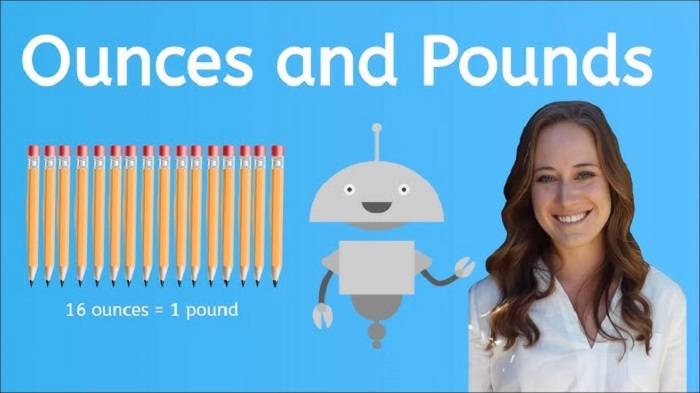
One of the easiest ways to convert kilograms to ounces is by using online converters. Many websites offer free tools where you simply enter the number of kilograms, and the site automatically provides the equivalent weight in ounces.
Calculator
A basic calculator is another handy tool for converting kilograms to ounces. Simply enter the number of kilograms, multiply by 35.274, and you have your answer.
Conversion Tables
For those who prefer to work offline, conversion tables can be a useful reference. These tables list common conversions from kilograms to ounces, allowing you to quickly find the equivalent weight without doing the math yourself.
Smartphone Apps
There are also many smartphone apps available that can perform unit conversions, including from kilograms to ounces. These apps often provide additional features, such as converting between other units of weight, volume, and length.
Why Understanding the Kilograms to Ounces Conversion Matters
Global Communication
In a globalized world, understanding how to convert between different units of measurement is crucial for clear communication. Whether you’re working with international clients, following a recipe from another country, or shipping products overseas, knowing how to convert kilograms to ounces ensures that you can communicate effectively and avoid misunderstandings.
Precision in Everyday Life
Whether you’re cooking, weightlifting, or working on a science project, precision matters. Understanding how to convert between kilograms and ounces allows you to make accurate measurements, leading to better results in your daily activities.
Educational Foundation
Learning about unit conversions is also an important part of building a strong foundation in mathematics and science. These skills are essential for more advanced topics in these fields and are valuable in many professional and academic contexts.
Related Post:
Unlocking the Jackpot: The Allure of Powerball
Clash of Titans: Inter Miami vs. Al Nassr – A Football Showdown Beyond Borders
Showdown in the Sun: Dallas FC vs. Inter Miami – Clash of Titans!
Understanding how many ounces are in a kilo and knowing how to convert between these units is a valuable skill in various aspects of life. From cooking and weightlifting to shipping and scientific research, accurate conversions ensure that you achieve the desired results.
By mastering the conversion factor and practicing with real-world examples, you can confidently navigate between the metric and imperial systems, making your daily tasks easier and more precise. Whether you’re a student, a professional, or someone who loves to cook, this knowledge will serve you well in countless situations.