

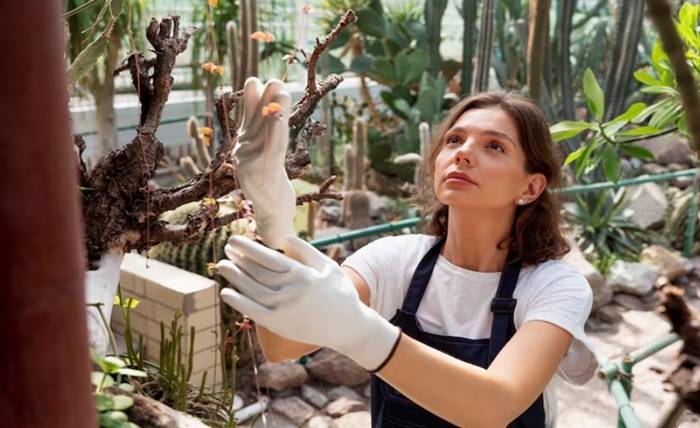
When most people look at the trees in their backyard, they see shade, autumn colors, or perhaps a bit of a nuisance when the leaves start to fall. However, a certified arborist looks at those same trees and sees a complex, living system that requires precise care to survive the challenges of modern life.
While it’s tempting to think of tree care as a simple weekend DIY project involving a ladder and a saw, the reality is much more scientific. Trees are some of the oldest living organisms on the planet, and in our urban environments, they are often under immense stress. From compacted soil to invasive pests, your trees are fighting a quiet battle for survival. Hiring a certified arborist isn’t just about “getting the trees trimmed”, it’s about bringing in a specialist who understands the biology, physics, and ecology of these giant plants.
What Exactly is a Certified Arborist?
To put it simply, a certified arborist is the “tree doctor” of the botanical world. Unlike a general landscaper or a tree lopper, an arborist has undergone years of rigorous training and passed comprehensive examinations administered by organizations like the International Society of Arboriculture (ISA).
The Diagnostic Approach
When a certified arborist arrives at your property, they don’t just look at the branches. They start with the “feet” of the tree, the root zone. They use specialized tools like soil probes to check for compaction or moisture levels and diagnostic kits to test for microscopic fungal infections.
This scientific approach allows them to catch “invisible” problems. For example, a tree might look green and healthy on the outside while its internal structure is being hollowed out by wood-decay fungi. An arborist can identify these structural risks long before a storm turns that tree into a liability for your home.
The Art and Science of Pruning
Pruning is perhaps the most misunderstood aspect of tree maintenance. Many homeowners view it as a haircut, but to a certified arborist, it is a surgical procedure. Every cut made to a tree is a wound that the tree must “codit” (Compartmentalization of Decay in Trees), a process where the tree grows over the wound to seal it off.
Why Technique Matters
An untrained person might “top” a tree, cutting off the upper main stems to reduce its height. To a certified arborist, topping is a cardinal sin. It leads to weak, vertical regrowth called “water sprouts” that are prone to snapping and invites disease into the heart of the tree.
Instead, a professional uses techniques like:
- Thinning: Removing specific branches to increase light penetration and air movement, which prevents fungal growth.
- Reduction: Carefully shortening branches to reduce the weight on a heavy limb, preventing it from tearing away during a windstorm.
- Elevation: Removing lower branches to provide clearance for pedestrians, vehicles, or buildings without compromising the tree’s health.
Guardians of the “Urban Forest”
In a city, trees are more than just decoration; they are essential infrastructure. They cool our streets, clean our air, and increase our property values. However, the “concrete jungle” is a hostile place for a tree.
A certified arborist plays a vital role in community ecology. They understand how trees interact with power lines, sidewalks, and underground utilities. They are the advocates who ensure that as cities grow, our green canopy isn’t sacrificed. By managing urban forestry, arborists help mitigate the “heat island effect,” making our neighborhoods more livable for everyone.
How to Choose the Right Specialist
Not all people who own a chainsaw are created equal. When you are looking to hire a certified arborist, you need to do your due diligence to protect your property and your wallet.
1. Check the Credentials
Look for the ISA (International Society of Arboriculture) seal. This ensures the individual has at least three years of full-time experience and has passed a comprehensive exam covering everything from soil management to safe work practices.
2. Ask the Right Questions
When interviewing a potential arborist, don’t be afraid to get technical. Ask:
- “What is your philosophy on pruning this specific species?”
- “Can you provide proof of workers’ compensation and liability insurance?” (This is crucial—if an uninsured worker gets hurt on your property, you could be liable).
- “What specialized equipment will you use for this job?”
3. Look Past the Lowest Bid
Tree care is high-risk work. A company that gives you a suspiciously low estimate might be cutting corners on safety, insurance, or the long-term health of the tree. A certified arborist provides value by ensuring the tree survives for the next 50 years, rather than just surviving the next 5 minutes.
Pro Tips for Year-Round Tree Health
Even between visits from your certified arborist, there is much you can do to keep your trees thriving.
- Spring: Focus on “structural pruning” before the full leaves come in. This allows the arborist to see the “skeleton” of the tree clearly.
- Summer: Mulching is your best defense against heat. A “donut” of mulch around the base (keeping it away from the actual trunk) helps retain moisture and keeps mower blades from nicking the bark.
- Fall: This is the time for “soil therapy.” Adding organic matter can help trees store the nutrients they need to survive the winter.
- Winter: Use the dormant season to remove “dead, damaged, or diseased” wood. Since many pests are inactive in winter, the risk of spreading infection through pruning cuts is much lower.
The Future: Drones, Data, and Climate Change
The field of arboriculture is moving into the high-tech era. Today’s certified arborist might use drones to inspect the upper canopy of a 100-foot oak or utilize GIS (Geographic Information Systems) to map out an entire neighborhood’s tree health.
Adapting to a Changing Climate
Perhaps the biggest challenge for the modern arborist is climate change. We are seeing “shifted” seasons where trees bloom too early, leaving them vulnerable to late frosts. We are also seeing new invasive pests moving into areas they never used to inhabit.
Arborists are now focusing on Integrated Pest Management (IPM). Instead of blanket-spraying chemicals, they use eco-friendly solutions like introducing natural predators (like ladybugs) or using targeted injections that treat the tree from the inside out without harming the surrounding environment.
Final Thoughts: A Legacy of Growth
When you hire a certified arborist, you aren’t just paying for a service; you are investing in a legacy. A well-maintained tree can live for centuries, providing beauty and environmental benefits for generations of your family.
Trees cannot speak for themselves. They can’t tell you when they are thirsty, when their “stomach” is empty of nutrients, or when a fungus is eating them alive. They rely on the trained eye of a certified arborist to interpret their signals and provide the care they need.