

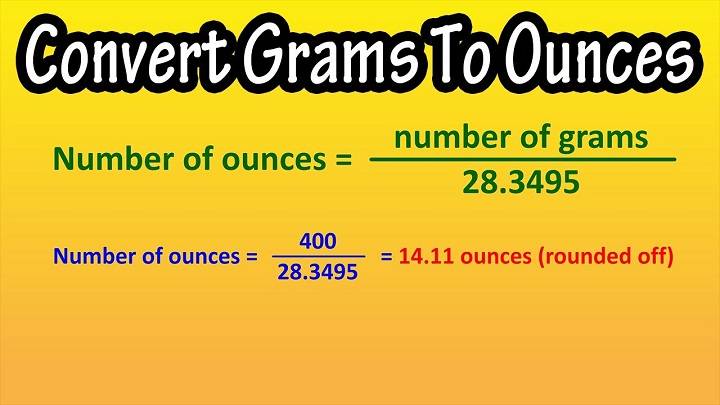
Understanding the conversion between grams and ounces is essential for anyone who cooks or bakes, especially when following recipes from different regions of the world. Grams are a standard unit of weight in the metric system, commonly used in Europe and other parts of the world, while ounces are used in the United States. This comprehensive guide will explore how to convert grams to ounces, explain the importance of accurate measurements in cooking, provide practical examples, and offer tips for making conversions easy and precise.
Accurate measurements are a cornerstone of successful cooking and baking. Whether you’re following a European recipe that lists ingredients in grams or adapting an American recipe that uses ounces, understanding how to convert between these units is crucial. This guide will provide detailed information on converting grams to ounces, explain the significance of precise measurements, and offer practical advice for using these conversions in your culinary endeavors.
Understanding Grams and Ounces
What is a Gram?
A gram (g) is a metric unit of weight used to measure small quantities. It is one-thousandth of a kilogram and is commonly used in cooking and baking for precision.
- 1 gram = 0.001 kilograms
- 1 gram ≈ 0.035 ounces
What is an Ounce?
An ounce (oz) is a unit of weight used in the imperial system, primarily in the United States. It is commonly used to measure both dry and liquid ingredients.
- 1 ounce = 1/16 of a pound
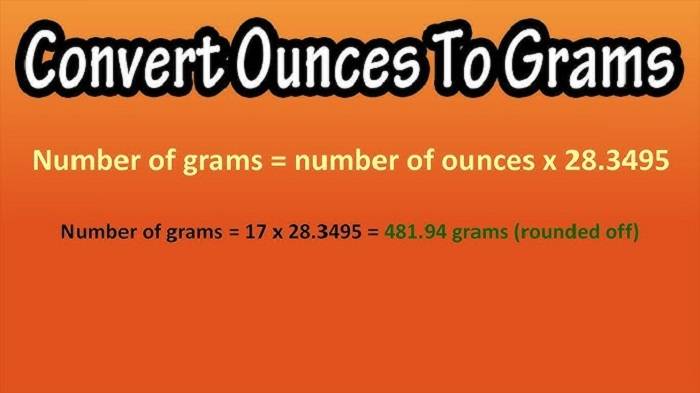
- 1 ounce ≈ 28.35 grams
How to Convert Grams to Ounces
The conversion between grams and ounces is straightforward once you know the basic conversion factor:
- 1 gram ≈ 0.035 ounces
- 1 ounce ≈ 28.35 grams
Conversion Formula
To convert grams to ounces, you can use the following formula:
ounces=grams×0.035\text{ounces} = \text{grams} \times 0.035ounces=grams×0.035
Practical Examples
Example 1: Converting 100 Grams to Ounces
100 grams×0.035≈3.5 ounces100 \, \text{grams} \times 0.035 \approx 3.5 \, \text{ounces}100grams×0.035≈3.5ounces
Example 2: Converting 250 Grams to Ounces
250 grams×0.035≈8.75 ounces250 \, \text{grams} \times 0.035 \approx 8.75 \, \text{ounces}250grams×0.035≈8.75ounces
Conversion Chart
Having a conversion chart handy can make the process quicker and more convenient. Here’s a simple chart for common gram measurements converted to ounces:
| Grams | Ounces |
| 10 | 0.35 |
| 50 | 1.76 |
| 100 | 3.53 |
| 200 | 7.05 |
| 250 | 8.82 |
| 500 | 17.64 |
| 1000 | 35.27 |
Importance of Accurate Measurements in Cooking
Consistency
Accurate measurements ensure consistency in your cooking and baking. Following a recipe precisely helps achieve the same results every time, which is especially important for baked goods where the balance of ingredients affects texture and flavor.
Balance of Flavors
Using precise measurements helps maintain the balance of flavors in a dish. Too much or too little of an ingredient can significantly alter the taste and outcome.
Recipe Development
For those who create and share recipes, accurate measurements are crucial. It ensures that others can replicate the recipe with the same success.
Tools for Accurate Measurement
Digital Scale
A digital kitchen scale is one of the most accurate tools for measuring ingredients. It allows you to measure in both grams and ounces, making conversions straightforward and precise.
Measuring Cups and Spoons
While measuring cups and spoons are essential, they are typically used for volume rather than weight. However, some measuring cups and spoons are marked with both metric and imperial units, which can be helpful.
Conversion Apps and Online Tools
There are numerous apps and online tools available that can quickly convert grams to ounces and vice versa. These can be handy when you don’t have a conversion chart or calculator nearby.
Practical Applications in Cooking
Baking
Baking requires precise measurements to ensure the correct chemical reactions occur between ingredients. Converting grams to ounces accurately is essential for achieving the right texture and rise in baked goods.
Example: Baking a Cake
If a cake recipe calls for 200 grams of flour, converting this measurement to ounces ensures accuracy, especially if your kitchen scale only measures in ounces:
200 grams×0.035≈7.05 ounces200 \, \text{grams} \times 0.035 \approx 7.05 \, \text{ounces}200grams×0.035≈7.05ounces
Cooking
While cooking can be more forgiving than baking, precise measurements still play a vital role in the balance of flavors and textures.
Example: Preparing a Sauce
If a sauce recipe requires 50 grams of butter, converting this to ounces allows for precise measurement and consistency in the sauce’s richness and texture:
50 grams×0.035≈1.76 ounces50 \, \text{grams} \times 0.035 \approx 1.76 \, \text{ounces}50grams×0.035≈1.76ounces
Scaling Recipes
When scaling recipes up or down, converting measurements accurately ensures that the proportions of ingredients remain consistent, preserving the integrity of the dish.
Example: Doubling a Recipe
If you need to double a recipe that calls for 75 grams of sugar, converting the measurement to ounces helps in accurately doubling the amount:
75 grams×0.035≈2.65 ounces75 \, \text{grams} \times 0.035 \approx 2.65 \, \text{ounces}75grams×0.035≈2.65ounces
2.65 ounces×2≈5.3 ounces2.65 \, \text{ounces} \times 2 \approx 5.3 \, \text{ounces}2.65ounces×2≈5.3ounces
Tips for Making Conversions Easy
Use a Digital Scale
A digital scale with a tare function can simplify the process of measuring and converting ingredients. The tare function allows you to zero out the weight of the container, ensuring that you only measure the ingredient.
Keep a Conversion Chart Handy
Having a printed conversion chart in your kitchen can save time and ensure accuracy. You can find printable charts online or create your own based on the most common measurements you use.
Practice Regularly
The more you practice converting measurements, the more familiar and comfortable you will become with the process. Over time, you may even start to remember common conversions without needing to refer to a chart.
Use Conversion Tools
Take advantage of digital tools and apps designed for cooking conversions. Many apps offer features like ingredient-specific conversions, which can be particularly useful.
Common Misconceptions About Conversions
Volume vs. Weight
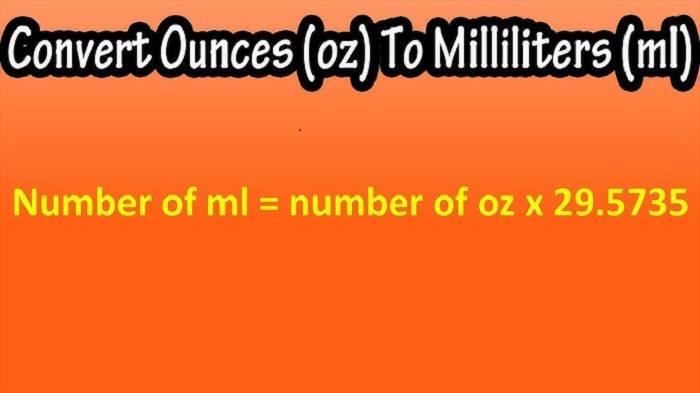
One common misconception is confusing volume with weight. For example, a cup of flour does not weigh the same as a cup of sugar. Always ensure you’re converting between the correct units (grams to ounces for weight, milliliters to fluid ounces for volume).
Dry vs. Liquid Ingredients
Another misconception is assuming that the conversion factor is the same for dry and liquid ingredients. It’s important to use the appropriate tools and methods for each type of ingredient to ensure accuracy.
Converting Other Common Ingredients
Flour
Flour is a common ingredient that often requires conversion. Since different types of flour have different densities, it’s important to use a scale for accuracy.
- 100 grams of flour ≈ 3.53 ounces
Sugar
Sugar is another ingredient frequently measured in both grams and ounces.
- 100 grams of sugar ≈ 3.53 ounces
Butter
Butter is often listed in grams in European recipes and ounces in American recipes.
- 100 grams of butter ≈ 3.53 ounces
Milk
Milk and other liquids are usually measured in milliliters but may need to be converted to fluid ounces.
- 100 milliliters of milk ≈ 3.38 fluid ounces
Related Post:
How Many Ounces are in a Gallon? A Comprehensive Guide
How Many Cups in a Gallon? Unraveling the Mystery of Liquid Measurements
Stay Updated: Iowa Women’s Basketball Schedule 2024 – Key Games, Dates & Highlights
Understanding how to convert grams to ounces is a vital skill for anyone who cooks or bakes, particularly when working with recipes from different regions. Accurate measurements ensure consistency, balance of flavors, and successful results in the kitchen. By using the right tools, practicing regularly, and keeping a conversion chart handy, you can easily master these conversions and enhance your culinary creations.
In summary, mastering the conversion from grams to ounces will not only improve your cooking and baking but also make it easier to follow and adapt a wide variety of recipes. Keep practicing, use the tips and tools provided in this guide, and enjoy the precision and satisfaction that come with accurate measurements. Happy cooking!