

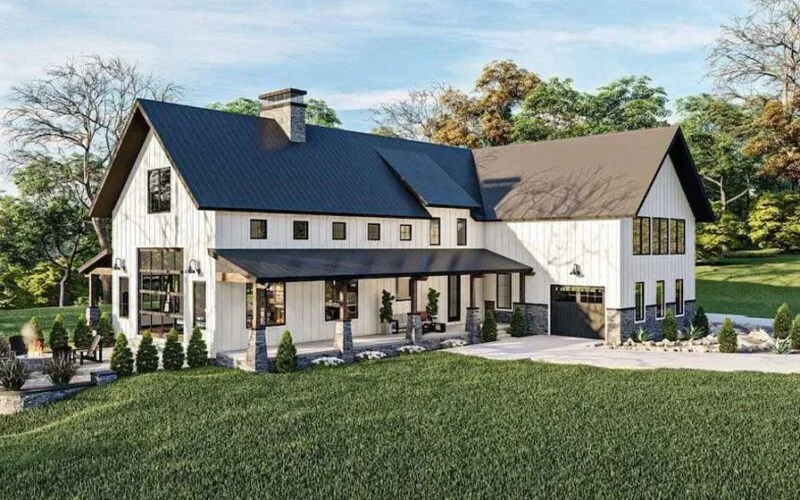
If you’re in the market for a new home, you may have come across the term barndominium—a unique fusion of barn and condominium that has been gaining popularity in recent years, notes leading property management team, Gulf Income Management. But how does it compare to a traditional home? Is it worth making the switch, or should you stick with the tried-and-true? Let’s break it down by looking at costs, construction time, maintenance, and energy efficiency to help you decide which option best suits your needs.
Cost Comparison
One of the biggest factors for homeowners is cost. Barndominiums tend to be more affordable than traditional homes, primarily because of their simple design and efficient construction process. Since barndominiums use post-frame or metal construction rather than traditional stick-built methods, labor and material costs are often lower.
A barndominium typically costs between $100 to $150 per square foot, whereas a traditional home can range from $150 to $250 per square foot, depending on location and materials. Additionally, barndominiums allow for an open-concept layout, which reduces the need for load-bearing walls and expensive architectural elements. If you’re looking for ways to save money, barndominiums offer a cost-effective solution.
Construction Time
If you’re eager to move into your new home quickly, barndominiums might be the better choice. These structures can often be completed in six months or less, whereas a traditional home can take anywhere from nine months to over a year to finish.
Barndominiums, along with more traditional pole barns and post-frame construction, provide an economical and efficient way to get a building up and ready for use in a fraction of the time. Since they use prefabricated materials and simpler designs, builders can streamline the process, getting you into your new space much faster than a standard home construction project.
Maintenance and Durability
Barndominiums have a significant advantage when it comes to maintenance. Their metal exteriors are resistant to pests, rot, and fire, making them more durable in the long run. Traditional homes, built with wood and other organic materials, require more frequent upkeep, including repainting, termite treatments, and roof replacements.
However, barndominiums aren’t entirely maintenance-free. While they resist many issues that plague traditional homes, they can be more susceptible to rust and condensation, especially in humid climates. Proper insulation and ventilation are crucial to preventing these problems. On the flip side, traditional homes tend to have better long-term resale value and are more universally appealing, which may be an important factor if you plan to sell down the road.
Energy Efficiency
Energy efficiency plays a major role in homeownership costs, and both barndominiums and traditional homes have their own strengths. Barndominiums, when properly insulated, can be extremely energy-efficient. Their metal siding and roofing reflect heat in the summer and retain warmth in the winter, reducing overall energy consumption. Plus, their open floor plans allow for better airflow and temperature control.
Traditional homes, however, are often built with thicker walls and better insulation from the start, which helps maintain indoor temperatures more effectively. That said, with the right insulation techniques, barndominiums can be just as energy-efficient, if not more, than a conventional home. Incorporating features like spray foam insulation, radiant floor heating, and energy-efficient windows can make a big difference in long-term savings on utility bills.
Financing Considerations
One challenge potential barndominium owners face is financing. Traditional homes typically qualify for conventional mortgage loans, while barndominiums often require alternative financing options. Lenders may view them as unconventional, which can make securing a loan slightly more complicated.
However, there are financing options available, including pole barn financing, which is designed for post-frame structures like barndominiums. Working with a lender experienced in barndominium construction can help streamline the process and ensure you get the funding needed for your new home.
Which One Is Right for You?
The choice between a barndominium and a traditional home ultimately depends on your priorities. A barndominium might be the way to go if you value affordability, quick construction, and low maintenance. On the other hand, if resale value, long-term durability, and traditional aesthetics are more important to you, then a conventional home may be the better choice.
At the end of the day, both barndominiums and traditional homes offer distinct advantages, and the best option is the one that aligns with your lifestyle, budget, and long-term plans. No matter which route you take, careful planning and consideration will ensure you build a home that meets your needs for years to come.