

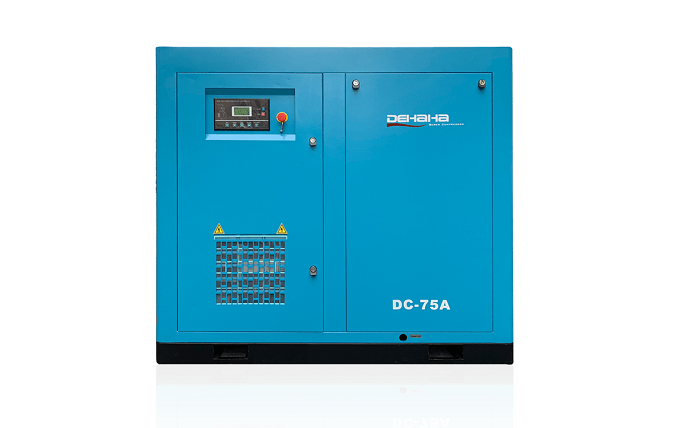
What is a Rotary Air Compressor?
A rotary air compressor compresses air using rotary motion. It traps air between its rotating parts and reduces its volume. They are mostly used in continuous industrial operations. “Rotary air compressor” is a general term. It has two main types like, Rotary vane compressors and Rotary screw compressors.
Core Characteristics:
- Uses rotary elements like vanes, lobes, or screws
- Uses in automotive, construction and small workshops
- Designed for medium to high-volume air needs
What is a Rotary Screw Air Compressor?
Rotary screw air compressors are a subtype of rotary air compressors. They have twin helical rotors (screws) to compress air. Thier design allows for continuous, smooth airflow without pulsation. Rotary screw compressors are the most popular rotary type because of their efficiency, low noise and long life cycle under demanding conditions.
Core Characteristics:
- Contains male and female rotors
- Air is compressed in a closed chamber between the screws
- Ideal for 24/7 industrial operations
Quick look: Rotary Screw vs Rotary Air Compressor
| Feature | Rotary screw air compressor | Rotary air compressor (General) |
| Type | Subtype of rotary air compressor | General category including vane and screw |
| Compression Mechanism | Twin interlocking helical screws | Vane, lobe or screw-based |
| Duty Cycle | 100% continuous use | Often 50–100%, varies by type |
| Efficiency | High, optimized for large loads | Moderate to high, depending on subtype |
| Noise Level | Low | Moderate to high, varies widely |
| Maintenance | Lower, fewer moving parts | Varies (vane types need more frequent checks) |
| Application | Industrial, continuous-use settings | Small shops to light industry |
What is the Difference in Mechanism?
Rotary screw compressors use two meshing helical rotors. Air is trapped and compressed between the rotors as they spin.
But, other rotary types like rotary vane compressors use a slotted rotor inside a housing. Air gets compressed as vanes slide outward and reduce air volume.
Main Mechanical Differences:
- Rotary screw: Positive displacement via screw rotors
- Rotary vane: Positive displacement via sliding vanes
- Result: Screw compressors deliver smoother and more consistent airflow
Rotary screw compressors maintain compression pressure more efficiently under continuous loads.
How Does Duty Cycle Vary?
The duty cycle defines how long a compressor can run continuously. Rotary screw designs support industrial-level uptime without overheating or degradation.
Rotary screw compressors support a 100% duty cycle. They can run non-stop. Rotary vane compressors usually support a 50% to 75% duty cycle, depending on the build and size.
Example:
- A 5 HP rotary vanemay require rest after 30–40 minutes.
- A 5 HP rotary screwcan run all day.
Which is More Energy Efficient?
Rotary screw compressors are more energy-efficient. They minimize internal air loss due to a tighter seal between rotors. Vane compressors lose efficiency as vanes wear down.
Efficiency Factors:
- Screw models have better volumetric efficiency
- Use of variable speed drives (VSD) in screw models further cuts energy costs
- Rotary screw models save up to 30% more energy in continuous use cases
How Do Cooling and Heat Generation Compare?
Cooling efficiency affects compressor lifespan and safety. Rotary screw compressors use oil-injected cooling or air-cooling systems. Heat is well-dissipated through built-in cooling jackets. Rotary vane models generate more heat due to friction on sliding vanes. Screw compressors maintain stable temperature in harsh environments.
Impact:
- Lower internal temperature = longer lifespan for rotary screw compressors
- Screw systems need less downtime for cooling
What is Air Quality and Pressure Difference?
Rotary screw compressors produce high quality compressed air with few pulsations. They deliver steady pressure, which makes them ideal for tools needing consistent PSI. Oil-injected screw compressors can filter to 1–3 microns. But, oil-free screw compresser provide more high quality air than oil-injected model. Rotary vane compressors may cause slight pressure variation and more oil carryover.
PSI Output Range:
- Rotary screw: 90–125 PSI (standard); up to 200 PSI (custom builds)
- Rotary vane: Usually limited to 100–125 PSI
Are Rotary Screw Compressors Quiet?
Yes, rotary screw air compressors produce less noise than any other types of rotary air compressor.
Average Sound Levels:
- Rotary screw: 60–75 dB
- Rotary vane: 70–90 dB
Why? Screw systems operate with less vibration and tighter internal tolerance. Manufacturers often enclose them in sound-dampening cabinets. Screw compressors improve worker comfort and meet noise regulation standards.
This is matters in:
- Indoor factories
- Workshops near residential areas
- Hospitals and labs
Which Has Lower Life Cycle Cost?
Rotary screw compressors offer better long-term ROI despite higher initial cost.
Cost Analysis:
| Type | Initial Cost | Maintenance Cost | Lifespan |
| Rotary Screw | High | Low | 60,000–80,000 hrs |
| Rotary Vane | Lower | Higher | 10,000–20,000 hrs |
Screw compressors require less frequent service, especially if they include smart controllers or auto shut-off systems. In industrial use, screw systems save thousands in downtime, energy and repairs.
What is the Size and Power Output Comparison?
Rotary screw compressors are larger and available in higher HP ratings.
Power Range:
- Rotary screw: 5 HP to 500+ HP
- Rotary vane: 1 HP to 50 HP
Physical Size:
- Screw units are bulkier due to dual rotor chamber and integrated dryer and tank
- Vane types are more compact and portable
For heavy industrial use, screw compressors provide greater scalability.
Summary:
If you need continuous operation, work in industrial or production environments or you prioritize energy savings and low maintenance and quiet performance, then choose a rotary screw air compressor.
But if you have limited space, need a lower-cost unit or your work involves shorter cycles or intermittent use, then choose a general rotary (vane) air compressor.
Final Tip: Always match compressor type to your air demand profile, duty cycle, and energy goals. For long-term savings and uptime, rotary screw compressors dominate across most use cases.