

If your doctor handed you a lab report and you spotted the letters “RDW” with an abnormal flag next to it, you’re probably wondering what it means and more importantly, whether you should be worried. You’re not alone. RDW is one of those blood test values that often gets overlooked, yet it can tell your doctor a great deal about what’s happening inside your body.
What Is RDW in a Blood Test?
RDW stands for Red Cell Distribution Width. It’s a measurement that appears on your Complete Blood Count (CBC) panel, and it tells your doctor how much variation there is in the size of your red blood cells.
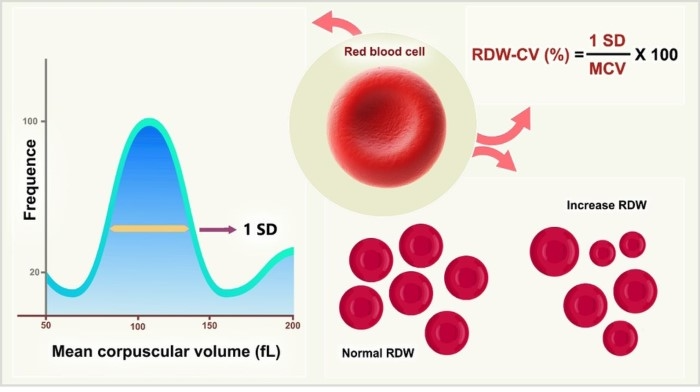
Normally, red blood cells are fairly uniform in size. But when something is off whether it’s a nutritional deficiency, a chronic disease, or something more serious your red blood cells can start coming in all different shapes and sizes. That inconsistency is what RDW measures.
Think of it this way: if your red blood cells were students lining up by height, a low RDW means they’re all about the same height. A high RDW means you’ve got some very tall kids and some very short ones a wide spread.
How Is RDW Measured?
RDW is usually reported as a percentage. Some labs may report it as an absolute value (in femtoliters), but the percentage form called RDW-CV (Coefficient of Variation) is the most common. A less common form, RDW-SD (Standard Deviation), measures the actual spread of cell sizes in femtoliters.
For this article, we’ll focus on RDW-CV, which is what most patients see on their reports.
What Is a Normal RDW Level?
The standard normal range for RDW-CV in adults is:
- Normal Range: 11.5% to 14.5%
Some labs may set their reference range slightly differently for example, 11% to 15% so always compare your result against the reference range printed on your specific lab report.
RDW in Children vs. Adults
Children, especially newborns and infants, naturally have a slightly higher RDW. This is normal and typically resolves as they grow. If you’re reviewing a child’s lab results, consult their pediatrician for age-appropriate reference ranges rather than using adult standards.
What Level of RDW Is Dangerous?
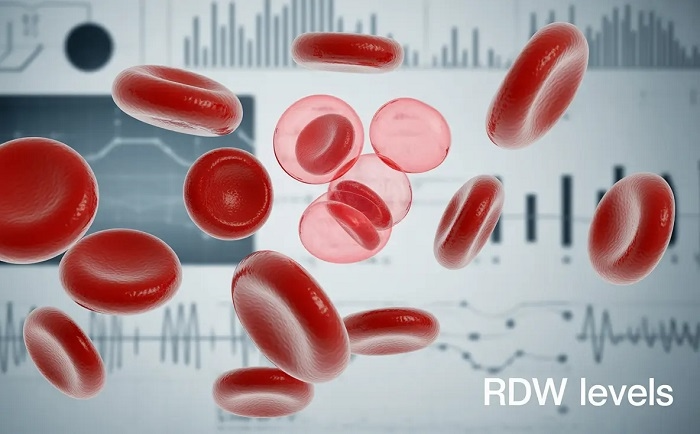
This is the question most people are searching for and the honest answer is: context matters enormously. There’s no single number that is universally “dangerous,” but there are thresholds and patterns that raise red flags for doctors.
High RDW: When Does It Become a Concern?
A high RDW means your red blood cells are varying significantly in size a condition called anisocytosis. Here’s a general breakdown:
| RDW Level | Interpretation |
|---|---|
| 11.5% – 14.5% | Normal |
| 14.6% – 16% | Mildly elevated — monitor and investigate |
| 16.1% – 20% | Moderately elevated — likely indicates an underlying condition |
| Above 20% | Significantly elevated — requires prompt medical evaluation |
An RDW above 14.5% is considered elevated, and anything above 20% is a serious concern that warrants immediate follow-up. However, even a mildly elevated RDW shouldn’t be ignored if paired with other abnormal CBC values.
What Causes a Dangerously High RDW?
A high RDW rarely exists in isolation. It’s usually a signal of something else going on. Common causes include:
- Iron deficiency anemia — one of the most frequent causes of elevated RDW
- Vitamin B12 or folate deficiency — affects red blood cell production and maturation
- Liver disease — disrupts normal blood cell formation
- Hemolytic anemia — red blood cells are being destroyed faster than they’re made
- Myelodysplastic syndrome (MDS) — a bone marrow disorder that can be serious
- Chronic kidney disease — affects the body’s ability to produce healthy red blood cells
- Certain cancers — including blood cancers like leukemia or lymphoma
- Thalassemia — a genetic blood disorder
A very high RDW (above 20%) alongside low hemoglobin, low MCV and other CBC abnormalities is a pattern that your doctor will take very seriously.
Low RDW: Is It Ever Dangerous?
A low RDW (below 11.5%) is less common and generally less alarming. It typically means your red blood cells are unusually uniform in size. This can occasionally occur with:
- Iron deficiency in very early stages
- Certain chronic diseases
- Some forms of thalassemia minor
Low RDW alone is rarely considered dangerous, but it still warrants attention if your other CBC values are off.
RDW and Cardiovascular Risk What the Research Says
Here’s something many patients don’t know: elevated RDW has been linked to increased risk of heart disease, stroke and even mortality in several large scale studies. Research published in major cardiology journals has found that people with high RDW levels face a measurably higher risk of adverse cardiovascular events even when they don’t have anemia.
This doesn’t mean a high RDW causes heart disease. Rather, it suggests that the inflammation and nutritional imbalances that drive up RDW also put stress on the cardiovascular system.
RDW as a Marker of Inflammation
Chronic inflammation is one of the key drivers of elevated RDW. When your body is in a prolonged inflammatory state whether from autoimmune disease, obesity or chronic infection normal red blood cell production gets disrupted, leading to size variation.
This is why doctors sometimes look at RDW alongside CRP (C-reactive protein) and other inflammation markers to get a fuller picture.
RDW Alongside Other Blood Values — Why It Matters
Your RDW number becomes much more meaningful when read alongside other CBC values. Here are the most important combinations your doctor will look at:
High RDW + Low MCV (Microcytic Anemia)
- Suggests: Iron deficiency anemia
- What it means: Your body isn’t getting or absorbing enough iron to make properly sized red blood cells
High RDW + High MCV (Macrocytic Anemia)
- Suggests: Vitamin B12 or folate deficiency
- What it means: Red blood cells are being produced larger than normal, with lots of size variation
High RDW + Normal MCV
- Suggests: Mixed deficiency (e.g., both iron and B12 deficiency at the same time), early anemia, or a chronic disease state
- What it means: Requires further investigation to pinpoint the cause
High RDW + Low Hemoglobin
- Suggests: Active anemia of some kind
- What it means: Your blood may not be carrying oxygen efficiently
Symptoms That May Accompany a Dangerous RDW Level
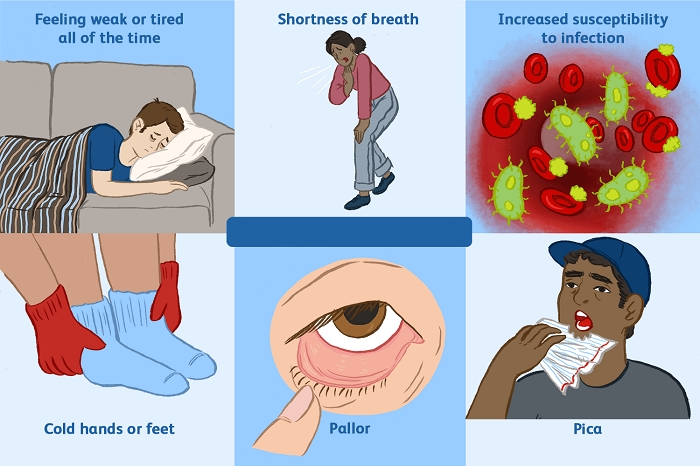
Blood test numbers don’t exist in a vacuum. If your RDW is in a concerning range, you might also be experiencing symptoms such as:
- Persistent fatigue and weakness
- Shortness of breath, especially with mild exertion
- Pale or yellowish skin
- Dizziness or lightheadedness
- Cold hands and feet
- Rapid or irregular heartbeat
- Frequent infections (if bone marrow is involved)
If you have a high RDW and these symptoms, don’t wait contact your healthcare provider promptly.
Can RDW Be Improved? What You Can Do
The good news is that in many cases, elevated RDW is treatable especially when it’s driven by a nutritional deficiency or a manageable condition.
Dietary Changes
- Boost iron intake: Red meat, spinach, lentils, tofu and fortified cereals are excellent sources
- Increase B12: Found in eggs, dairy, meat, and fish; a supplement may be needed if you’re vegetarian or vegan
- Eat folate-rich foods: Leafy greens, beans, citrus fruits, and fortified grains
Medical Treatments
Depending on the underlying cause, your doctor may recommend:
- Iron supplements (oral or IV depending on severity)
- B12 injections or high-dose oral supplements
- Treating the underlying disease (e.g., managing kidney disease or autoimmune conditions)
- Referral to a hematologist if a bone marrow disorder is suspected
What NOT to Do
Don’t self-diagnose or self-treat based on RDW alone. Supplementing with iron when you don’t need it, for example, can cause its own problems. Always work with a healthcare provider to find the root cause.
When Should You See a Doctor About Your RDW?
You should schedule an appointment or follow up promptly if:
- Your RDW is above 14.5% and you haven’t discussed it with your doctor
- Your RDW is above 16% with other abnormal CBC values
- Your RDW is above 20% this needs prompt evaluation regardless of other values
- You have an elevated RDW and are experiencing symptoms like fatigue, breathlessness, or dizziness
- Your RDW has been trending upward over multiple blood tests
Even if your RDW is only mildly elevated and you feel fine, don’t dismiss it. A conversation with your doctor could catch something early.
Frequently Asked Questions (FAQs) About RDW
Is an RDW of 15% dangerous?
An RDW of 15% is mildly elevated and outside the normal range of 11.5%–14.5%. It’s not immediately dangerous on its own, but it does warrant a follow-up conversation with your doctor especially if other CBC values are abnormal or you have symptoms.
Can stress cause high RDW?
Chronic psychological stress can contribute to inflammation, which may indirectly affect RDW over time. However, stress alone is rarely the primary driver of a significantly elevated RDW. Nutritional and physiological causes should be investigated first.
How quickly can RDW change?
RDW reflects changes in red blood cell production over time. Since red blood cells live for about 120 days, it can take weeks to months for RDW to normalize after treating the underlying cause. Don’t expect overnight improvement.
Can dehydration affect RDW?
Severe dehydration can affect blood test results in general, but it’s not a common cause of meaningfully elevated RDW. If you were dehydrated at the time of your blood draw, your doctor may recommend a repeat test.
Is high RDW always a sign of cancer?
No. The vast majority of people with elevated RDW have nutritional deficiencies or manageable chronic conditions not cancer. However, in some cases, a very high and unexplained RDW can prompt further investigation, including ruling out blood cancers. Don’t panic, but do follow up.
RDW is a small number on a big lab report easy to overlook, but worth paying attention to. A level above 14.5% is elevated, and anything above 20% is considered significantly high and requires prompt medical evaluation. But the number alone never tells the whole story.
What makes a high RDW truly dangerous is the combination: what other values look like, what symptoms you’re experiencing, and what’s driving the change in the first place. The reassuring reality is that many causes of elevated RDW are very treatable once you know what you’re dealing with.
If your RDW came back flagged on your lab report, the best step you can take right now is a straightforward conversation with your doctor. Bring your full lab results, mention your symptoms, and let them guide the next step. Early investigation almost always leads to better outcomes.