

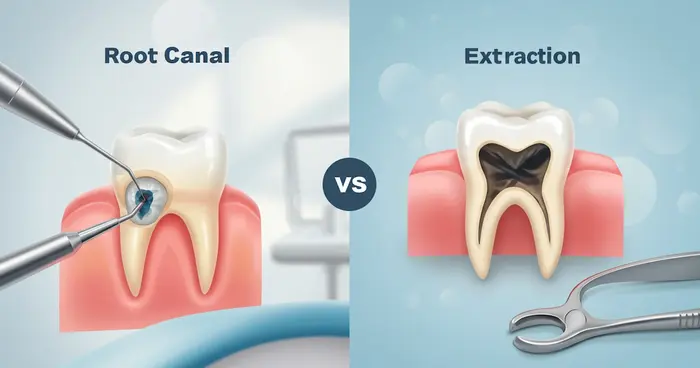
When a tooth is severely damaged or infected, two of the most common solutions recommended by dentists are root canals and tooth extractions. Deciding between these options isn’t always straightforward, as both come with their own set of benefits, risks, and long-term implications for your oral health.
A root canal aims to save the natural tooth by removing the infected pulp and sealing it, while a tooth extraction involves removing the tooth entirely to prevent further infection or complications. Each approach has a unique impact on your smile, bite, and overall dental health, so understanding the differences is key.
1. Understanding Root Canal: Saving Your Tooth
A root canal is a procedure that treats a tooth with severe decay or infection while preserving the natural tooth structure. During a root canal, the dentist removes the infected pulp inside the tooth, cleans the area, and fills it with a special material to prevent further infection. The tooth is then sealed and usually topped with a crown for protection.
Benefits of Root Canal:
- Keeps Your Natural Tooth: The main advantage is that your natural tooth remains in place, allowing you to maintain your bite and smile.
- Prevents Further Dental Issues: By keeping your tooth, you avoid problems that can come from missing teeth, like shifting teeth or jawbone loss.
- Quick Recovery: Root canals have a relatively quick recovery time, with most patients resuming normal activities within a day.
Cons of Root Canal:
- Not Always Successful: In rare cases, the infection may return, requiring additional treatment.
- Can Be Costly: Root canals, especially with crowns, can be more expensive than extraction, depending on your insurance.
2. Understanding Tooth Extraction: Removing the Problem Tooth
Tooth extraction is the complete removal of a problematic tooth from the mouth. This procedure is typically recommended when a tooth is too damaged to save, such as in cases of severe decay, trauma, or extensive infection.
Benefits of Tooth Extraction:
- Eliminates the Infection: Extraction removes the infected tooth, eliminating the problem quickly and effectively.
- Can Be Less Expensive: Often, extraction is cheaper upfront compared to a root canal, especially if no further procedures are needed.
- Simple Procedure: Extractions, especially of front teeth or less complex cases, can be quick and straightforward.
Cons of Tooth Extraction:
- Leads to Missing Teeth: Once the tooth is removed, you’re left with a gap that may affect your appearance and chewing ability.
- Additional Costs for Replacement: You may need a dental implant, bridge, or denture to replace the missing tooth, adding extra costs and time.
- Risk of Bone Loss: Missing teeth can lead to bone loss in the jaw over time, affecting your overall dental health.
3. Comparing Root Canal and Extraction: Which Is Right for You?
Choosing between a root canal and extraction depends on several factors, including the condition of your tooth, your overall dental health, budget, and personal preferences. Here’s a simple comparison:
- Longevity: Root canals can last for many years with proper care, while extractions mean the tooth is permanently gone.
- Aesthetics and Function: Root canals preserve your natural appearance and tooth function, whereas extraction requires a replacement for optimal aesthetics and function.
- Time and Cost: Although root canals might cost more initially, they can be more cost-effective in the long run compared to the ongoing care and replacement costs of an extracted tooth.
4. Making the Decision: Factors to Consider
When deciding between a root canal and extraction, consider the following factors:
- Severity of Damage: A root canal is usually the better choice if the tooth can be saved. However, if the tooth is severely broken or decayed, extraction might be the only option.
- Personal Comfort and Preference: Some patients prefer extraction to avoid the chance of future complications, while others value keeping their natural teeth.
- Financial Considerations: Insurance coverage, procedure costs, and potential follow-up treatments should be considered. Discuss your options with your dentist to understand the financial impact.
Book Your Appointment At HQ Dental Design
Whether you’re dealing with tooth pain, considering a root canal, or unsure if extraction is the right choice, HQ Dental Design dentist near you is here to help. Our experienced team of dental professionals is dedicated to providing the best care for all your dental needs. We understand that every smile is unique, and so is every dental issue. That’s why we take the time to assess your condition, explain your options, and recommend the most effective treatment tailored just for you.
From routine check-ups and cleanings to specialized procedures like root canals, tooth extractions, implants, and more, we’ve got you covered. No matter the service you need, we’re committed to making your visit as comfortable and stress-free as possible. Our state-of-the-art clinic in Georgetown, TX, offers a welcoming environment where your oral health and satisfaction are our top priorities.
Recovery and Aftercare: Ensuring a Smooth Healing Process
Proper recovery and aftercare play a crucial role in the success of both root canals and tooth extractions. This section can guide patients on what to expect after each procedure, how to manage pain and swelling, and steps to promote faster healing. Cover topics like post-procedure care instructions, dietary recommendations, oral hygiene tips, warning signs of complications, and when to schedule follow-up visits. Providing this information helps patients feel prepared and supported throughout their dental treatment journey.
Don’t wait until the pain becomes unbearable. Contact HQ Dental Design today to schedule your appointment and let us guide you toward the best solution for your dental health.
Conclusion:
Ultimately, choosing a root canal and extraction depends on your dental condition and personal preferences. Always consult your dentist, who can thoroughly examine and recommend the best treatment for your needs. Whether you save or remove the tooth, the goal is to ensure your long-term oral health and comfort.